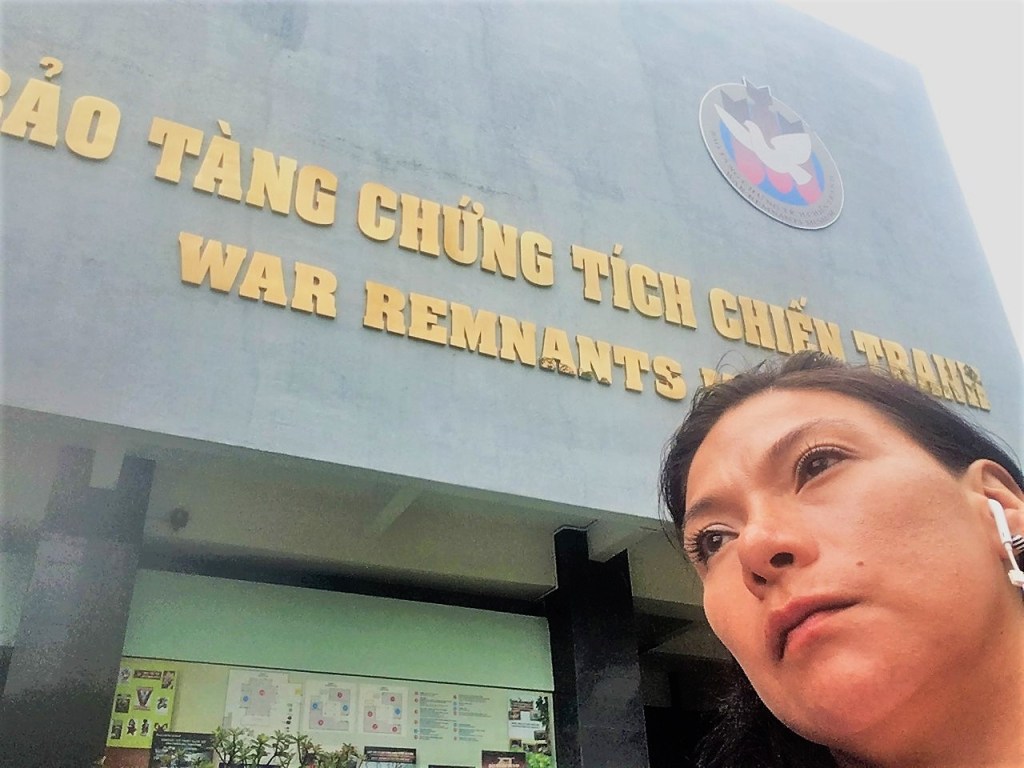
I visited this museum five months ago during a trip to Vietnam, but I had been putting off writing about it simply because of the heart-wrenching emotions it stirred. While observing the harrowing photographic material, which was even more shocking than what I had seen during my previous visit to the UXO Visitor Centre in Laos, I felt a mix of anger and profound sadness.
The museum is located in District 3 of Ho Chi Minh. Originally opened in 1975 as an “Exhibition of USA Crimes,” its name changed to the War Remnants Museum 20 years later, following the establishment of diplomatic relations between Vietnam and the USA. It has since become one of the most visited museums in Vietnam, drawing a significant number of visitors from Europe, and North America, and a growing influx from Asia.
When I visited the museum, I did so without checking any reviews beforehand, so I was not prepared for what awaited me. I left feeling deeply affected by the material, and I had to conclude my visit without exploring all the exhibits. Sometime later, I came across various mixed opinions about the displays; it is often referred to as the one-sided story museum (from the Vietnamese perspective). There were numerous contradictory yet freely expressed positive and negative opinions. In the end, I concluded that learning this side of the story was essential.
Regardless of anyone’s opinions, the museum’s curators have undoubtedly assembled a remarkable collection of photographic and documentary evidence. I will share some of the photos I took, but the most harrowing ones were too distressing to capture. So, this is my account of the experience. Upon arrival, I paid the entrance fee of 15,000 Dong (£0.50, 1950 Colombian pesos).


The first thing I encountered outside the building was an open-air display of US military vehicles, including aircraft, artillery, and various other weapons. Notable examples included an F-111 bomber jet, a Chinook helicopter, and tanks. The informative labels explained their purposes, such as the CH47 Chinook being primarily used for transporting personnel, artillery, and ammunition supply to challenging locations. At that moment, I didn’t dwell much on it; it simply reminded me of the many Hollywood movies depicting US war interventions.


Continuing on and entering the ground floor, I encountered a spacious area with various displays. On the left side, there was a smaller room hosting an exhibition called “Hai Phong: The Wavefront.” This exhibit was created in commemoration of the 42nd anniversary of Vietnam’s reunification. It depicted the significant impact on Hai Phong, a major port city in North Vietnam, which was a prime target heavily bombed by the US Navy. The graphic pictures vividly portray the immense destruction inflicted upon the city, evoking a sense of profound sadness.


The remainder of the ground floor is devoted to showcasing numerous anti-war posters and photographs from various countries worldwide. These historical posters depict different organisations, countries, and individuals urging the USA to cease its bloody intervention in Vietnam (refer to the pictures below). Reading through them gave me goosebumps


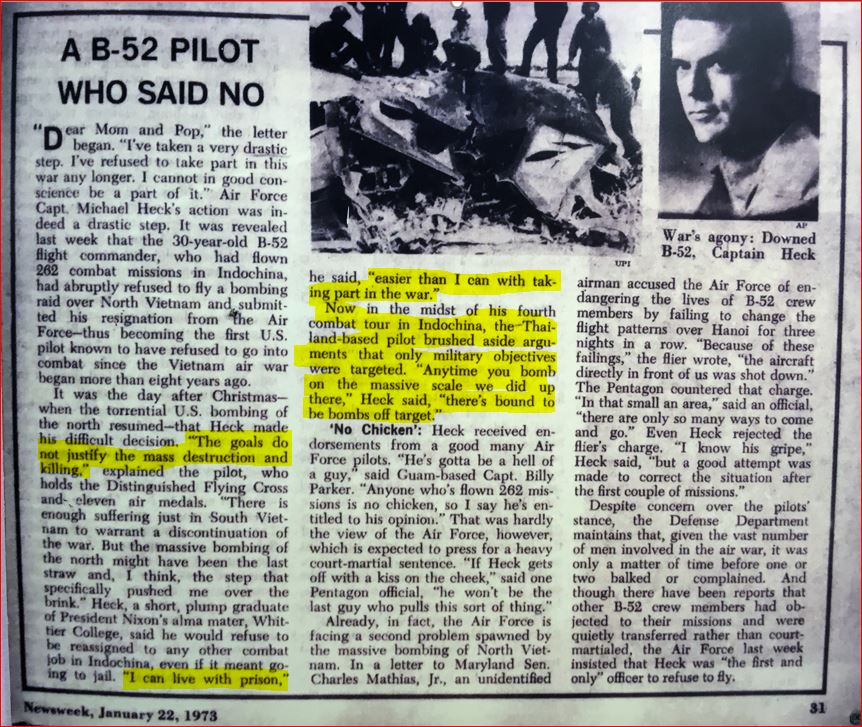
THE BRAVE ONE WHO SAID NO!!!!!
One of the posters that intrigued me and stirred strong emotions was the one featuring a news article about US Commander Captain Michael Heck. It detailed the astonishing history of how this man, awakened by the horror of the senseless war, abruptly refused to continue participating, regardless of the consequences he would face. I’m sharing the article here with my yellow highlights, but I encourage you to conduct your own research as well.
After reading this article above, I proceeded upstairs. Upon entering the first room, I encountered dreadful photographs depicting various victims and killings during the war. One image that left me with an uneasy feeling was a photo of a group of US soldiers, seemingly having fun, surrounded by mutilated bodies. In the picture, they appeared cheerfully accomplished and proud.
Trying to fathom what was in their minds at that specific moment left me contemplating the possibility of cruel psychopathic insanity. I reasoned that perhaps it wasn’t solely their fault but rather a result of the military system or ideology. Nevertheless, it was undeniably sickening. I chose not to capture a picture of this display.


I then took a short break before proceeding to the next room, the Orange Agent Room. Here, the images continued to be distressing and are likely to upset even the sturdiest of human hearts. The impact was not only evident for the people of that era but also had consequences for many generations that followed.


The Vietnam War exacted a dreadful toll on the people of Vietnam. Agent Orange, along with other chemical weapons, left a shocking legacy that included unexploded ordnance, posing a significant danger to people even today, similar to the situation in Laos.


I was unable to continue after that part of the visit, and I left. However, I don’t regret attending; the visit is a must if you are in Ho Chi Minh. Nevertheless, please avoid bringing children!
“We can know only that we know nothing. And that is the highest degree of human wisdom” Leo Tolstoy.
🕊️
Jenny
 Jenny Sky Is The Limit
Leave a comment