What a whirlwind of a day it turned out to be! I meticulously planned a full day of activities for us, starting at 7 am and stretching well into the late hours. Despite the exhaustion that settled in by the day’s end, it was an immensely enjoyable and efficient way to explore Beijing.

Typically, this day’s adventure kicks off at Tiananmen Square, leading seamlessly into the Forbidden City. However, owing to disruptions caused by unruly tourists the day before, parts of the area were temporarily closed and under heightened security. In response, Michael proposed an alteration to our planned schedule, suggesting that we visit Tiananmen Square later in the day. Here’s the revised itinerary we followed:
The Forbidden City
Upon reaching the entrance of the Forbidden City, we were met with a bustling crowd, sparking a realisation that the vibrant energy and throngs of people might be a recurring theme throughout our visit to China.
It appeared as though the entire 1.4 billion-strong population was on holiday!!!. Thankfully, Michael, our adept local guide, had the foresight to prearrange our entrance tickets. This thoughtful preparation meant that we only had a brief wait while he efficiently collected our tickets.

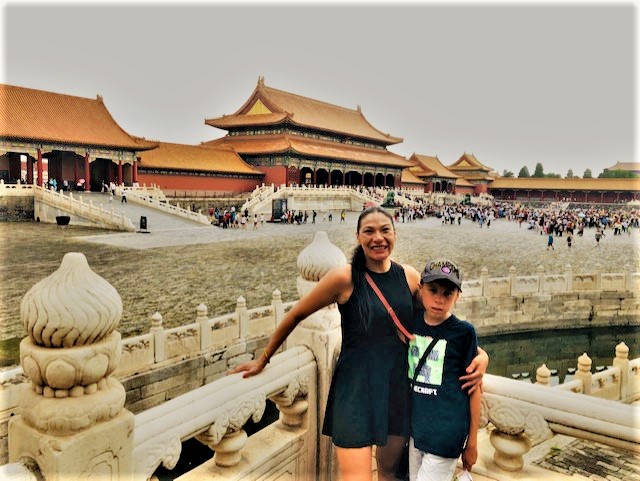
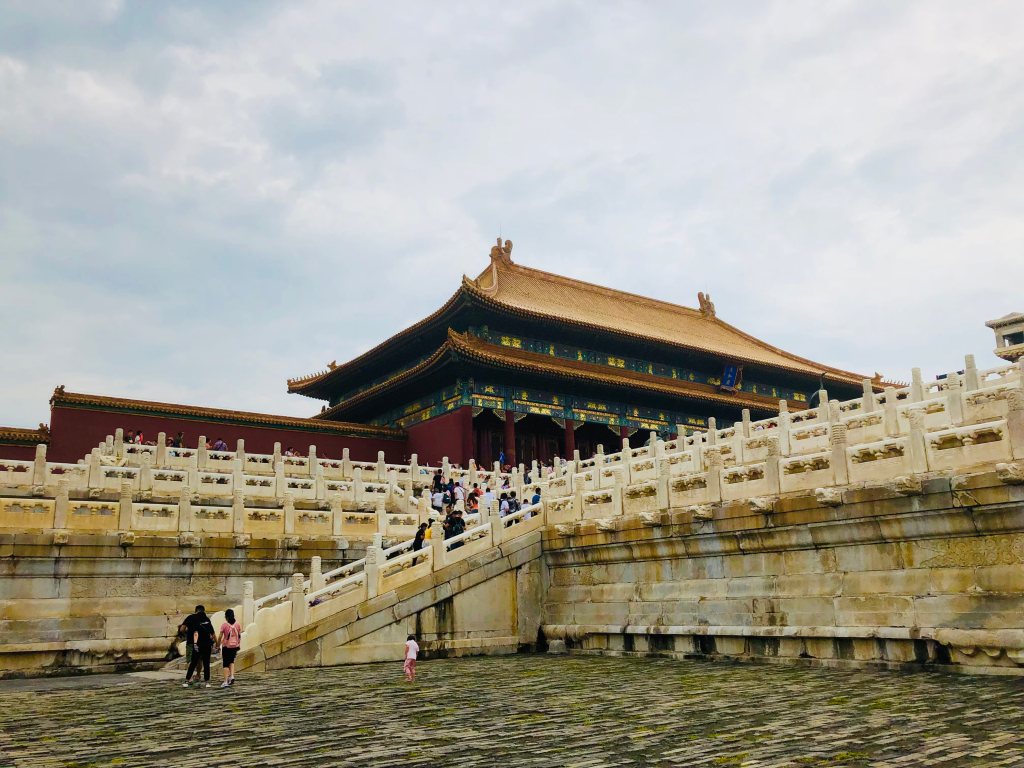
The Forbidden City served as the imperial palace for an impressive span, accommodating 24 emperors from the Ming to the Qing Dynasties, spanning the years 1368 to 1911.
This sprawling 0.75 km2 complex is neatly divided into two distinctive sectors. The southern Outer Court, where imperial duties were carried out, contrasts with the northern Inner Court, reserved for the emperor’s residence alongside his family.
Following a south-to-north itinerary, we entered through the imposing south Meridian Gate, also known as Wumen, where the journey typically begins. Opting for the less-travelled west part of the complex, as opposed to the central route frequented by most tourists, proved to be a delightful choice. This path offered us a more serene stroll with fewer crowds.
We covered a distance of approximately 1 km, zigzagging our way to the north Gate of Divine Prowess (Shenwumen), we immersed ourselves in the captivating Forbidden City. The journey allowed us to almost feel the pulse of the mysterious lives led by Chinese emperors as we wandered amidst the vibrant red and yellow adorned buildings and gateways.
The designation “Forbidden City” stems from its historical exclusivity, where commoners were strictly prohibited from entering, and only those with special permission could access its grandeur.
The transformation of this imperial enclave into a museum occurred in 1924, following the departure of the last emperor after a five-century-long imperial rule. Since then, it has evolved into one of the world’s most sought-after attractions, drawing visitors not only from China but also from every corner of the globe.
Enclosed by a moat and a towering 10-meter-high wall, encompassing its impressive 8,999 rooms, the Forbidden City stands as a compelling testament to royal architectural magnificence. With its opulent halls and concealed treasures from eras past, it undoubtedly stands out as a must-visit for contemporary travellers seeking a glimpse into China’s regal history.
For further insights, Michael graciously shared some guide comments about this site, as detailed below:
Our tightly packed schedule meant that our planned visit to Coal Hill had to be omitted due to time constraints. However, as we departed from the Forbidden City, we took a moment to admire it from a distance (as shown in the last part of the video above). Michael shared intriguing information with us, revealing that Coal Hill is, in fact, an artificial mountain constructed in 1421 using the excess earth from a Mongolian extraction.
Hutongs Area - Ron Yard Hotel
Following our exploration of the Forbidden City, we ventured to explore a delightful boutique hotel, my personal favourite among those I’ve visited.
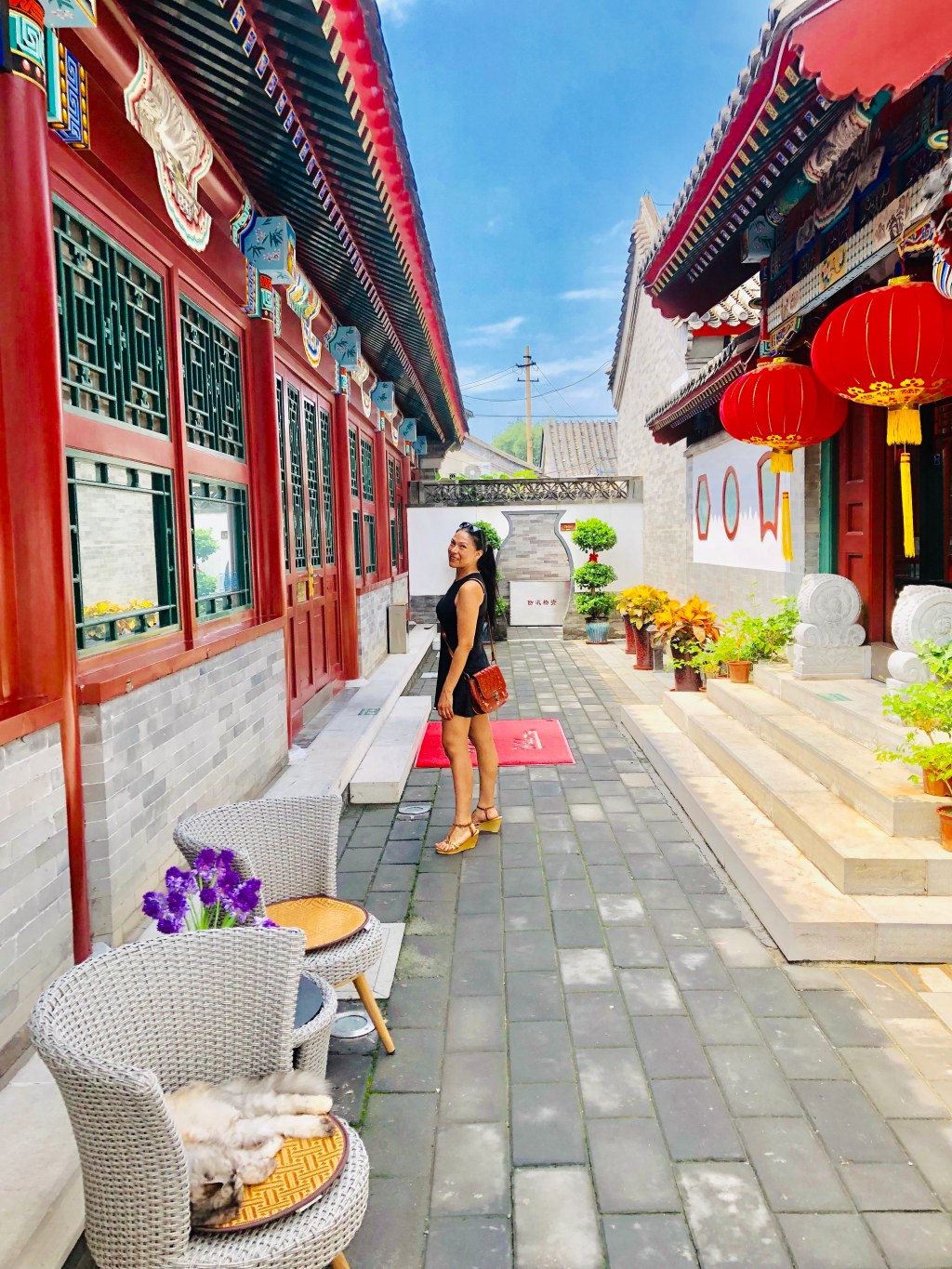
Ron Yard Hotel, nestled in the historic heart of Beijing within a small alley at Huguosi Street in the hutong area, stood out as an excellent choice for tourists seeking a superior and boutique experience. Set in a charming and well-maintained traditional house, the hotel provided an ideal setting for a relaxing stay. The welcoming staff went above and beyond, taking the time to guide me through the property.
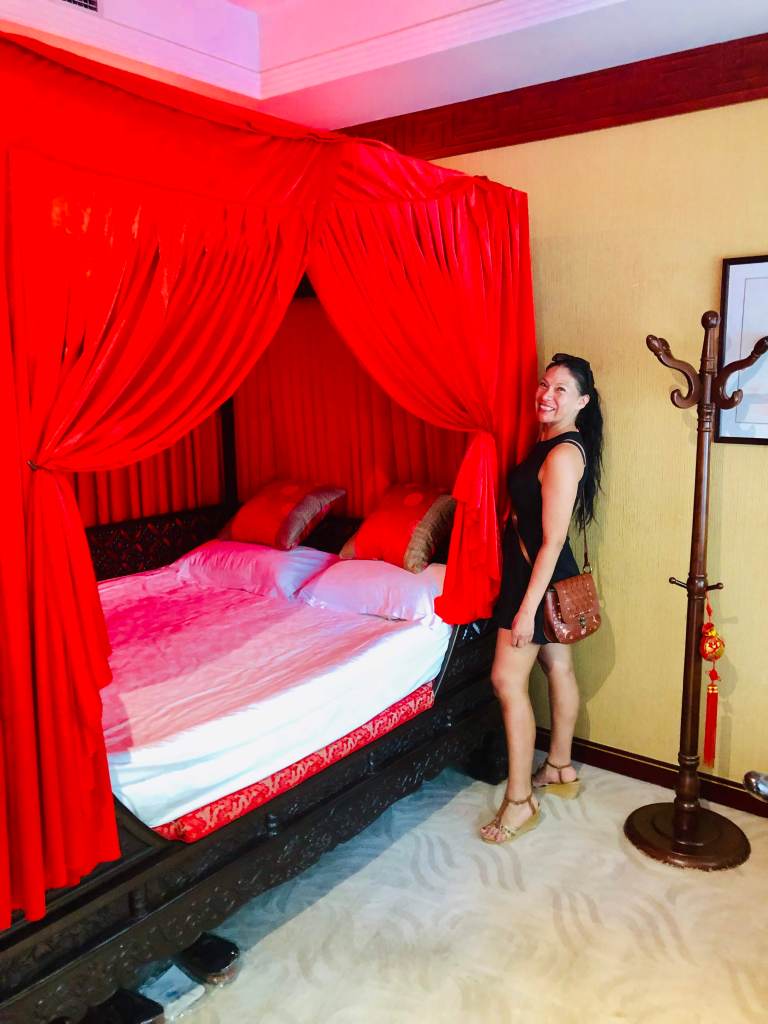
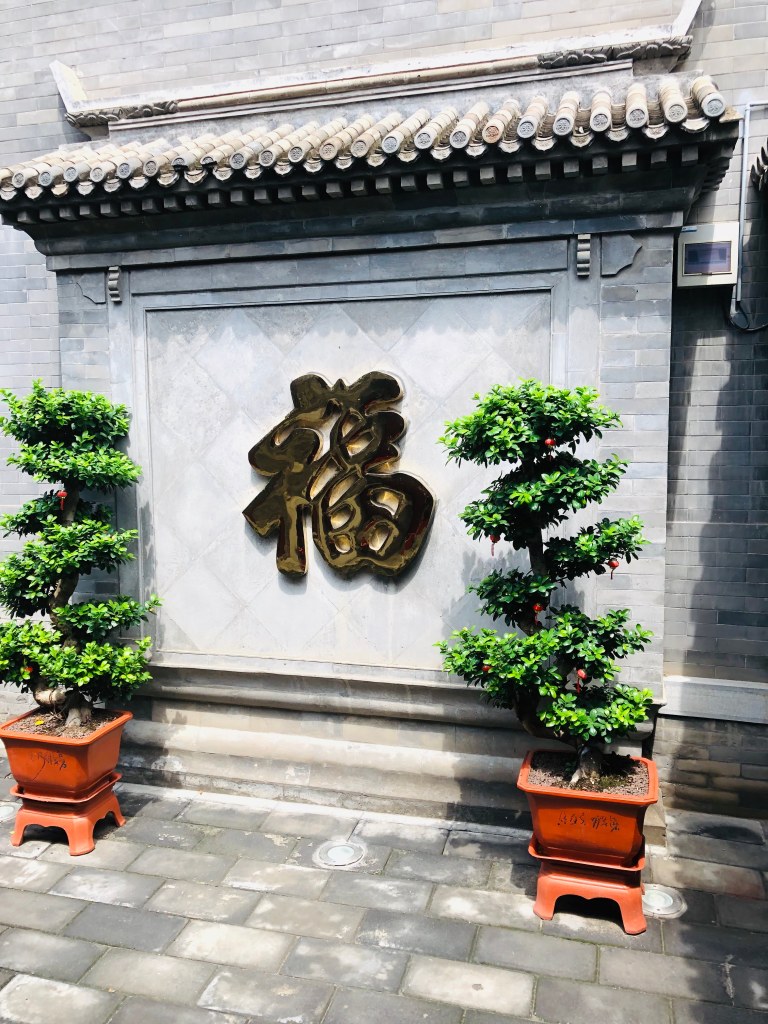
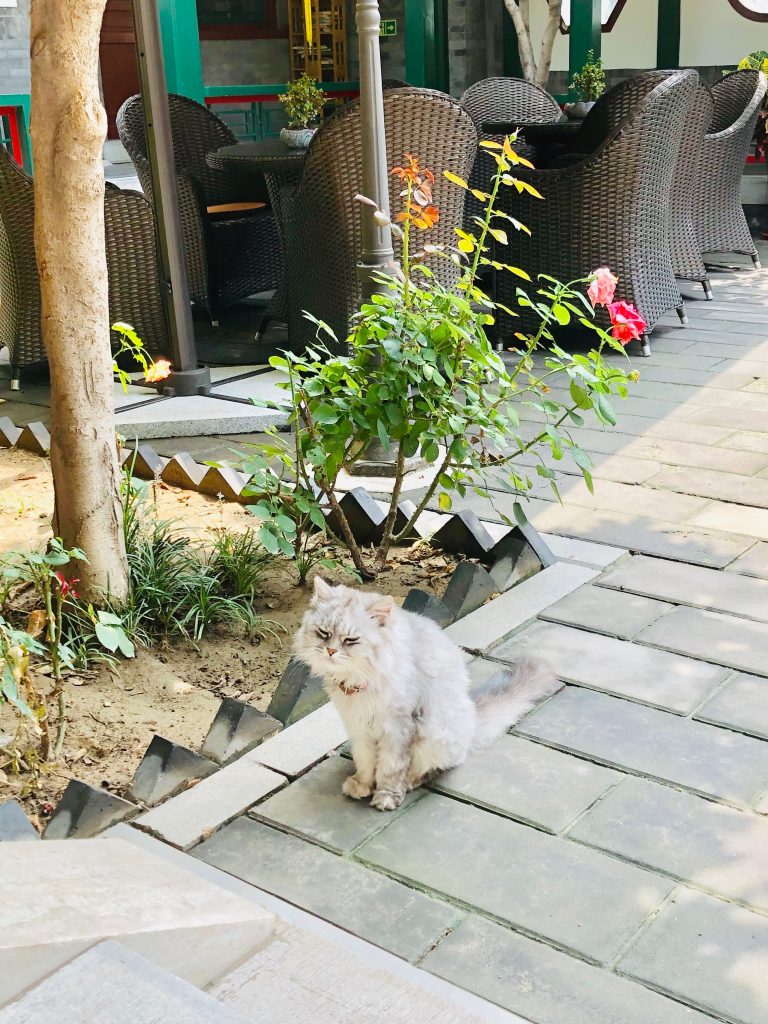
I was captivated by the hotel’s enchanting décor, especially the charming courtyard where local musicians occasionally played beautiful melodies. The impeccable cleanliness and serene ambiance across all areas of the hotel were truly praiseworthy.
During my visit, I had the pleasure of exploring a couple of rooms, the Standard and the Classic Suite, both situated around the serene courtyard. These rooms were tastefully adorned, exuding a calm atmosphere and equipped with excellent amenities. I fully recommend Ron Yard Hotel, though securing availability might prove a challenge, given its limited capacity of only 30 guest rooms!.

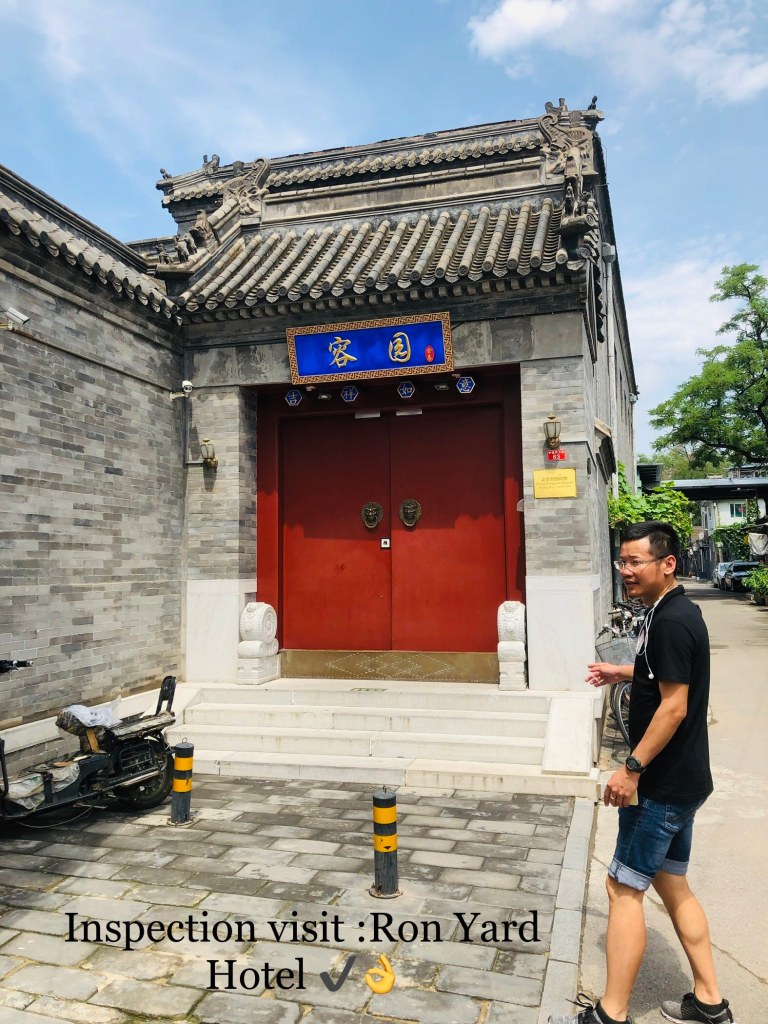

After the hotel inspection, we relished a ride through the intricate network of hutongs and the central area of Xicheng, culminating at the picturesque Hou Hai Lake.
Our journey continued with a leisurely stroll along the renowned Yandai Byway, a shopping street spanning 232 meters. Government-restored in 2007, this street stands as a living embodiment of traditional folk customs, vendors’ trading, calligraphy, and other elements that showcase the old Beijing charm.
As we ambled by the Drum Tower and Bell Tower, our path led us to a heart-warming experience, a traditional lunch hosted at a local family home.
Local Family Experience – Old Beijing & Mask Painting
Lunch proved to be a delightful affair, homemade, abundant, and absolutely delicious!. The lovely hostess prepared a variety of options, taking into consideration my vegan preferences as well as accommodating Felipe’s egg allergy.
The meal was not only satisfying but also left me feeling grateful for their impeccable attention to our dietary needs. Post-lunch, we were presented with a choice between a calligraphy lesson and a mask painting activity. Opting for the latter, we thoroughly enjoyed unleashing our artistic skills and engaging in a creative endeavour.
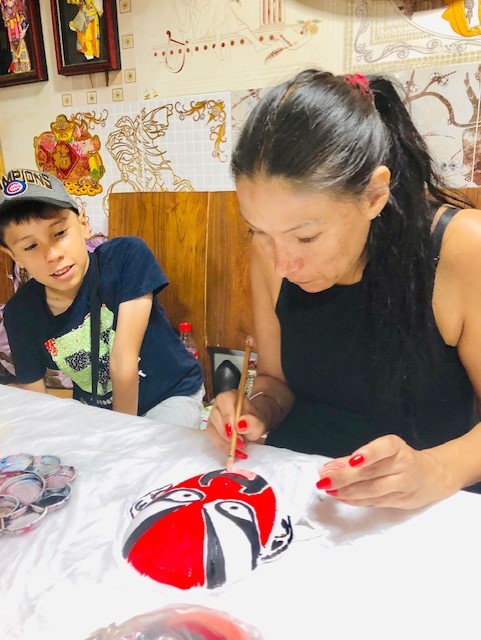
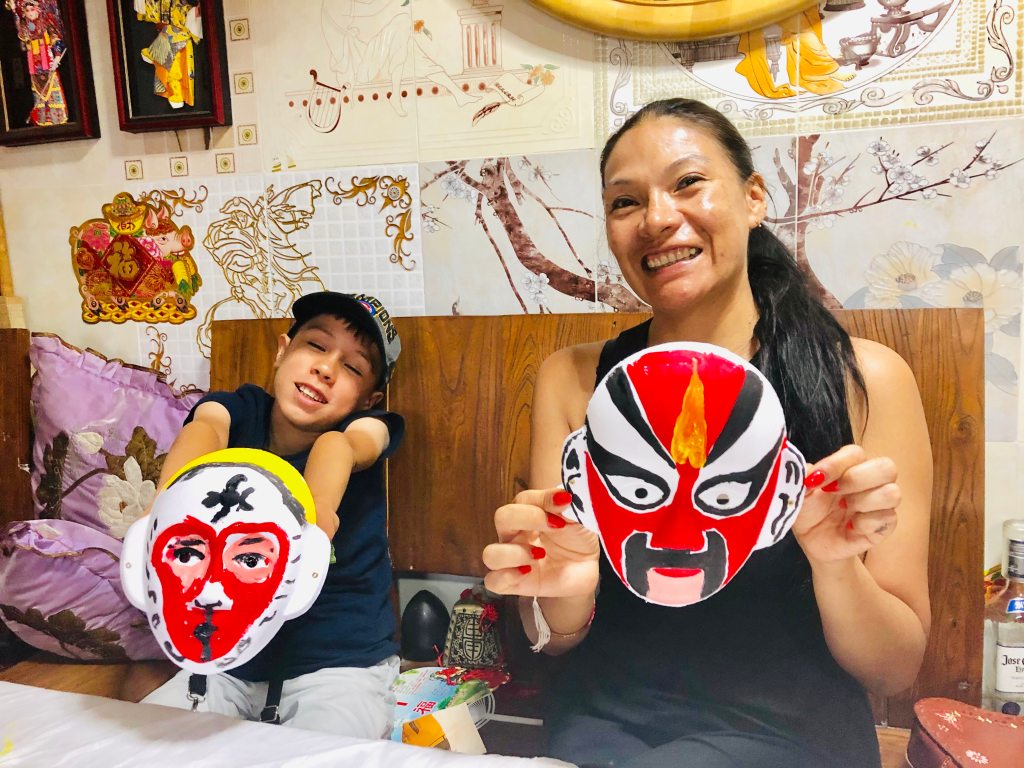
Engaging in activities like mask painting provided a wonderful opportunity for bonding between my son and me. Such creative endeavours, not typically pursued at home, turned out to be incredibly enjoyable and a source of great fun for both of us.
Tiananmen Square
Immediately following our local family experience, we set out to explore Tiananmen Square. Spanning an expansive area of 440,000 square meters, the square holds a central position in Beijing. Following Michael’s suggestion, we started our walk from the east side to sidestep the crowds. His advice proved invaluable, allowing us to relish a brief yet pleasant visit without being engulfed by the typical sea of hundreds of people.
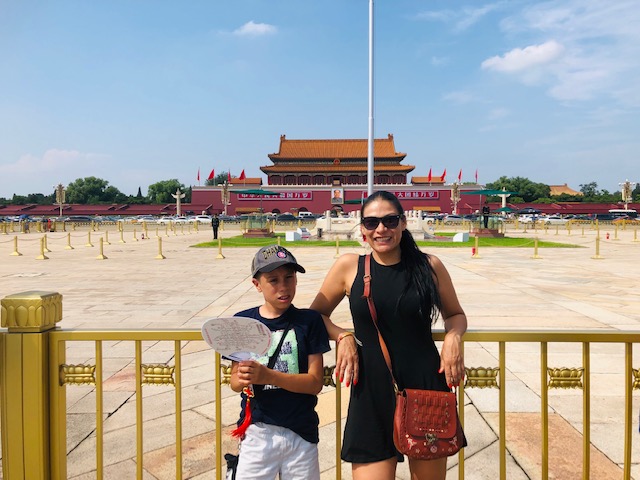
Our leisurely stroll through the square led us past various significant monuments.
At the north end, we explored the Tiananmen Tower, erected in 1417, historically hosting grand ceremonies to announce the chosen emperor to the commoners.
Moving to the center, we briefly admired the Monument to the People’s Heroes, constructed in 1952, adorned with Chairman Mao’s words, ‘The People’s Heroes are Immortal.’
Towards the south, we visited the Memorial Hall of Chairman Mao Zedong, featuring three halls and Mao’s crystal coffin.
Adjacent is the National Museum of China, inaugurated in 2003, showcasing Chinese history and revolution.
Nowadays, Tiananmen Square serves as a tranquil space for the public, who gather to fly kites and enjoy leisurely walks. It attracts thousands of daily visitors, both locals and foreigners, contributing to its vivid atmosphere.
Our walk concluded on the west side of the square, despite the scorching weather, leaving us content and enriched with newfound knowledge about China. As we departed, we observed a long queue, underscoring the value of having a local guide familiar with the ins and outs of the city.
Sidecar Experience – Regents Plaza
This off-the-beaten-track tour afforded us the opportunity to navigate the narrow hutongs and pass by the modern landmarks of Beijing, providing a distinctly different experience than traveling by car. We made stops at the narrowest alleys, meandered through the Forbidden City, passed by the Drum and Bell Towers, and admired the awe-inspiring National Grand Theatre, affectionately known as the “Giant Egg.”
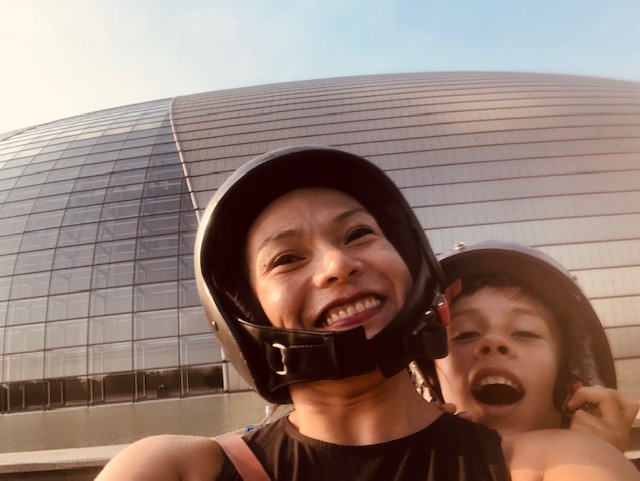
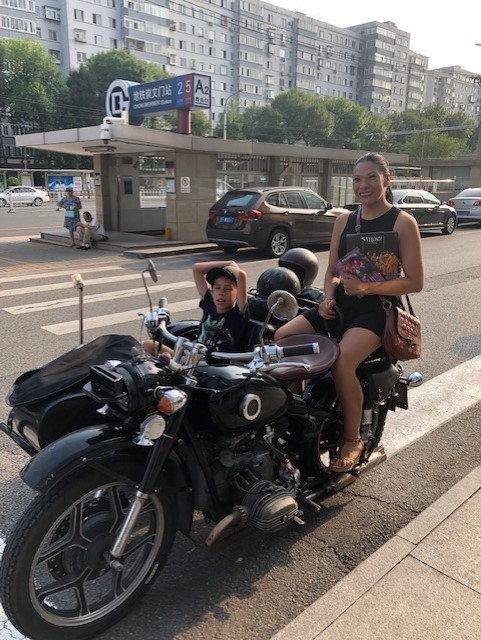
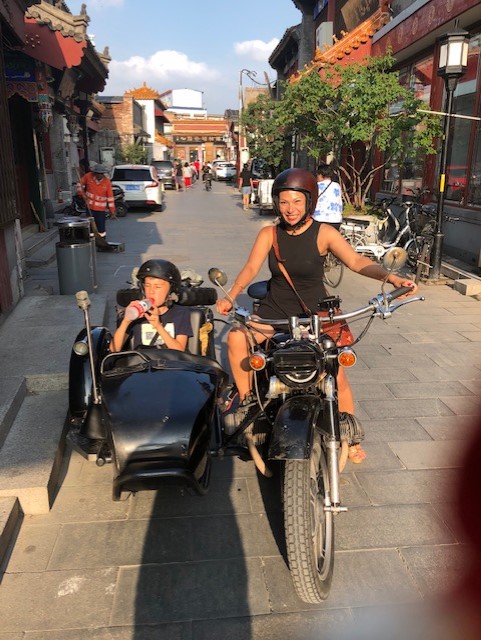
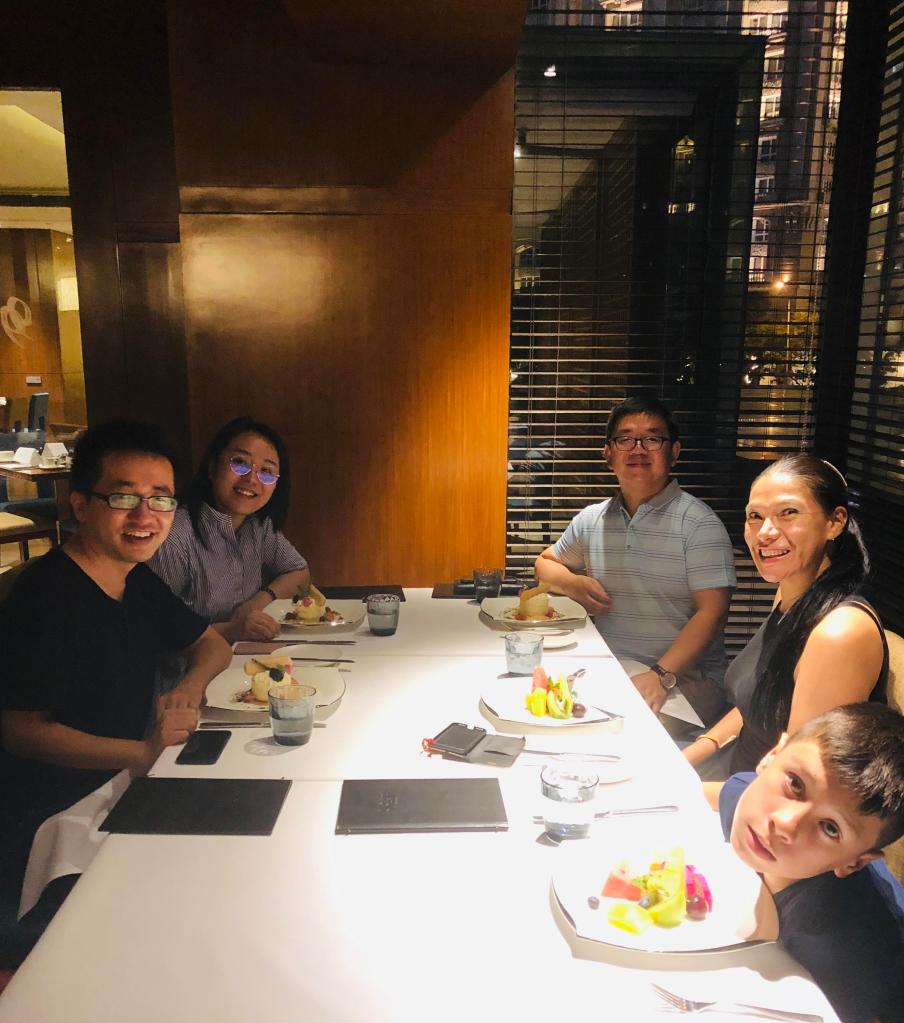
Our tour concluded at the Regent Park Deluxe Hotel, where we savoured a delightful dinner in the company of colleagues from the travel industry. The hotel boasts one of the best views of Beijing, making it an exceptional deluxe option with its breath-taking surroundings.
“The man who asks a question is a fool for a minute, the man who does not ask is a fool for life.” “Your life is what your thoughts make it.”


With love and dreams forever.
🙏
Jenny
Next: Xi’an
 Jenny Sky Is The Limit
Leave a comment