
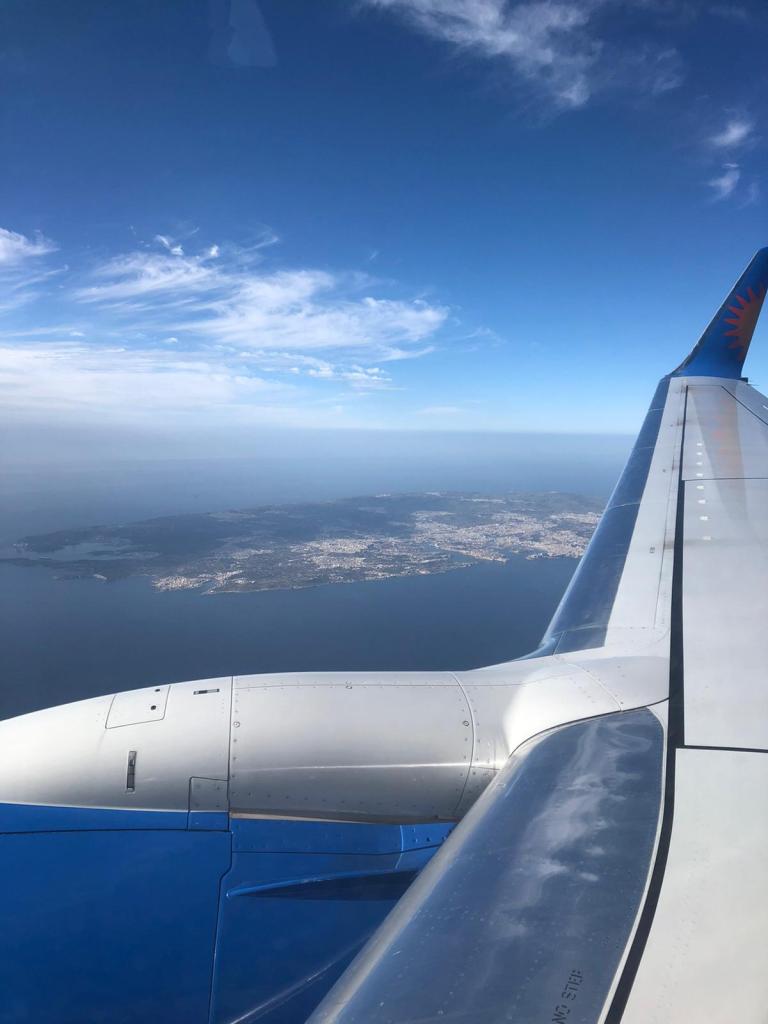
On the 7th of December, coinciding with the 75th Anniversary of the renowned Chicago Convention, I find myself aboard a plane, journeying from London to Malta on a spontaneous trip, a respite from the brisk winds of London. This experience prompts profound reflections on the ever-evolving nature of life, marvelling at the progress facilitated by the incredible human mind. In the realm of aviation, a mere century has witnessed remarkable transformations.
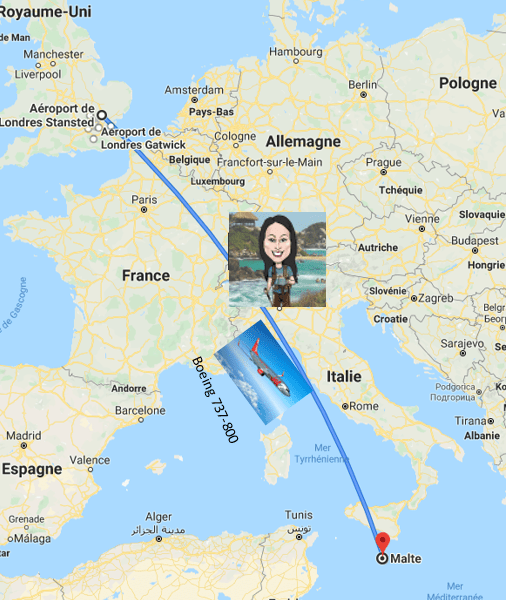
Contemplating the present, it’s awe-inspiring to consider that a journey spanning nearly 3000 km, from London to Malta, can be completed in just three hours. This made possible by the advent of the Jet era some 50 years ago, is now accessible with a mere £70 round-trip airline ticket (equivalent to 300,000 Colombian Pesos). The sheer accessibility and speed of travel, a stark departure from the expectations of half a century ago, continue to captivate me as if it were my first flight. I cherish every opportunity to take to the skies, never taking the marvel of flight for granted. Each time I find myself airborne, my gaze is fixed upon the window, allowing me to witness the cotton-white bluish sky: for me an ethereal canvas where countless dreams unfold. Today, I am compelled to share my thoughts on aviation, exploring a few of its pivotal milestones. Join me as I explore more into the fascinating world of flight in the following paragraphs.
In 2019, we commemorate significant milestones in aviation history, celebrating the centenary of the world’s two oldest commercial airlines, KLM and Avianca. Additionally, this year marks the 75th anniversary of the renowned Chicago Convention, a treaty that established the standards and procedures for the peaceful global navigation of the skies. This century has witnessed remarkable achievements for the aviation industry, shaping the course of air travel and navigation on a global scale
Air travel can occasionally become a source of controversy, navigating through various locations and complex global regulations, often entangled with political agendas. As travelers, we may at times overlook the arduous journey that aviation has undertaken and the extensive regulations that have shaped the landscape of open commercial aviation today. Recognising the intricate web of rules and developments, I have taken the time to pen down this article, to raise awareness about the intricate evolution of the aviation industry.
The Chicago Convention
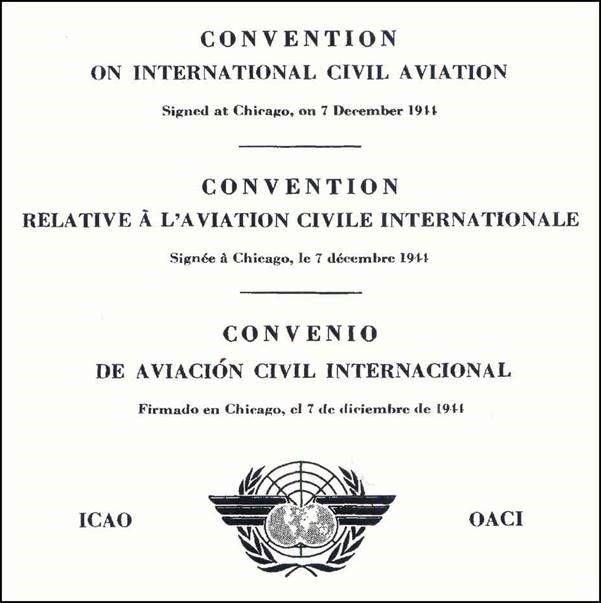

Let’s do a recap of the 1944 Chicago Convention, a pivotal moment that deserves our appreciation for the opportunities it has bestowed upon humanity through commercial aviation. In 1944, leaders from 52 nations gathered to forge an agreement centred on the harmonious sharing of the vast expanse of the blue sky enveloping our planet, a realm that, despite its fairy-tale allure, is bound by practical limits.
This historic meeting, convened in Chicago, was spurred by the aftermath of the Second World War, aiming to avert potential disputes among nations regarding air traffic navigation. The United States, being strategically positioned post-war, took the initiative in hosting the convention. The war had bequeathed numerous technological advancements to aviation, integral for strategic wartime tactics. However, post-war, nations faced the imperative of transitioning to a different scenario and devising a method for the commercial management of aviation. There was a need to update the rules governing international airspace navigation and safety legislation, which had remained unchanged since the last agreement in 1919, forged in Paris during aviation’s nascent stages.
This historical context underscores the significance of the Chicago Convention, as it not only mitigated potential conflicts but also laid the groundwork for the systematic and safe global regulation of aviation. Reflecting on this pivotal event reminds us to be grateful for the strides made in commercial aviation and the meticulous efforts invested to ensure the seamless, secure navigation of our skies.
Indeed, the post-war era was a time of uncertainty and anxiety, especially for countries grappling with vulnerability or partial occupation. Despite these challenges, the imperative to find solutions and develop commercial aviation prevailed, leading to the convening of the summit. On December 7, 1944, during this turbulent period, an agreement was successfully reached and signed by representatives from 52 countries. Two years later, in the face of continued global recovery and rebuilding, the agreement was ratified. Simultaneously, the International Civil Aviation Organization (ICAO) was established to serve as the governing body responsible for monitoring and ensuring policy compliance.
Fast forward 75 years, and the Chicago Convention stands as a testament to international cooperation and progress. Currently, it unites 193 countries, encompassing all members of the United Nations. One of the convention’s cornerstone principles is the acknowledgement of absolute sovereignty for each country over the airspace above its territory. Moreover, a crucial commitment emphasised in the convention is the unequivocal prohibition of hostile attacks on any commercial aircraft, an affirmation that, while seemingly obvious, was explicitly articulated to ensure universal understanding and compliance.
The enduring relevance of these principles highlights the enduring impact of the Chicago Convention on global aviation governance.
The Five Freedoms of the Air
Indeed, a pivotal outcome of the Chicago Convention was the conceptualisation of the “Five Freedoms of the Air,” a cornerstone in the evolution of commercial aviation. These freedoms established essential parameters governing the transport of passengers and cargo, delineating the relationship between airlines, their nationality, and the extent of their route networks. The significance of these freedoms lies in their standardisation of commercial aviation practices between countries. Here are a few examples to illustrate these fundamental principles:
First Freedom of the Air
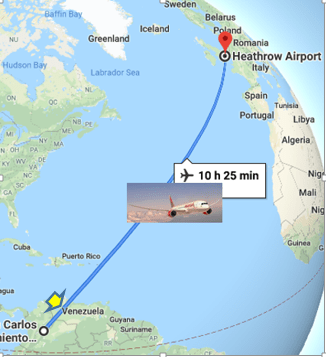
Often referred to as the “Transit Right,” is indeed fundamental to the very essence of modern air travel. It provides an airline from one country (let’s say “A”) the privilege to navigate through the airspace of another country (“B”) without the necessity of landing. As you rightly point out, this freedom may seem so inherent in our air travel experiences that we might not consciously acknowledge the governing principles behind it. Consider your journey from the UK to Malta, where your flight traverses the skies over France and Italy. This seemingly routine and straightforward path is made possible by the First Freedom of the Air. Without this foundational right, the logistics of international air travel would be drastically different, and the seamless connections we take for granted today would be unattainable. It’s fascinating to think about how these principles, conceived during the Chicago Convention, have become integral to the daily operations of airlines and the convenience of passengers worldwide. The Transitory Right ensures the interconnectedness of global air routes, enabling efficient and direct travel between distant destinations.
e.g. Avianca, being a Colombian airline, exercises its First Freedom right when flying from Bogota to London. During the segment over Venezuela (Country B), Avianca has the freedom to navigate through the airspace of Venezuela without the requirement of landing. This right enables airlines to create more direct and efficient routes, as in the case of your non-stop journey from Bogota to London, enhancing the overall effectiveness and convenience of international air travel.
Second Freedom of the Air
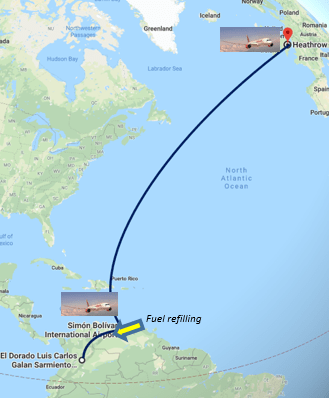
Often termed as the “Transit Right” or “Technical Stop Right,” accurately. This freedom grants an airline from one country (let’s say “A”) the authority to operate air services over the territory of another country (“B”) with the provision to land, but solely for technical or non-commercial reasons. These reasons could include refuelling, maintenance, or addressing emergencies. Importantly, during this stop, there is no embarking or disembarking of passengers, mail, or cargo. In the earlier days of aviation, when aircraft had limited range and efficiency, the need for refuelling stops was more prevalent. However, as technological advances have allowed for the development of long-range aircraft, the necessity for frequent technical stops has diminished. Modern ultra-long-haul flights can now cover substantial distances without the need for intermediate landings. Nonetheless, the Second Freedom remains a valuable right in situations where operational or logistical considerations may require a brief stop for technical reasons. While not as commonplace as in the past, this freedom continues to play a role in ensuring the flexibility and adaptability of international air travel operations.
e.g Avianca, the Colombian airline, exercises the Second Freedom of the Air when flying from Bogota to London. During the journey, Avianca’s flight path takes it through the airspace of Venezuela. Here, Avianca may make a technical stop in Caracas, Venezuela, for reasons such as fuel refilling or handling emergencies. Importantly, during this stop, there is no embarkation or disembarkation of passengers, mail, or cargo; it is solely for technical purposes. This example demonstrates how the Second Freedom allows airlines to optimise their routes, addressing operational needs without conducting full-scale commercial activities during these technical stops. While advancements in aircraft technology have reduced the frequency of such stops, the flexibility provided by the Second Freedom remains crucial in certain operational scenarios.
Third Freedom of the Air
Also known as the “For Traffic Right,” grants an airline from one country (let’s say “A”) the permission to operate air services to another country’s territory (“B”) with the right to disembark passengers, mail, and cargo. However, this disembarkation is permissible only if the passengers, mail, and cargo were originally taken on board in the airline’s home country (“A”).
Avianca, a Colombian airline, flies from its home country, route Bogota with its destination London, in the United Kingdom. On this journey Avianca is ending its journey in London and passengers, mail and cargo are disembarked. So the third freedom is granted here.
Fourth Freedom of the Air
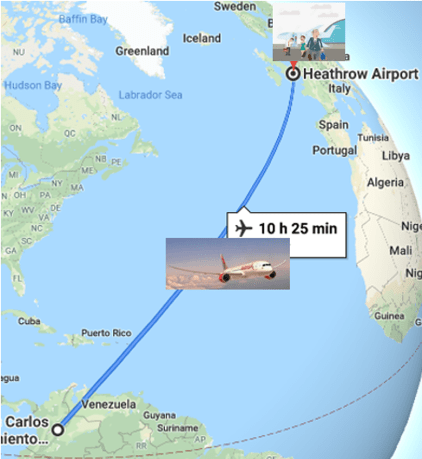
Also known as the “For Traffic Right,” is essentially the opposite of the Third Freedom. It grants an airline from one country (let’s say “A”) the right to operate air services from another country’s territory (“B”) with permission to embark passengers, mail, and cargo. However, this embarkation is permissible only when the destination is the airline’s home country territory (“A”).
Avianca, a Colombian airline, routes London (UK) to Bogota (Colombia). Avianca is granted here four freedoms since it can take/embark passengers, mails and cargo from a foreign country (UK), Country “B” with destination its own country Colombia “Country A”.

Fofth Freedom of the Air
Often referred to as the “For Traffic Rights” or “Freedom of Sequential Transport.” This freedom is indeed crucial for establishing financially viable air networks. It grants an airline from one country (let’s say “A”) the right to embark passengers, mail, and cargo in a foreign country (“B”) and transport them to third countries (“C”), all while the original journey originates in the airline’s home country (“A”).
e.g Qatar flight from Doha, Qatar, acting as country “A” to Sao Paulo, Brazil, country “B” and onward flight to Buenos Aires, Argentina Country C: Here the display of the whole flight:
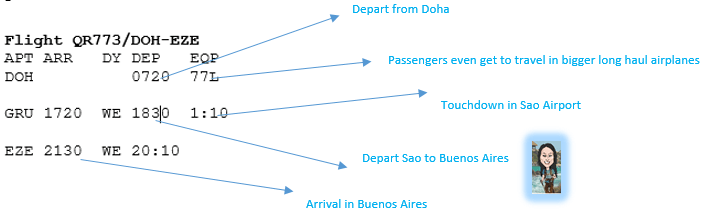
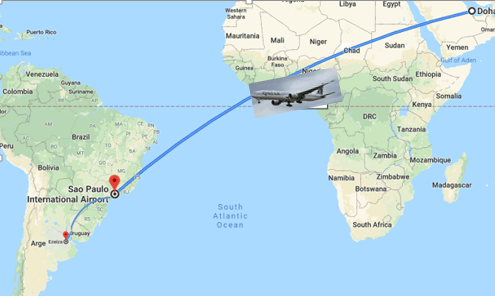
For the above example, the air tickets for this Qatar Airways flight are available for sale for any of these three sectors (Doha to Sao Paulo, Sao Paulo to Buenos Aires, or the entire Doha to Buenos Aires journey). This demonstrates how the Fifth Freedom allows Qatar Airways to offer commercial services between Sao Paulo and Buenos Aires, even though Qatar Airways is not based in Brazil or Argentina. It’s a key strategy for airlines to enhance their route networks and commercial viability.
This particular freedom alone has caused a lot of controversy, it sparks the argument of imbalanced competitive advantage. For instance, main US airlines protested against the dominant Middle East ones for years claiming an illegal economic advantage. But why? Well, this example can help to explain it: 1) Dubai (Emirates Hub Airport) to New York Newark, this flight has a stop in Athens, Greece on the way, operated by Emirates (one of my favourite airlines by far!) and Emirates has fifth freedom rights on both. As you can imagine US airlines were furious and alleged that Emirates had the “unfair” opportunity to profit and drain traffic on this European route, which can be a good long-haul route with potential for both leisure and business travellers. The dispute is now over thanks to a US-EUA Agreement signed last year, but I wanted to highlight this debate with a real example.
The complexities of international aviation agreements highlight the delicate balance required to foster healthy competition and cooperation within the global airline industry.
In addition to the original Five Freedoms established by the Chicago Convention, several variations and extensions have emerged over the years. These are often referred to as “beyond the fifth freedoms” or “new freedoms.”
Conclusion and thanks for reading !!!
To conclude, the Chicago Convention and the freedoms of the air, are the foundation for diplomatic air global navigation. They are the instruments of international law to establish air routes. Air freedoms act as regulators of free airflow and transit through the invisible borders of the sky. What is important to remember here, is that next time you are flying you appreciate how much international synergy goes into making worldwide travel function viable and functioning well.
“Aviation is proof that given the will, we can achieve the impossible.”
Love
❤️
from
Jenny

 Jenny Sky Is The Limit
Leave a comment