Here the itinerary for day two 🙂


1. Day Two Itinerary: An Early Attempt at Sunrise at Angkor Wat
My day began with an ambitious plan: to witness the sunrise at the awe-inspiring Angkor Wat. Armed with enthusiasm, I rose at 4 am and made my way to the temple, eager to capture the breathtaking moment. However, luck wasn’t on my side that morning, the sky was shrouded in thick clouds, and the sun refused to make its grand appearance. Despite missing the iconic sunrise, the misty blue skies created a different kind of beauty, making for a mesmerising scene that I couldn’t help but appreciate. Every cloud has its silver lining, and in this case, it was the serenity and unique charm of a cloudy morning at Angkor Wat. No complaints here, just a different, equally enchanting perspective.


2- Pre Rup
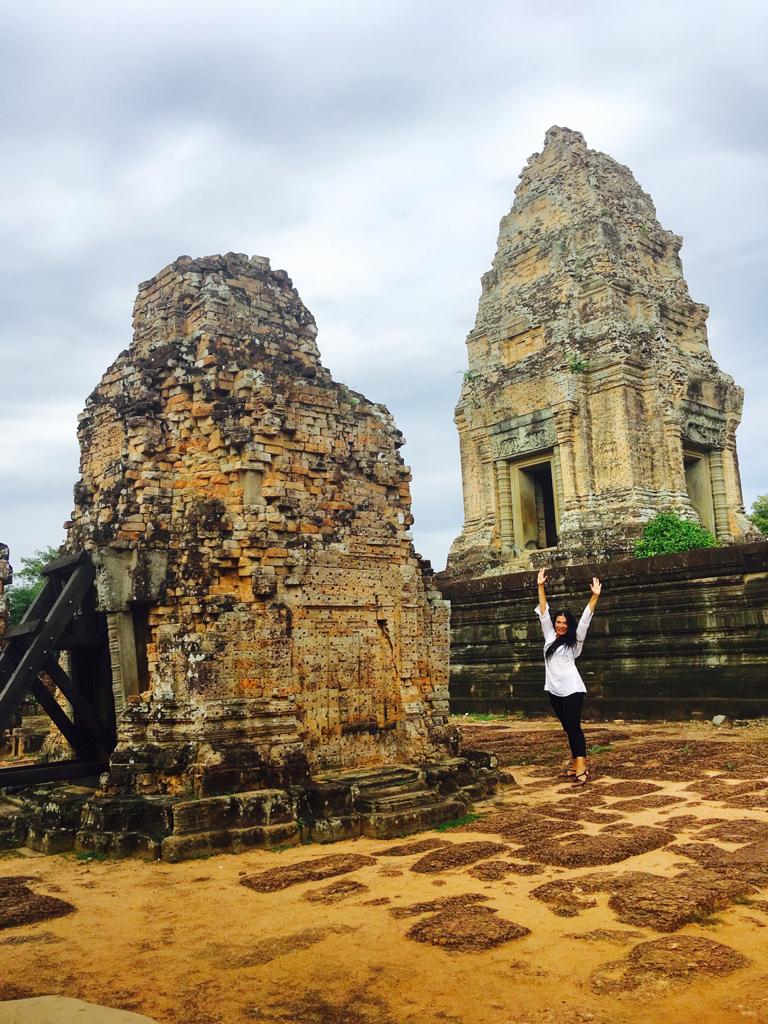
Our day led us to the enchanting Pre Rup temple, strategically nestled in a foothill. This architectural marvel boasts a remarkable 3-pyramid layout, ascending to a height of 12 meters, mirroring the sacred Mount Meru. Commissioned by the visionary King Rajendravarman II in 961, this temple stands as a dedicated sanctuary to Shiva. Situated a mere 6 kilometres east of Angkor Thom, Pre Rup naturally became our next destination. The temple, once obscured by nature’s reclaiming grasp, underwent a captivating revival in the 1930s, thanks to the efforts of the French explorer George Trouvé. His dedication unearthed Pre Rup from its overgrown obscurity, allowing us to witness its ancient grandeur restored to the light of day.


The Majestic Symbolism of Pre-Rup Temple: Embracing Mount Meru’s Presence Crafted from enormous bricks, the Pre-Rup Temple stands as a symbolic representation of the five peaks of Mount Meru, a sacred mountain steeped in Hindu mythology. Its grand proportions, towering height, and warm-toned facade make it an ideal vantage point to marvel at the natural beauty of the surrounding countryside. As I explored this architectural marvel, the temple’s size and significance unfolded, inviting us to appreciate both its physical magnificence and the spiritual connections it embodies.
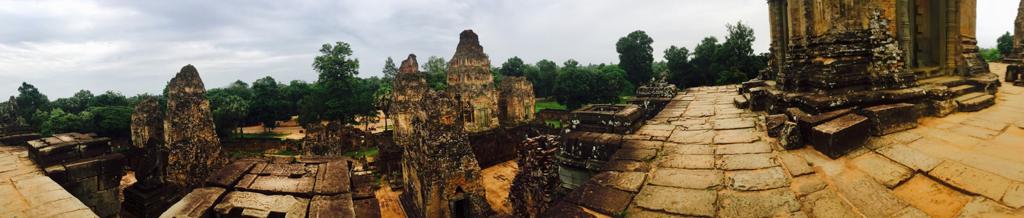
During my visit, the early hours of the day bestowed upon me the gift of solitude at Pre Rup Temple. As the sole wanderer at that moment, I seized the opportunity for some solo photos, capturing the essence of the temple undisturbed. The tranquil surroundings allowed me to immerse myself in contemplation, savouring the unique atmosphere before embarking on the journey to our next destination. This serene interlude, free from the hustle and bustle, added an extra layer of intimacy to my encounter with the ancient marvel of Pre Rup.
3- The Enchanting East Mebon Temple:
A Former Island Sanctuary Transported back in time, I stood amidst the lush surroundings of East Mebon Temple, once an island accessible only by boat. It’s fascinating to contemplate the serene scene today, with towering trees, palms, and nature in abundance. It’s almost challenging to envision this temple amidst the vastness of a colossal reservoir. My exploration led me to discover that the temple’s island status was no natural occurrence; rather, it was meticulously crafted through a network of embankments, harnessing over 8 million cubic meters of water. This ingenious construction not only formed an island sanctuary but also played a pivotal role in redirecting and connecting water flows around the Angkor region. Standing here, surrounded by the remnants of this historic feat, I marvelled at the symbiosis between architectural ingenuity and the forces of nature.


Guardians and Artistry at East Mebon Temple: My keen exploration of East Mebon Temple revealed the presence of stone lions standing proudly, assuming their roles as guardians along the temple’s borders. Their majestic stance added an aura of protection to the sacred platforms. My attention was drawn to the exquisite artistry showcased in the form of beautifully engraved elephants positioned in the four corners of the temple. These intricate details not only served as decorative elements but also showcased the remarkable artistic prowess of the creators, leaving an indelible impression on the temple’s ambiance.


Despite the passage of time, East Mebon Temple remains a sacred space, where believers gather to offer prayers to the Hindu god Indra. This ritual, conducted after the dry monsoon season in April and May, is an earnest plea for rain. As I explored the temple, the living legacy of devotion became evident through the presence of offerings – candles and incense thoughtfully placed around the site. Witnessing these symbolic acts of faith served as a poignant reminder that East Mebon is not merely an ancient relic but a living sanctuary, cherished and revered by those who seek spiritual connection.


4- Ta Som: A Tranquil Encounter with a 12th-Century Gem by King Jayavarman VII
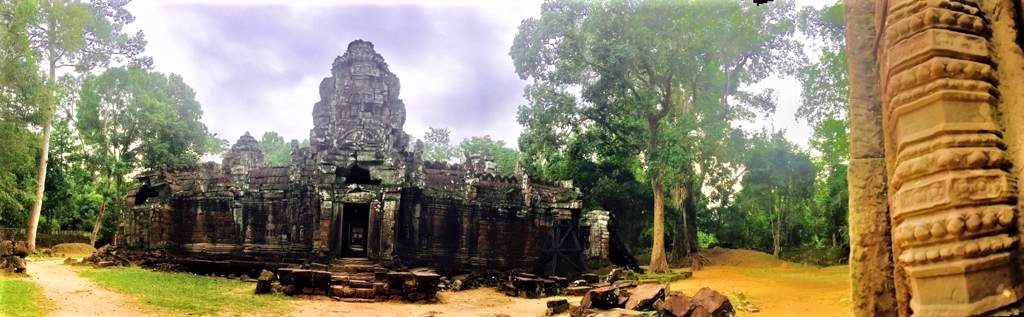
In the hushed embrace of the late 12th century, King Jayavarman VII bestowed upon us the serene marvel of Ta Prohm Kel. Tucked away in tranquillity, this relatively quiet site unfolded its history-laden tale as we made our way to Preah Khan. The architectural elegance is unveiled through its three enclosures, marked by majestic gateways, or “gopuras,” leading us gracefully to a central sanctuary. As we passed through this temporal portal, the whispers of a bygone era resonated, revealing the subtle magnificence and cultural significance meticulously etched into the stones.
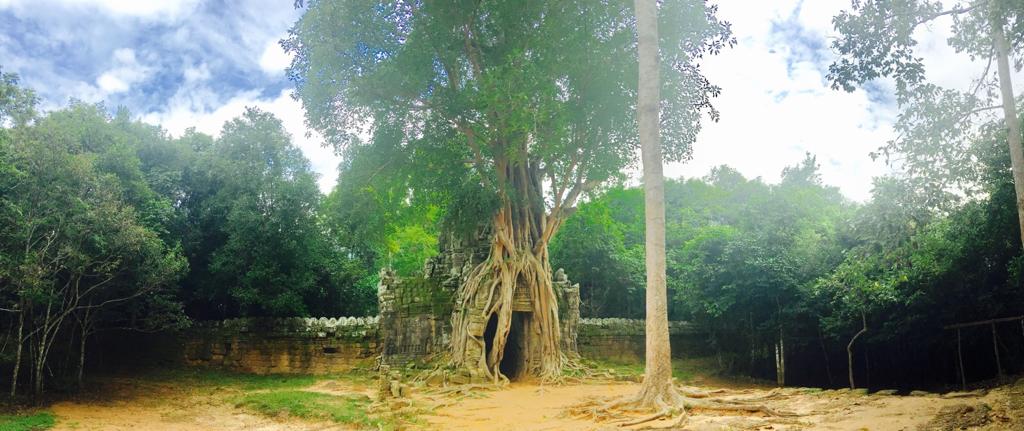
A visit to this temple unveils a peculiar spectacle, a strangler fig, entwined with one of the ancient gopuras, creating a surreal and captivating scene. Here, nature asserts its dominance, reclaiming space from history. It’s a testament to the enduring dance between the man-made and the organic, where the relentless force of time becomes palpable. As we stand witness to this bizarre yet enchanting view, the convergence of past and present reveals itself, casting a spell that transcends the boundaries of mere observation.


5- Neak Pean: A Harmonious Blend of Nature and Artistry
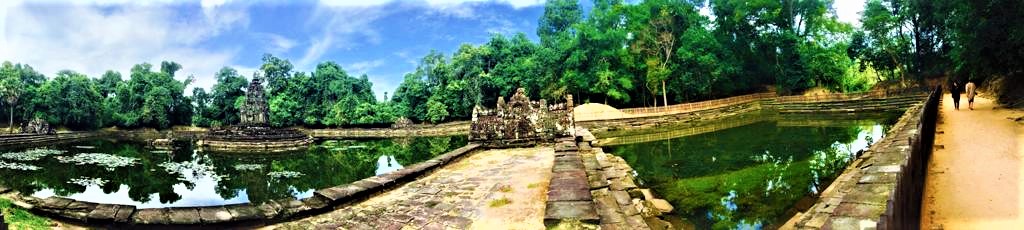
Nestled in the embrace of time, a captivating testament to the synergy of nature and human ingenuity awaits: the expansive Neak Pean. This large square lake, accompanied by four smaller ponds, stands as a testament to the creative vision of King Jayavarman VII, who sculpted this masterpiece in the latter half of the 12th century, dedicating it to Buddhism. More than a mere architectural marvel, Neak Pean holds spiritual significance, believed to be sacred to Buddha as he attained Nirvana. As you traverse this tranquil oasis, the seamless union of natural beauty and man-made craftsmanship becomes apparent, creating an atmosphere that whispers tales of devotion and reverence across the centuries.

At the heart of Neak Pean lies a central pond, meticulously crafted to mirror the mythical Lake Anavatapta nestled in the Himalayas. This deliberate imitation symbolises the origin of four great rivers that span the Earth. Gargoyles, intricately moulded and aligned with the cardinal points, stand as guardians of this sacred representation. In India, Lake Anavatapta has long been revered for its perceived healing powers, a belief mirrored in the spiritual resonance of Neak Pean. As you explore this intricate tapestry of symbolism, the convergence of myth and reality unfolds, revealing a sanctuary where the earthly and the divine seamlessly intertwine.
6- Preah Khan: A Day’s Culmination: An Enchanting Finale
As the day drew to a close, I embarked on my final exploration: one that left an indelible impression on my senses. This particular site, among the most striking and awe-inspiring, unfolded before my eyes, concluding our journey with a breathtaking spectacle.

This temple was built following the defining battle with the Buddhist King of the Chams. This king belonged to a kingdom in what is now Vietnam, in the year 1191.
The victory secured Jayavarman VIII his position in the most significant period of Khmer prosperity. Its name translates to “the Sacred Sword”.


The structure was initially built up with wooden houses and huts, long gone, where ordinary people lived. The inner sanctuaries seem to look overcrowded among the several temple buildings, including a well-preserved Hall of Dancers.


This temple truly impressed me, and all its aesthetics are unique; for moments, it feels that the overgrowing vegetation and giant trees keep swallowing the ruins!.


Thank you very much for reading my blog, and don’t be shy to leave a comment.
“Angkor Wat is of such extraordinary construction that it is not possible to describe it with a pen, particularly since it is like no other building in the world. It has towers and decoration and all the refinements which the human genius can conceive of.” – António da Madalena, 1586
Love
🙏
from
Jenny
 Jenny Sky Is The Limit
Leave a comment