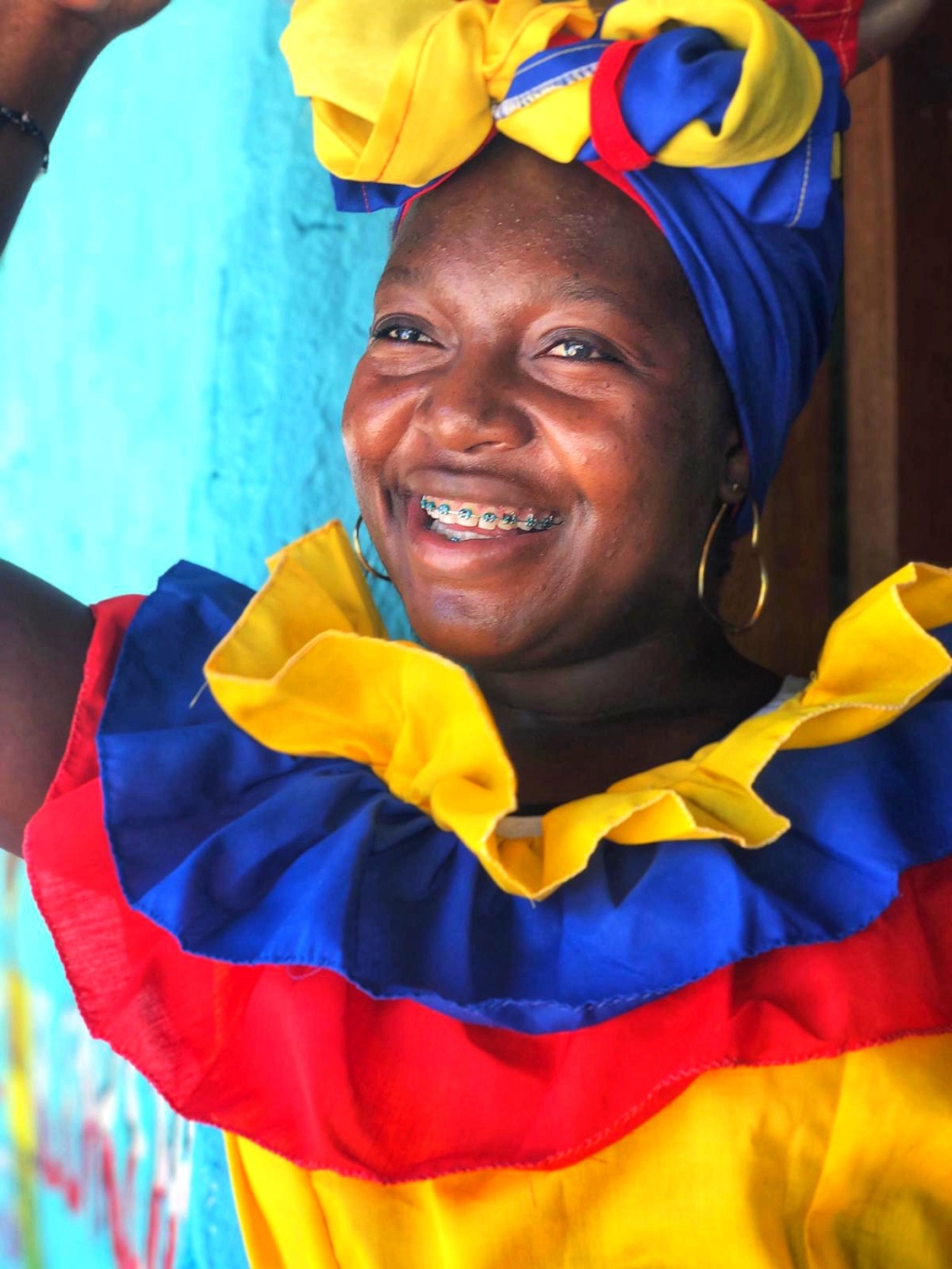
Amid our wildly accelerated world, where energy courses through vibrating waves, magic unfolds around the fifth element: music. It stands as an indisputable witness to the evolution of cultures through the centuries. Allow me to share my story.
A little over a year ago, courtesy of the astute Instagram algorithms that seemingly know me better than I do, I stumbled upon an ad beckoning me towards an enticing musical experience rooted in the vibrant sounds of my homeland, Colombia. The ad unquestionably called my name, prompting an immediate connection with its charismatic advertiser. Our interaction unfolded through the excited typewriting haste of Instagram messages; Gregorio Uribe, an extraordinary artist whom I had the pleasure of meeting through this experience. From that moment, I embarked on a new adventure in my imagination, immersed in the harmonies of music and the vivid landscapes of Colombia. Without much further thought, I booked it then and there

Sounds of Colombia
This experience encapsulated the essence of musical tourism, inviting me on an extraordinary journey deep into the African heart of my homeland. Despite having explored Colombia on numerous occasions, this particular experience, enriched by the vibrant beats of traditional music, proved to be truly unparalleled, an exploration ‘off the beaten track.’ It served as a poignant reunion with my roots, guiding me through uncharted territories seldom trodden even by many Colombians.
A shining jewel within this expedition is the Montes de María, a region easily accessible from Cartagena today, but once the backdrop of arduous journeys to freedom for those enslaved during colonial times. Through the skillful orchestration of “Sounds of Colombia”, these lands spoke to me in a rhythmic language, weaving tales of heroism during the lively evenings of this venture
This journey opened my mind and heart in a spirited way, connecting me with cultural educators and musicians right within their community, inside their own homes. With friendly smiles and exceptional talent, they warmly transmitted their love and pride for their roots to us visitors. There is nothing more authentic than such genuine encounters
While traversing the roads of Colombia, each passing minute gifted me with enchanting views of the Magdalena River and unique landscapes that, with every kilometre, unfolded something beautiful to cherish. Guided by a music specialist and accompanied by extraordinary fellow travellers, the universe, once again, showed its kindness to me. I am grateful for connecting with all these delightful people with whom I shared these pleasurable moments of life, music and travel. Colombia is undeniably a country of a thousand rhythms, smiles, cultures, and meaningful encounters.
CARTAGENA – CUMBIA SABANERA GLORIOUS SUNSET
I embarked on this journey amidst the embrace of the warm and welcoming climate of the Colombian Caribbean. I landed in Cartagena after a journey that took me from London, with layovers in Paris and Bogotá, aboard one of those mechanical birds I so thoroughly enjoy riding; The Sky is The Limit.
Overflowing with excitement and a deep thirst for knowledge about the fifth element, I found the time to celebrate my friend Karenina’s birthday. We wandered through the bustling streets of the walled city, immersing ourselves in the rhythm of lively salsa at a local venue. All of this unfolded the night before I met my fellow travellers, whom I had the pleasure of encountering the next morning. Most hailed from North America, embarking on a quest for the allure of the region or to trace their Momposinian roots. Our exploration commenced there, marking the beginning of our shared journey.
We commenced our adventure with a delightful stroll around Joe Arroyo Square, where a statue serves as a poignant reminder of the immense legacy left by the great man himself: Joe Arroyo. Through his music, he elevated the Afro-Colombian culture to global recognition. I have found immense joy in his songs and undoubtedly will continue dancing to their beats for years to come.

At this stage, we also experienced our first encounter with the invigorating shot of ñeke, swiftly becoming everyone’s favoured drink! Ñeke, an artisanal beverage crafted from sugarcane juice, undergoes a seven-day fermentation process, resulting in a distinct distillate: the local rum! I can personally vouch for its remarkable anti-hangover qualities, adding an extra layer of allure to our journey.
The welcoming evening unfolded with a selection of local cocktails, set against the backdrop of the most spectacular views from the rooftop terrace overlooking the Pegasus dock and the clock tower. Here, we were introduced to the captivating music of maestro Carmelo Torres Mendoza and his Cumbia Sabanera. Maestro Carmelo graciously shared anecdotes from his remarkable 50-year journey in music. In his youth, he worked in tobacco fields, nurturing the dream of one day owning an accordion. I could not help but visualise those challenging days when a generation of musicians was born through camaraderie and joy! a true revolution of traditional sounds. Today, Maestro Carmelo stands as a revered specialist in the cumbia of the Montes de María.

Maestro Carmelo also shared with us that his mentor was Andrés Landeros, a well knows musician and composer who garnered acclaim at significant festivals throughout his lifetime. Described by his grandson as irreverent yet visionary, Landeros, in his attempt to mimic the songs of birds, left behind a precious cultural legacy not only for Maestro Carmelo but for the entire tapestry of Colombian music history.
We revealed in the enchanting melodies as the sun dipped below the horizon, casting a magical sunset atmosphere with unparalleled views of the city; a spectacle that seemed as if the sun itself, captivated by the rhythms of Maestro Carmelo’s accordion, decided to illuminate the sky in a stunning display just for us. In that moment, it felt as if I were inside ‘Jenny in Wonderland’ experiencing a one-of-a-kind atmosphere that words can hardly capture.


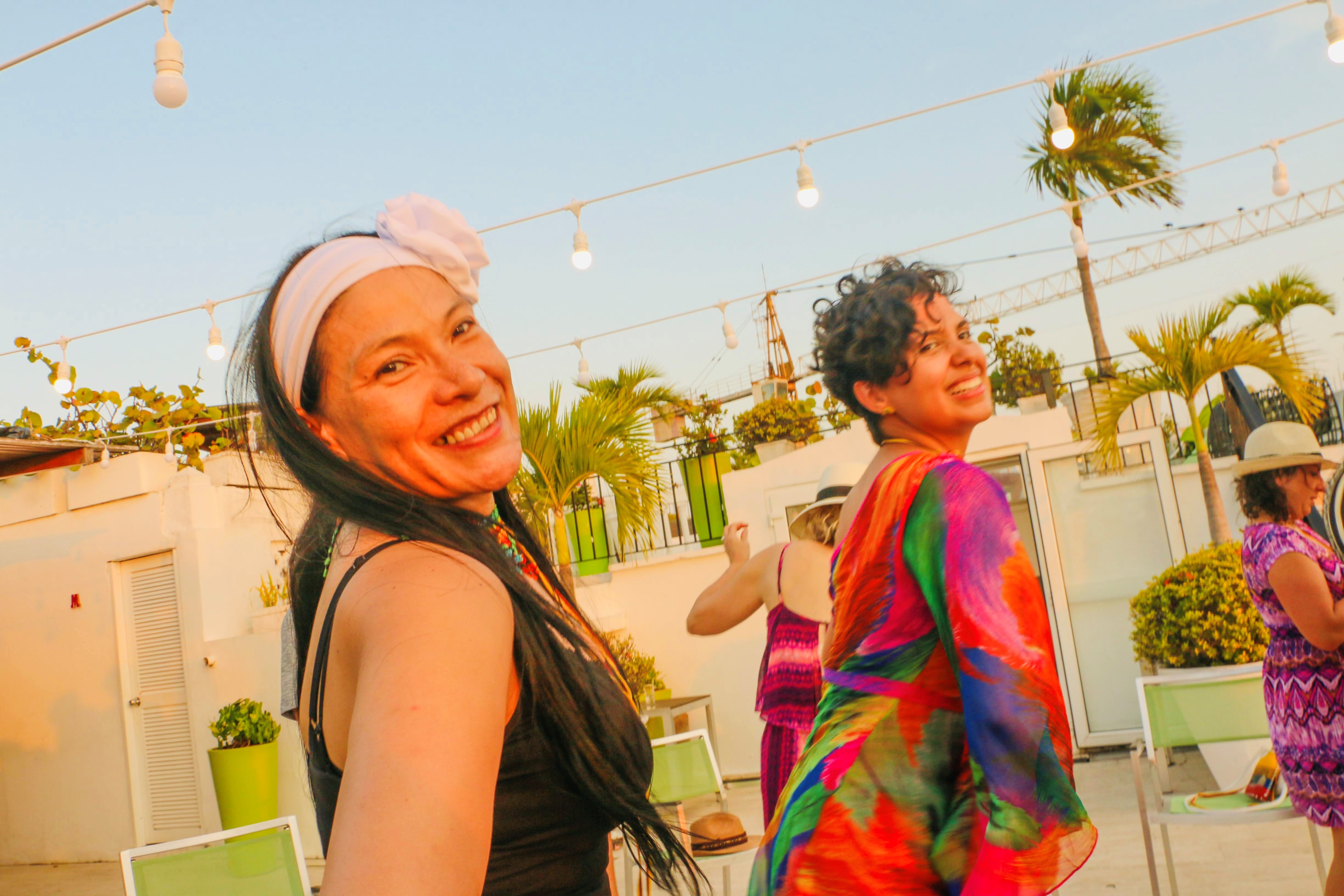
The delightful Doña Lili, a beautiful Momposina with an endless smile, graced us with her presence. Hailing from New York, she arrived with her two daughters, Alejandra and Cumbia. Doña Lili took charge, offering us lively cumbia dance lessons, infusing the evening with rhythm and joy.
SAN JUAN DE NEPOMUCENO – THE ENCHANTING SOUNDS OF FLUTES
The following morning, we arose bright and early, treating ourselves to a delightful local breakfast that served as both a culinary delight and the perfect fuel to kickstart our day’s activities.
We set our course towards the Montes de María, specifically heading to the town of San Juan de Nepomuceno, approximately 90 kilometres from Cartagena. The journey unfolded along the main Caribbean motorway, Troncal Del Caribe, offering glimpses of an arm of the mighty Magdalena River and a passage through the Canal del Dique. As we drove, the soulful tunes of Montes de María’s ‘La Cañaguatera,’ curated by Maestro Carmelo, serenaded us throughout this leg of our adventure.
Upon our arrival in San Juan de Nepomuceno, we were warmly welcomed by flute luthier Fredys Arrieta and his mother at their home. In the context of our journey, I will now refer to the flutes as ‘Gaitas,’ as it feels most fitting for the narrative.
After a brief respite, Fredys guided us on a short yet picturesque walk around the area, providing insights into the intricate process of crafting gaitas. The tour revealed an ecosystem teeming with corozo and cardón trees, the very materials sourced to create these enchanting musical instruments.
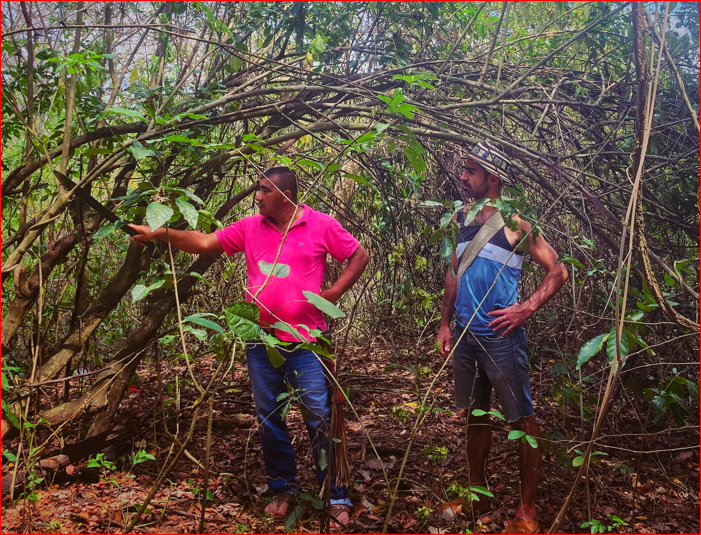
Gaitas, those magical instruments, weave splendid sounds inspired by the melodies of birds. As I pen these lines, I find myself transported once again to those enchanting notes, struggling to encapsulate their profound beauty in words. In a serendipitous twist, I crossed paths with the incredible English-Colombian artist, Titti Orinoko, whose essence inspired my next thoughts: “Those sounds connect us powerfully with the converging universe, filling the soul intensely through the simplicity of their echoes. In moments of synergy with the ancient cosmos, one strangely becomes a flute”
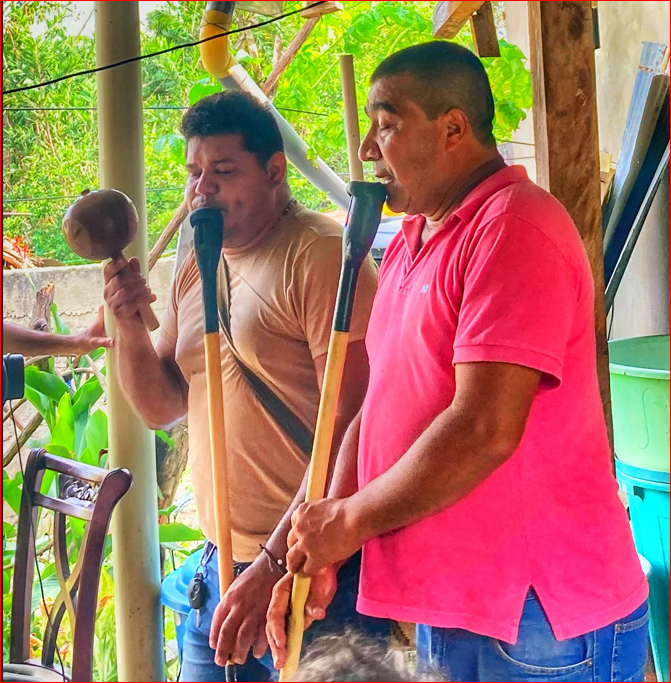
As Fredys eloquently asserts, Gaitas are 100% indigenous instruments, with their earliest usage documented among the Koguis and the Arhuacos of the Sierra Nevada de Santa Marta, a family of the Tayrona culture that fortunately withstood the Spanish invasion. Over time, these instruments engaged in a magical marriage of sounds, intertwining with the drums introduced by African communities.
Fredys generously imparted some of the essential steps in the Gaita production process. The tip of the Gaita is crafted with a mixture of beeswax and charcoal, the charcoal serving to deter bees from returning and protecting against rodent nibbling, imparting the mouthpiece its distinctive black hue. While traditional Gaita peaks were fashioned with duck feathers, contemporary ones often incorporate plastic material for increased durability and easier maintenance.
The body of the Gaita is meticulously carved from cactus wood, with variations depending on the region. After Fredys elucidated this intricate process, I seized the opportunity to acquire some maracas and Gaitas crafted by him, nurturing the hope of finding time in the future to master their melodic enchantment.
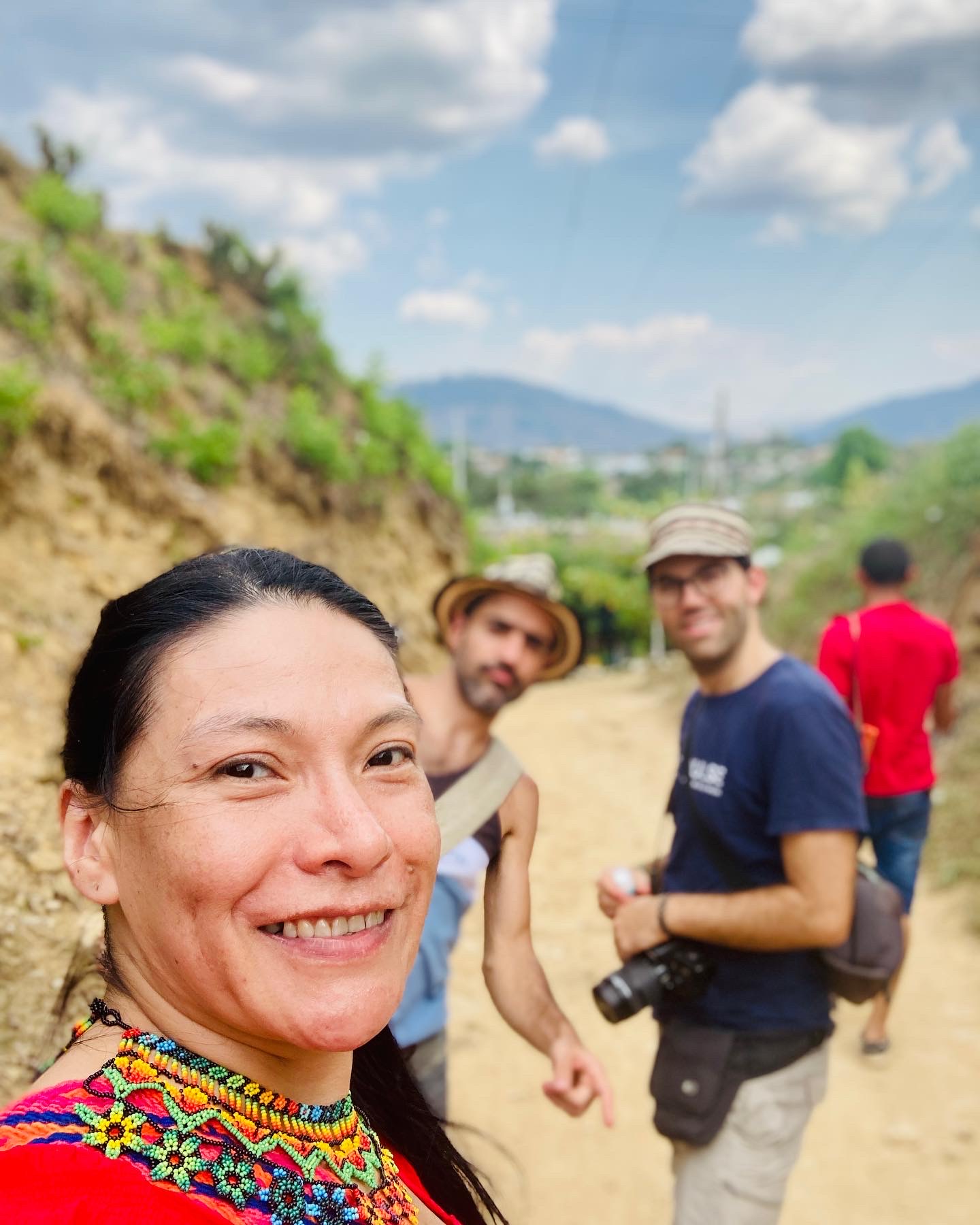
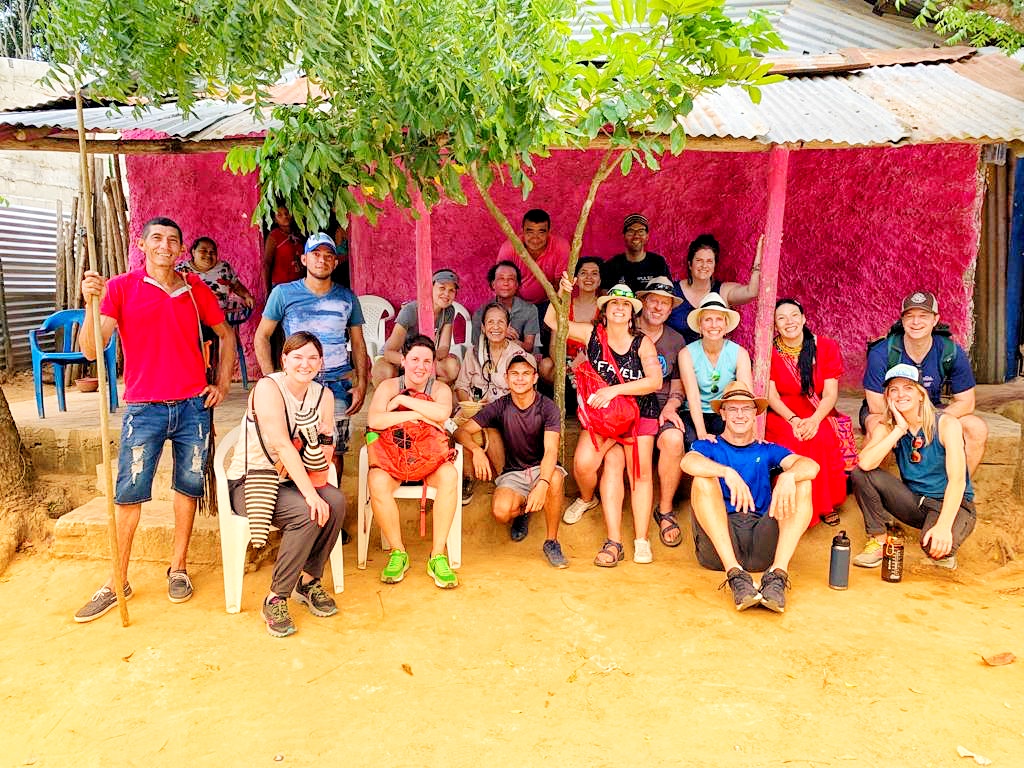
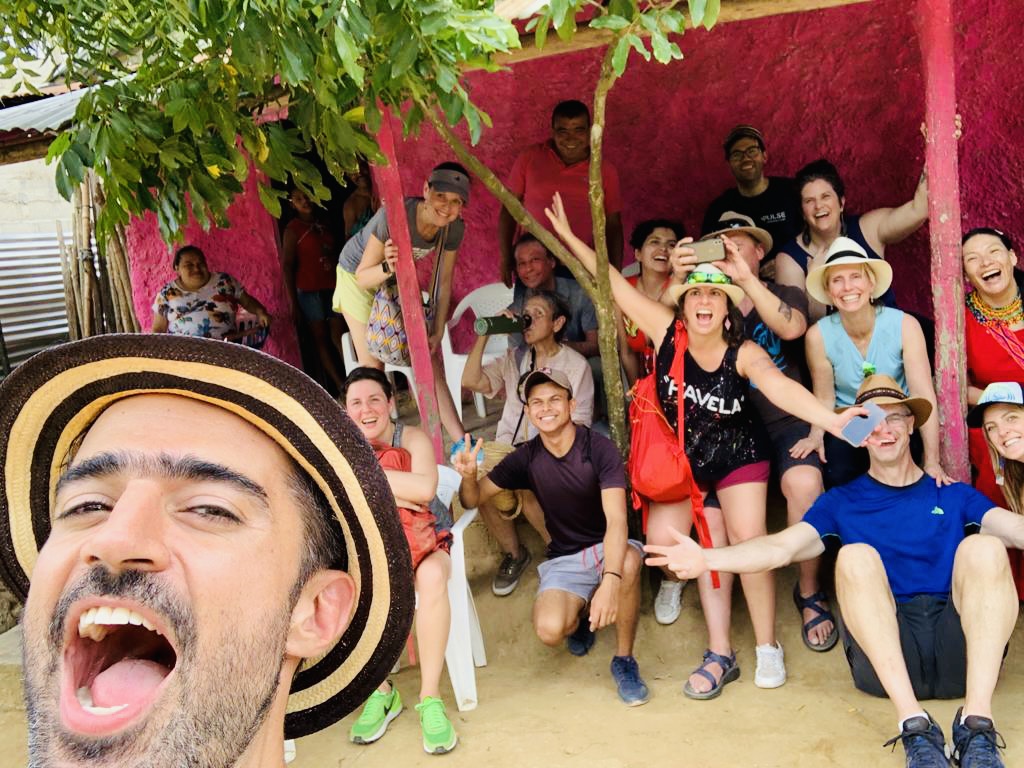
SAN JACINTO – GAITAS CIRCLE AND DRUMS
Later that night, we ventured to the town of San Jacinto, just 15 km south, where we were treated to the joyous spectacle of a “Rueda de Gaitas” Hosted by Dionisio and Orlando Yepes and their group ‘Gaitas y Tambores de San Jacinto” the evening was made even more delightful by the presence of the talented dancer Eduardo Carval, who graciously imparted a few dance steps. Eduardo, with pride in his voice, described his homeland as a place where magic permeates every street.
We discovered firsthand that the Rueda de Gaitas is a social and festive tradition inherited from the African Bantu culture, spreading during the colonial period, and evolving over the years into a celebration that transcends generations. Participants form a circle where Gaiteros and tamboleros (drummers) gather at the centre, creating rhythmic sounds that synchronize with the graceful movements of the dancers circulating around them

The Yepes brothers, natives of San Jacinto, immersed themselves in these traditions from a young age, guided by their uncles and fuelled by their determination to hone their listening skills through old recordings of maestros.
Today, they stand as masters in interpreting all the instruments employed in the Rueda de Gaita, including the male gaita, female gaita, caller drum (llamador), female drum (alegre), Tambora, and maracas. Here is the link to their latest release, “Canto a los Juglares” allowing you to experience the magic of their music. Press Here.
The following day, our journey continued, leading us into yet another enchanting town, one that holds a special place in my heart from a past visit and lingers in my cherished memories.”
SANTA CRUZ DE MOMPOX – SUNG DANCES BY DON ABUNDIO
We pressed on with a five-hour journey to the north, arriving at Santa Cruz de Mompox, a town steeped in an extraordinary cultural legacy. We enjoyed a delightful lunch in a charming setting, accompanied by the refreshing breeze from one of the arms of the Magdalena River.
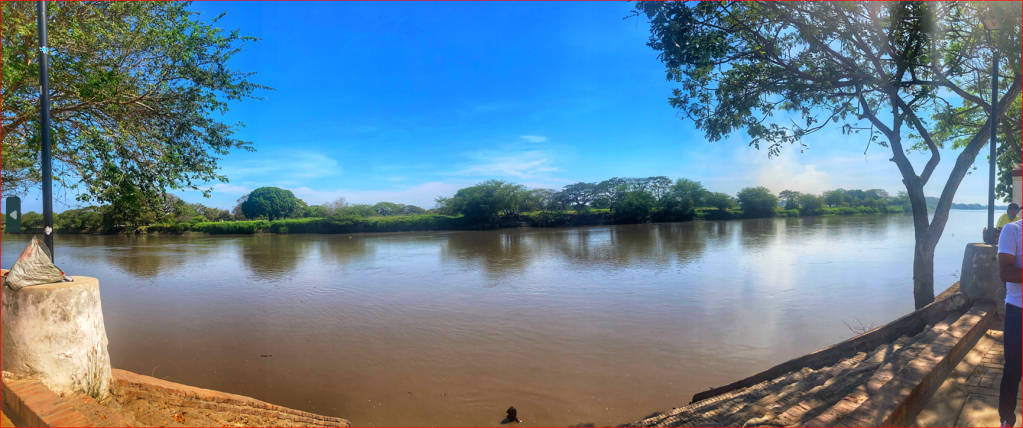
After our satisfying lunch, Paloma, Cumbia, Lili, Alejandra, and I indulged in a historical tour through the beautiful streets of Mompox. It was in these charming streets that I purchased my first filigree necklace a few years ago, an exquisite piece of handmade art crafted with delicate silver threads, proudly considered 100% momposino..
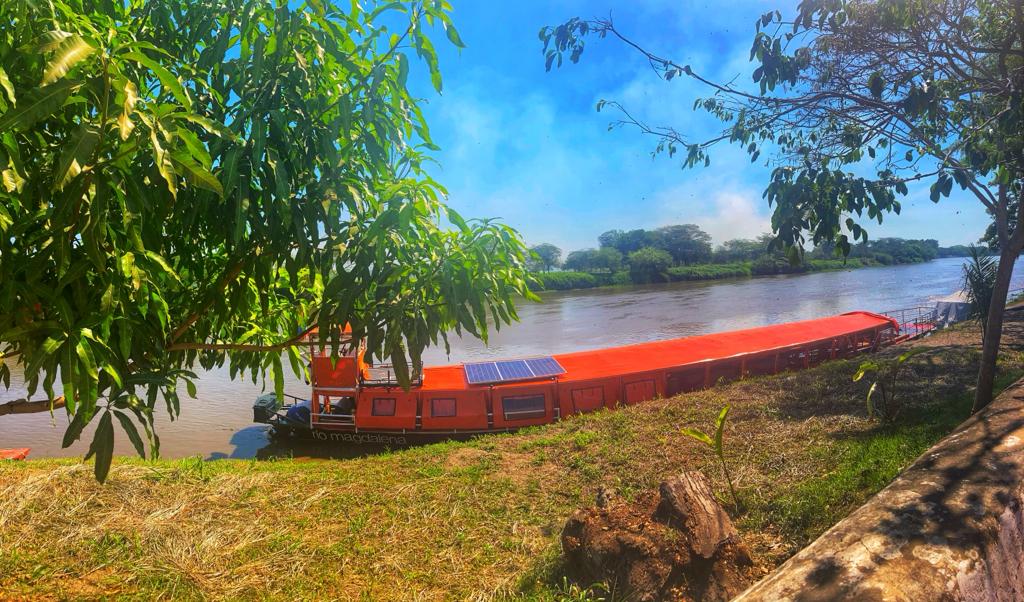

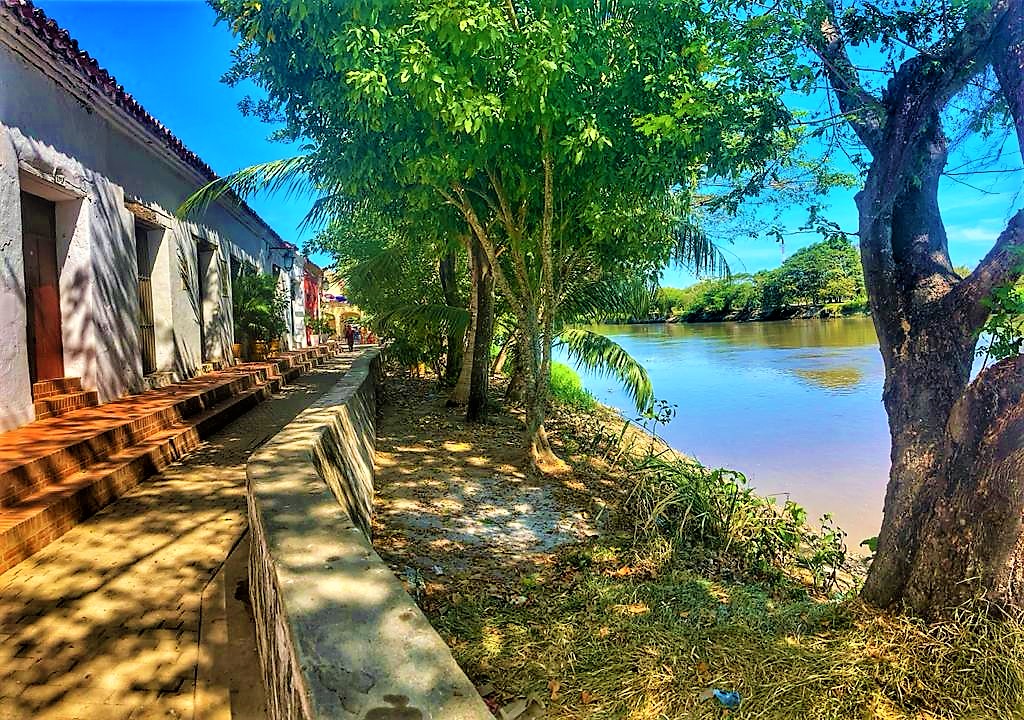
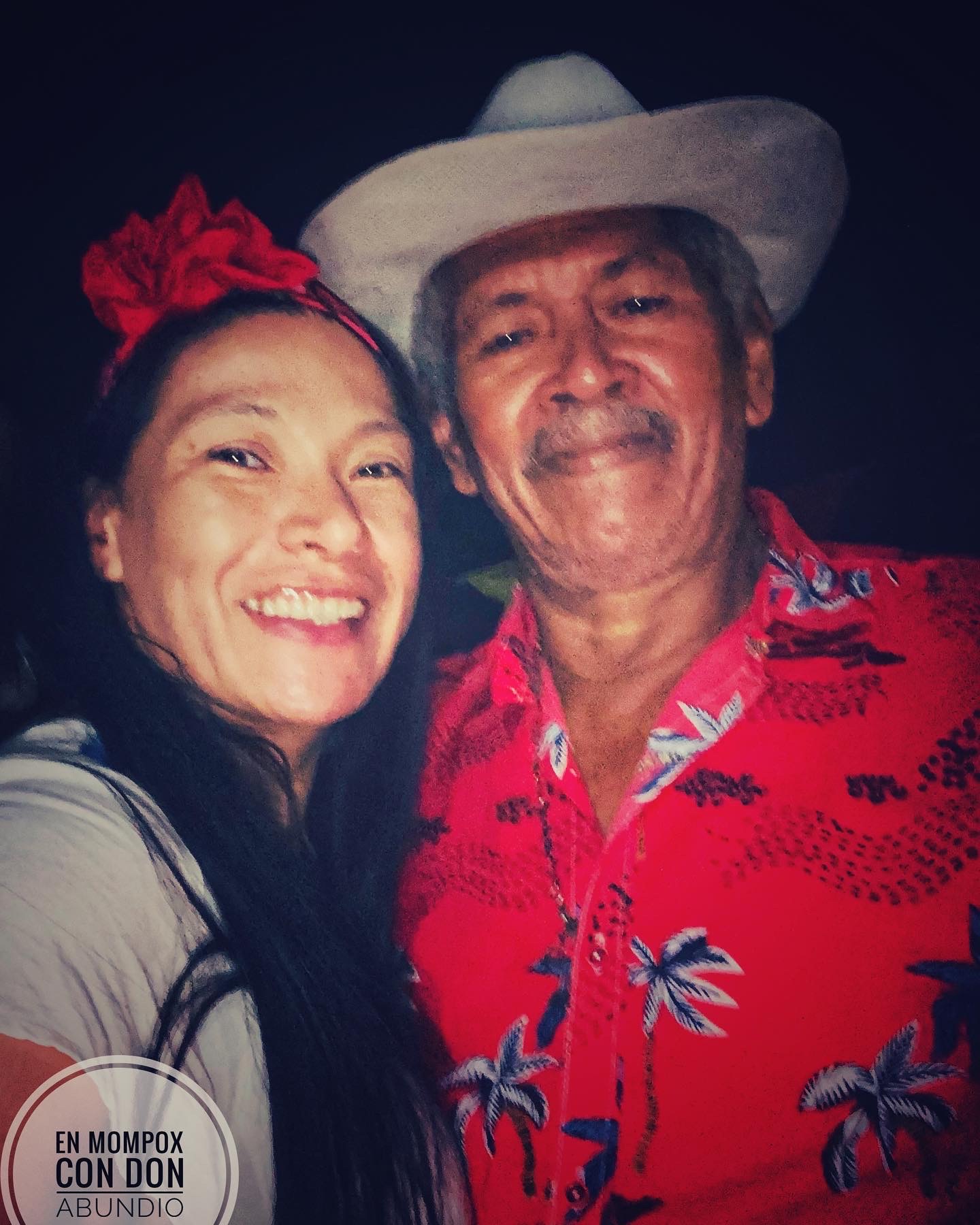
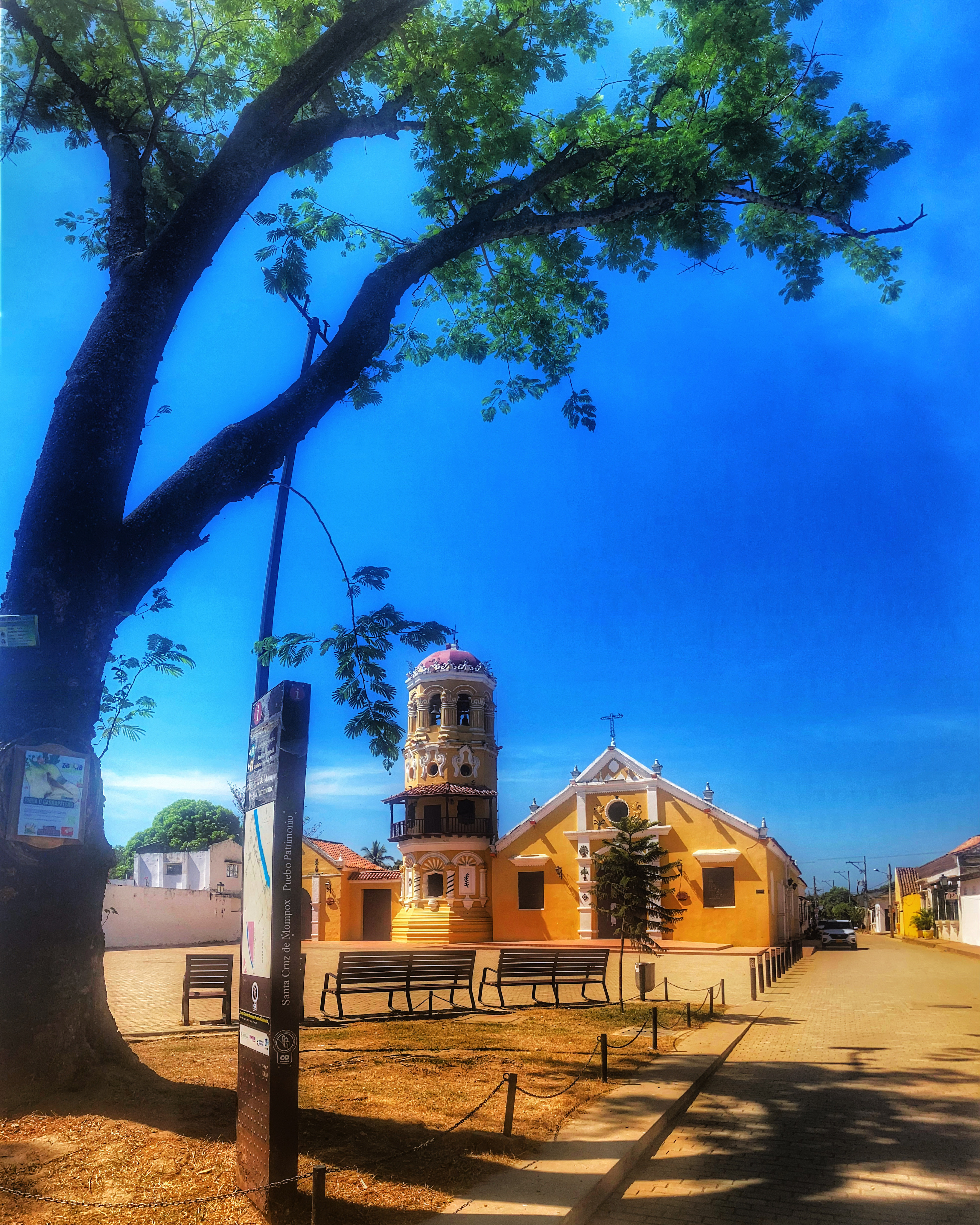
Later in the evening, our musical journey persisted with a captivating performance that truly captured my heart, an eclectic presentation of river-sung dances led by the esteemed Don Samuel Mármol, an artist and the cultural director of AsoAbundio in Mompox, affectionately known as Don Abundio.
With nearly 50 years dedicated to learning and teaching the local folklore to new generations, Don Abundio has cultivated an enriching cultural space, a gathering point that seamlessly unites the young and old in an authentic community blend, preserving the rich tapestry of music and dance.”
In the words of Don Abundio, music is what unites people, and it is the undeniable path to peace. I wholeheartedly resonate with this sentiment. Don Abundio y sus Traviesos, literally translated as ‘Don Abundio and his Mischievous,’ is a folklore group that provides a profound connection with our ancestors in a carnival atmosphere brimming with boundless energy.
Their Afro-Caribbean folklore vibe is inspired by the daily experiences of community life along the shores of the Magdalena River.
The vibrant performance filled my spirit with immense joy as if dancing to the rhythms of the cosmos and nature simultaneously. It was an extraordinary moment accompanied by the resonating beats of the drums, where the mischievous troupe artfully showcased local rhythms such as guacherna, chande, and berroche, creating a night filled with festive and animated reverberations.
Leveraging the festive atmosphere, Goyo showcased his flauta de millo, and alongside the talented young singer Arianna Pena, treated us to a delightful rendition of a beautiful cumbia, a song that instantly captured my heart. “Candelario” narrates the poignant tale of the final days of a swallow, earning its well-deserved spot at the top of my favourite playlist. This song pays tribute to the life of a magnificent being that once soared freely through the windswept skies of Mompox but, alas, met an untimely end. Click here to learn and enjoy Candelario.
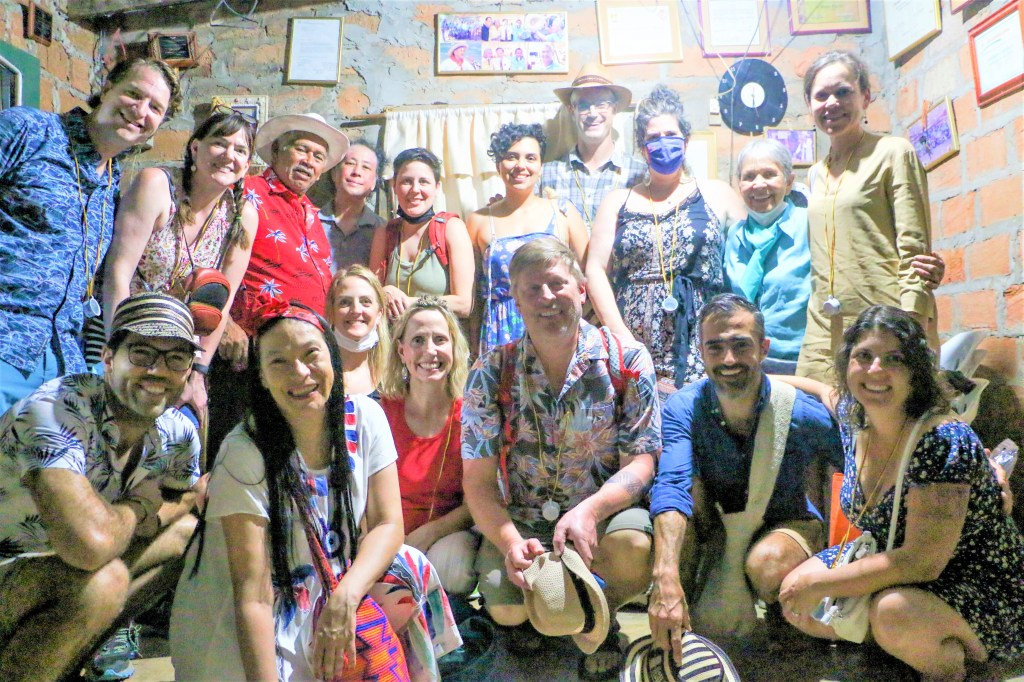
What a special night it was for me! Don Abundio y sus Traviesos performed one of my favourite fandangos, ‘Escudo de Tambor,’ and the enchanting Ariana Pena mesmerized me with her voice. And, voila, I had my artistic moment too, joining in with a lively bullerengue dance.
We all surrendered to the dance on this night of delicious rhythms, a celebration for our bodies and spirits where no one could resist the call of these traditional Carnival dances.
Gratitude to all the momposinos for their warm welcome, to Goyo, and all the members of the group Don Abundio y sus Traviesos. Special thanks to Arianna and Keimer for extending a beautiful and warm reception in their enchanting land. Carpe Diem!
The following day, I awoke to the gentle sun peeking through my window, as if nudging my shoulder to rise and embrace the joy of our day’s journey. We embarked on a 230 km, 5 ½ hour journey toward a town called…❤️
MALAGANA – JUAN AMARIS – TAMBORES DEL LAMBA SCHOOL
We arrived in Malagana at night, where we were immersed in a Bullerengue workshop led by the brilliant percussionist Juan Amaris, the director of Escuela Tambores del Lamba. This school serves as a hub for the instruction and preservation of the musical traditions of Malagana, a space where children and youth can engage in study, dance, community sharing, and learn the art of playing the drums.
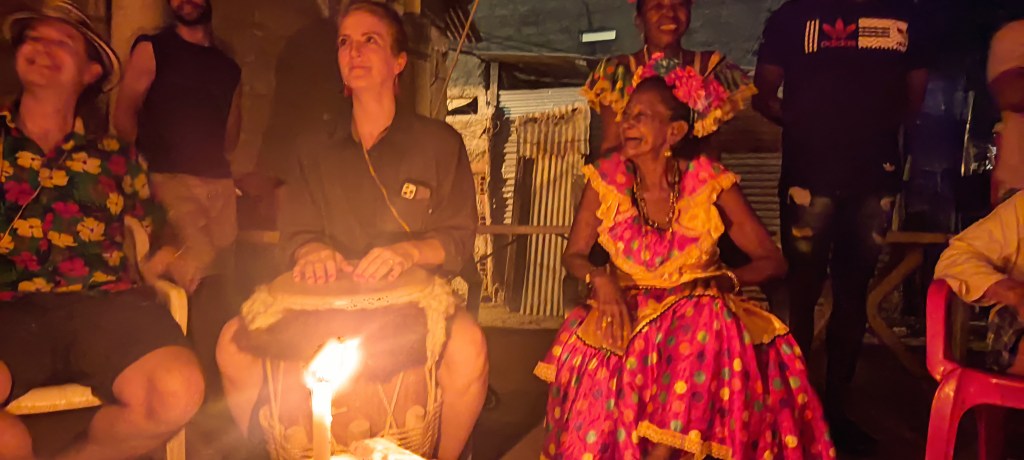
It was truly a delight to engage with this vibrant community. I certainly burned more than a few calories dancing with the spirited children and young people of the school, who generously shared their best steps of the son de negro and the representative, infectious smiley-grimaces that accompany the dances. If you are interested in supporting this school, you can find more information here
We also had the pleasure of enjoying the songs of the wonderful Juana Rosado, one of the most traditional voices in the history of bullerengue, born in Evitar, Bolívar. It was a genuine privilege to experience the sounds of ‘Las Olas de La Mar‘ directly from her live voice. Juana Rosado embarked on her singing journey as a child while doing household chores, growing up alongside her mother, Martha Herrera, who passed on this knowledge to her in the most natural and everyday way possible
Juana shares that when she sings, her mind comes to a standstill, as if the world vanishes for a moment, leaving only her voice, a powerful embrace of the present. Her energy is irresistibly contagious, and her smile radiates the virtues of a woman fully immersed in her art.
I couldn’t resist embracing her with a warm hug! Juana and her Bullerengue are indeed a source of joyful energy.
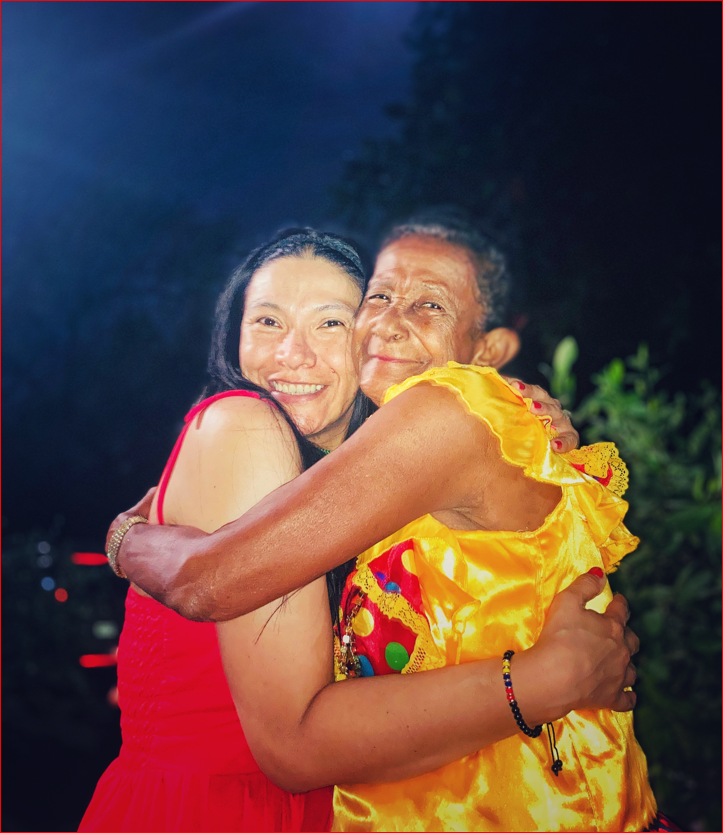
That night whisked by like a fleeting sigh as if time itself contracts in the presence of such incredible moments. Have you ever experienced that sensation? It was here in Malagana that I found a new travel companion, my new ‘alegre’ drum, which I lovingly named ‘Mechita’ in honour of my wonderful mother. This delightful addition was graciously facilitated by Juan Amaris.
SAN BASILIO DE PALENQUE – HEROISM, ARTISTIC EXPRESSION, AND RICH AFRICAN HERITAGE
The next day we continued 6 km more to reach San Basilio de Palenque, one of the most culturally exquisite towns in the Colombian Caribbean, which I was also lucky to visit back in 2018.
San Basilio de Palenque holds the prestigious title of Masterpiece of the Oral and Intangible Heritage of Humanity, as designated by UNESCO in 2005. It stands as the first free town in the Americas. The remarkable tale unfolds in the early 17th century when the African king Benkos Biohó, breaking free from slavery, ventured into rough territory some fifty kilometres from Cartagena.
Alongside a small group of fellow escapees, Benkos Bioho founded Palenque in 1603, establishing the only space of freedom for Africans and their descendants. Notably, this occurred 250 years before the total abolition of slavery in Colombia. It is a narrative steeped in courage, heroism, and unwavering resistance


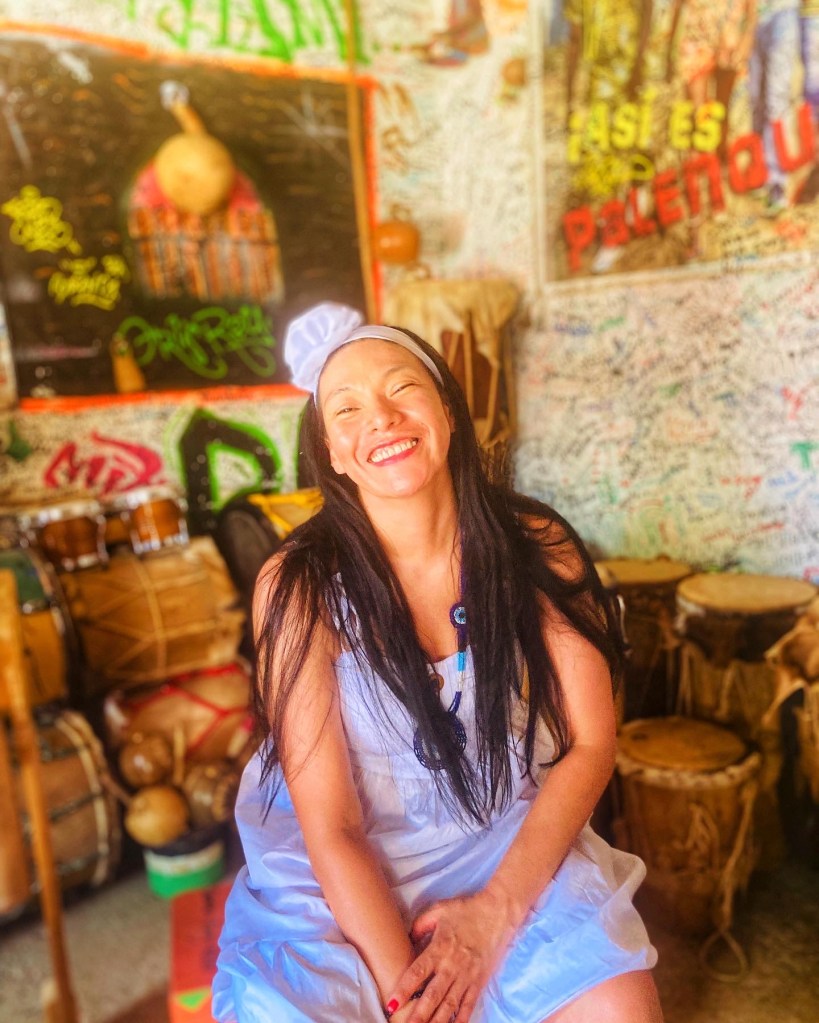
Over four centuries, Palenque has cultivated a culturally distinct identity, preserving its unique social fabric with musical and oral traditions of African origin. It’s as if a pause button has been pressed to safeguard its cultural heritage.
The Lumbalú ceremony, a mortuary rite of Bantu origin, stands out as a poignant expression that intertwines song, dance, and percussion, a sound that serves as a profound connection to their ancestors. This ritual not only commemorates the departed but also acts as a communal reunion, collectively evoking the memories of those who have passed.
We strolled through the unassuming streets of San Basilio de Palenque, discovering its monuments dedicated to figures such as Benkos Biohó and Kid Pambele. A particularly enchanting aspect for me was the vibrant street art, and colourful murals adorning many walls throughout the town. I seized the opportunity to capture these artistic expressions through my lens, as they serve as windows into local life, providing a perspective of reality through their colours, shapes, and graffiti, a visual portrait of the inhabitants’ lives.
Another significant legacy of Palenque is its language: Palenquero, the only Creole language with a foundation of Spanish mixed with African linguistic elements. Ata Uyo Bega Palenque! The following lines are dedicated to briefly describing the artists, maestros, and cultural figures I had the pleasure of meeting during this visit:
We savoured a homemade lunch prepared by the ever-energetic Emelia Reyes Salgado, artistically known as La Burgos. Not only did she nourish us with her delightful homemade dishes and delicious local sweets called alegrías, but she also amused us with her spirited voice and some of her songs. La Burgos is also a singer for Las Alegres Ambulancias, showcasing Colombian African musical heritage on various national and international stages.
A remarkable woman proud of her roots, La Burgos possesses the innate talent, a gift she proudly acknowledges inheriting from her mother Graciela Salgado.
In the afternoon, we had the privilege of visiting the workshop of Kombilesa Mi, a group of musicians from Palenque who are the architects of a remarkable fusion of traditional music and urban rap, known as RFP (Palenquero Folkloric Rap). Comprising young local artists deeply proud of their ancestral roots, the group, through various sonic innovations, has reimagined and reinvented their own cultural expressions.
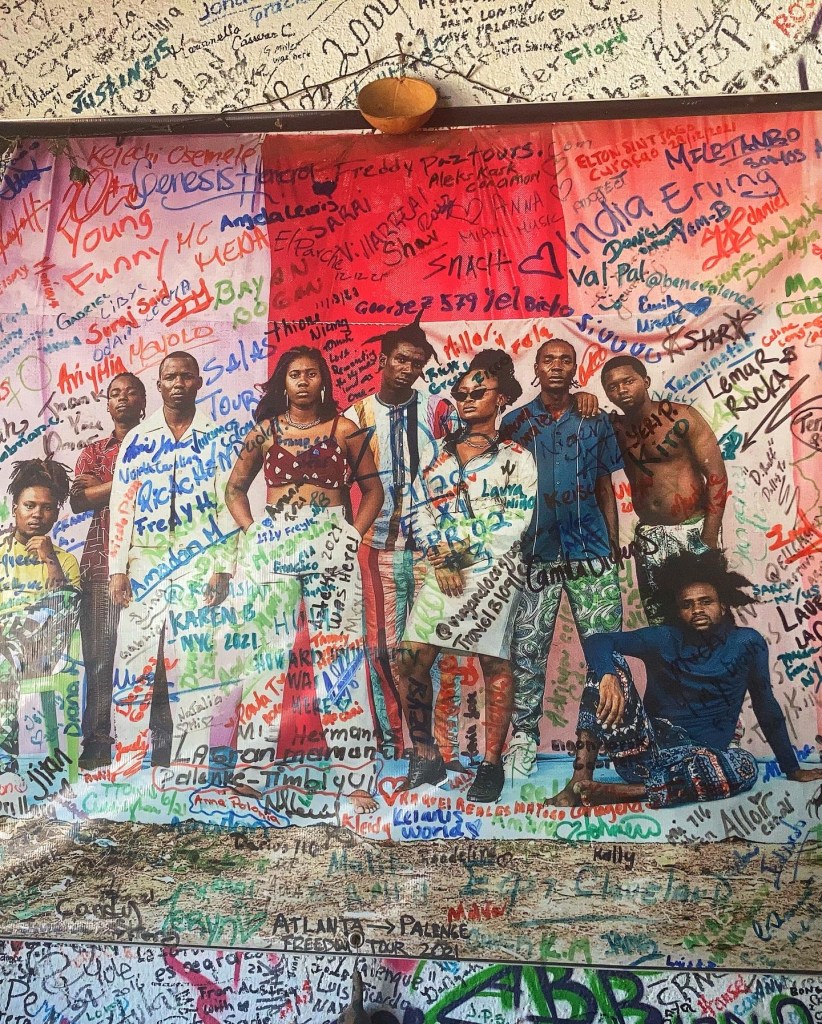
Their sounds draw from traditional rhythms like Sexteto, Mapalé, and Bullerengue, seamlessly blending them with Hip Hop to create unique and modern harmonies. Their lyrics are delivered in both the Palenque language and Spanish.
Kombilesa Mí emerged from a deep-seated desire to express resistance, embody the spirit of struggle, and preserve their traditions as a people of Palenque. The group has garnered significant international recognition for their innovative and powerful fusion of cultural elements
MAESTRO RAFAEL CASSIANI Y SU SEXTETO TABALA
Later, we ventured to the home of maestro Rafael Cassiani and his Sexteto Tabalá, where we revealed an afternoon filled with music, dance, and drumming. To our delight, even a joyful howler monkey joined the festive mood!
Sexteto Tabalá traces its roots back to the 1930s in a sugar mill near Palenque, situated between Sincerin and Malagana.
During those times, local workers, alongside foreign workers brought in from Cuba, would gather after exhaustive workdays to forge bonds of fraternity and naturally blend their rhythms, a spontaneous fusion of two worlds. This birthed the Sexteto Tabalá. Today, more vibrant than ever, the group has upheld its multigenerational legacy and continues to thrive, promising to delight generations to come.
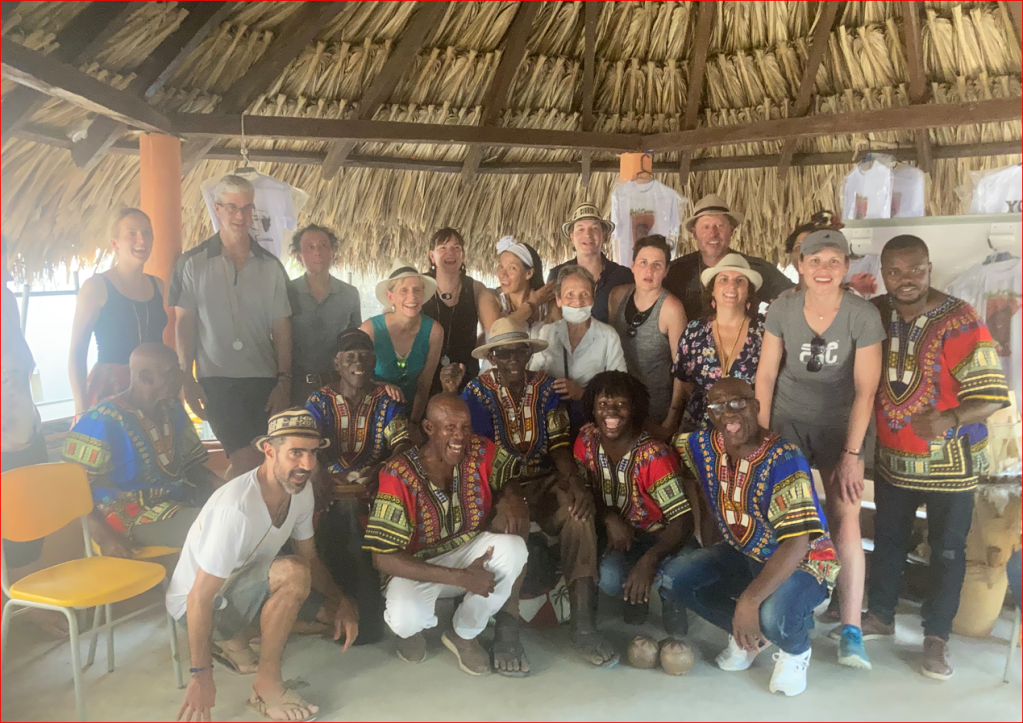
Thanks to this delightful afternoon, we delved into the Sexteto genre and grasped its profound Cuban influence. Meeting Maestro Rafael Cassiani and learning about his legacy while enjoying music in his own home was a tremendous honour. There are moments in life that are truly priceless, and this was undeniably one of them.
My heartfelt gratitude extends to Juan Cañate and Franki Lukumi for embracing the moment and singing ‘Reina de los Jardines,’ one of my favourite songs. Here is a little video capturing our visit—a song from Sexteto Tabalá: ‘Ofelia.’
ISLA GRANDE – ROSARIO ISLANDS
In the morning, we embarked on a journey to the main island of the Rosario Archipelago, Isla Grande. After an hour-long voyage aboard a musical boat, we traversed the sparkling turquoise waters of the Caribbean Sea while being serenaded by the melodies of the accordion and the beautiful voice of Gregorio. It felt as though the sea itself invited music to dance on a windy trip amidst the infinite blue sea and sky.
Our destination was the Eco Hotel La Cocotera, where I discovered one of the most breathtaking beaches I have ever seen. Though small, it boasted spectacular turquoise waters and white-golden sands. I must admit, I would love to be there right now, even if just for a few moments.”
In the embrace of these moments, my vision extends limitlessly towards the enchanting horizon and I wrote: “When these moments give me an unlimited sight towards the enchanting horizon where I can still find peace, warmth, pure air and transparent turquoise waters, there the sky looks at me with its blue eyes sparkled by spectacular white pillows, where I dance happily in the clouds of my imagination, you are the only infinite sky and beautiful and I’m in love with your universal and cosmic greatness – thank you forever” theskyisthelimit.
Isla Grande stands as the largest island in the Rosario Islands archipelago, encompassing both mangrove vegetation and dry forests within its 200-hectare expanse. From this picturesque piece of land, visitors are treated to panoramic views of the Caribbean Sea, along with glimpses of Barracuda Island, Marina Island, and the Boca Grande Channel
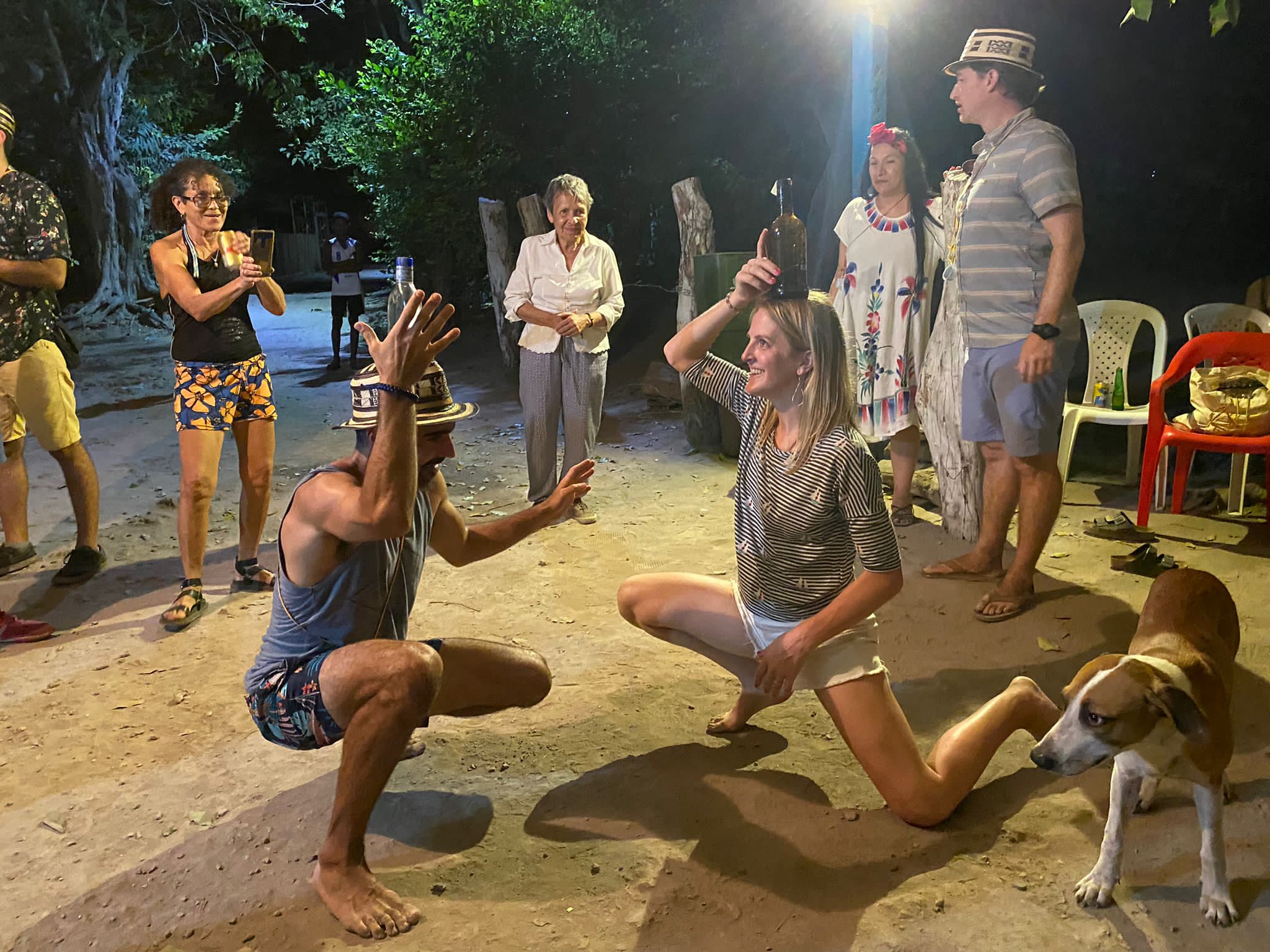
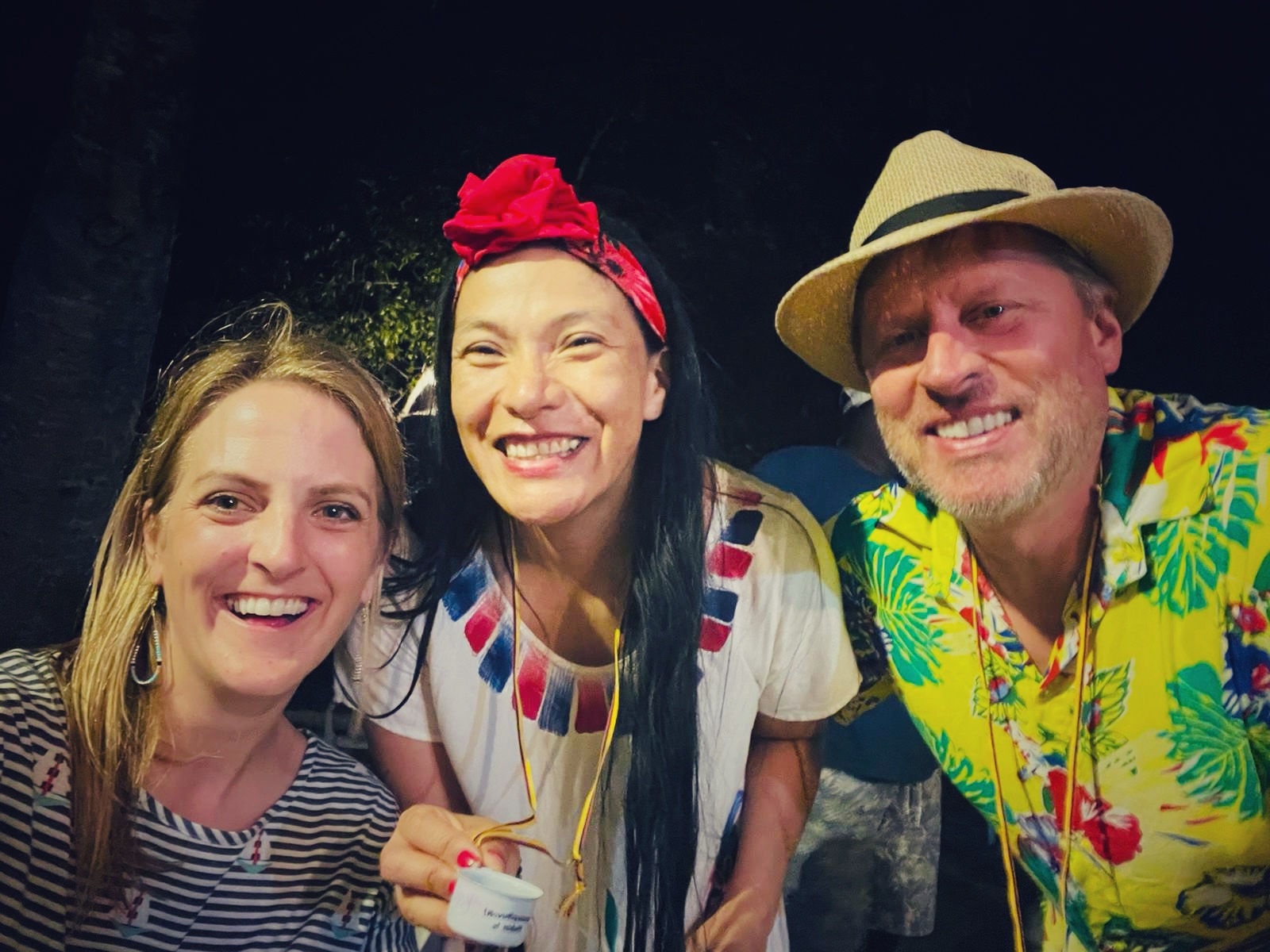
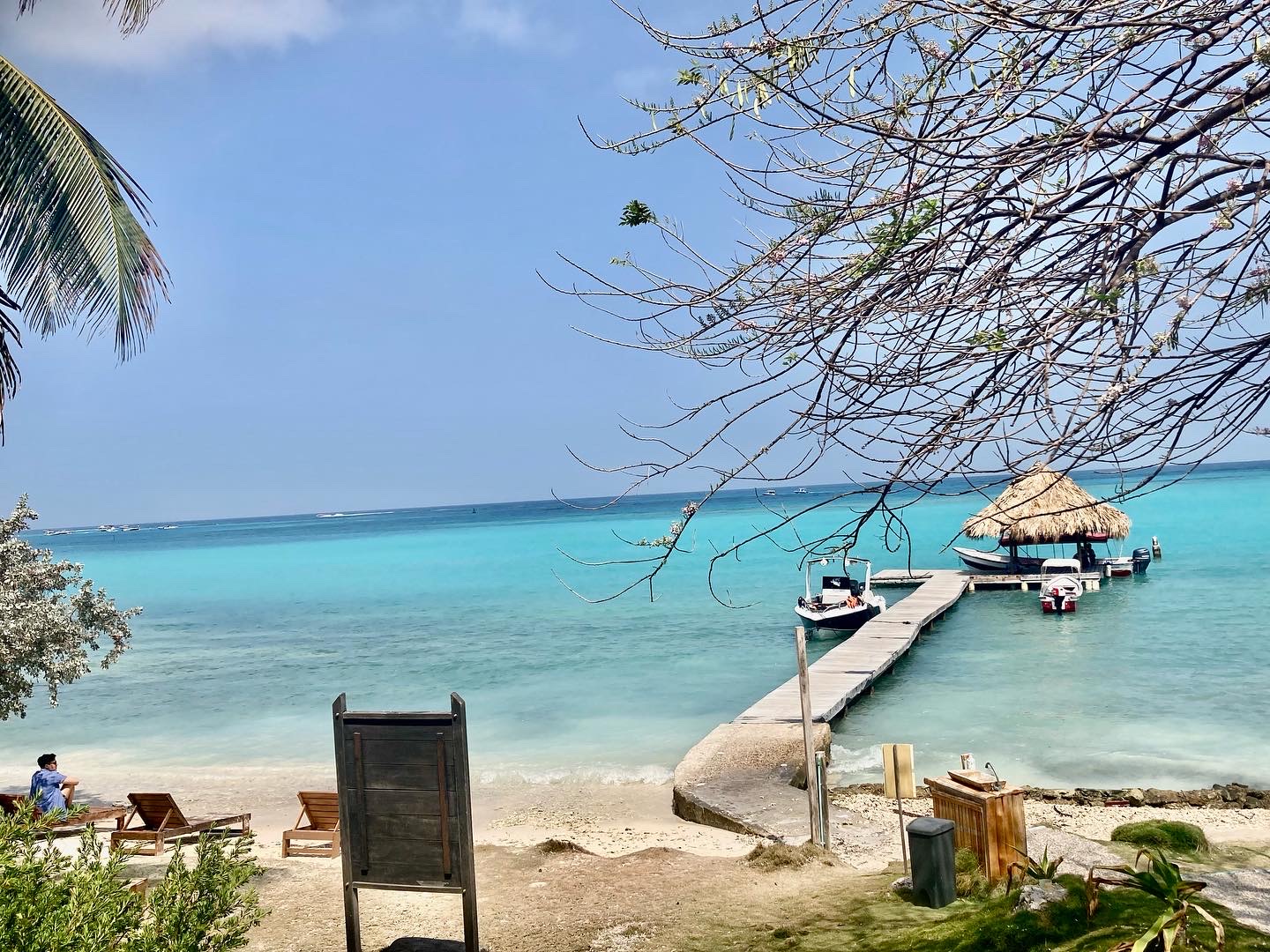
This afternoon was a tranquil interlude for me, a time of harmony with nature and the sky. I enjoyed observing my intrepid fellow travellers leaping joyfully into the azure sea, delighting in the playful splashes.
As the late afternoon unfolded, we strolled through gentle forest paths to reach the island’s main town easily on foot. There, we immersed ourselves in a cultural showcase featuring today’s sound: Champeta. We discovered that this genre bears a strong influence from African Sukus of the 70s, seamlessly blended with local flair. It felt like a reconnection with Africa through the rhythmic beats of music and dance, enhanced by modern elements like the Pikó (sound system). Personally, though, I found it to be incredibly loud!
CARTAGENA AND FAREWELL – PORRO
On this day, we returned to Cartagena, marking our farewell with a porro concert, a traditional musical rhythm hailing from the regions of Córdoba, Sucre, and Bolívar. Renowned for its joyful and festive rhythm, porro is typically performed by bands known as ‘papayeras.‘ It was a spirited celebration to conclude our journey.
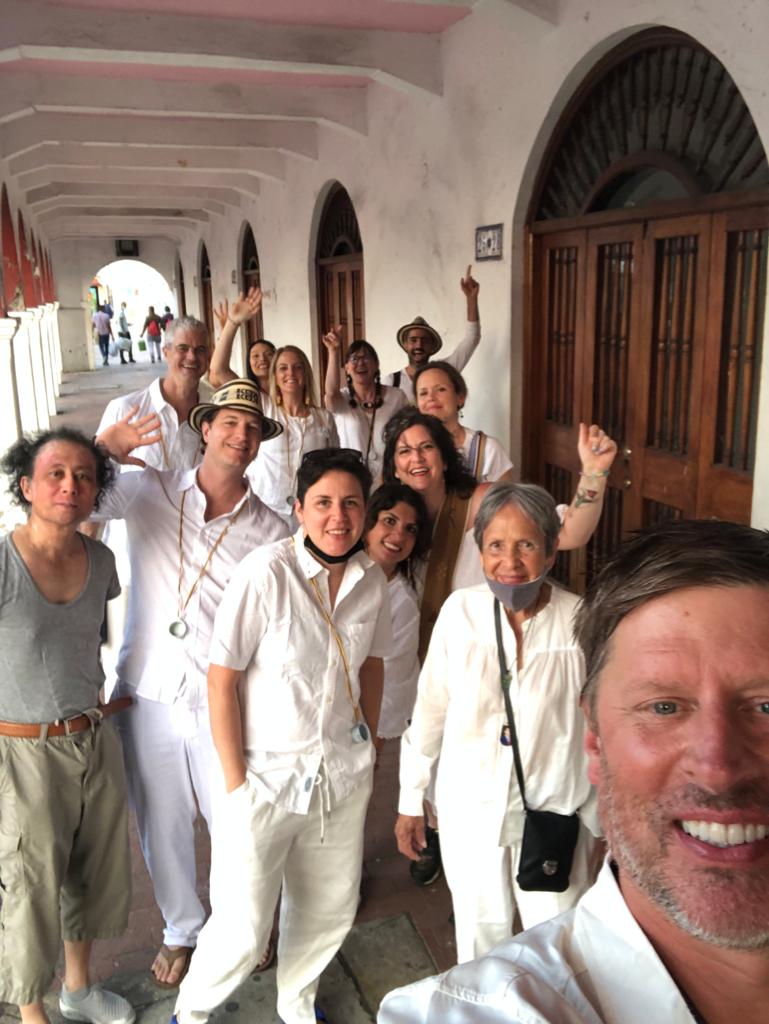
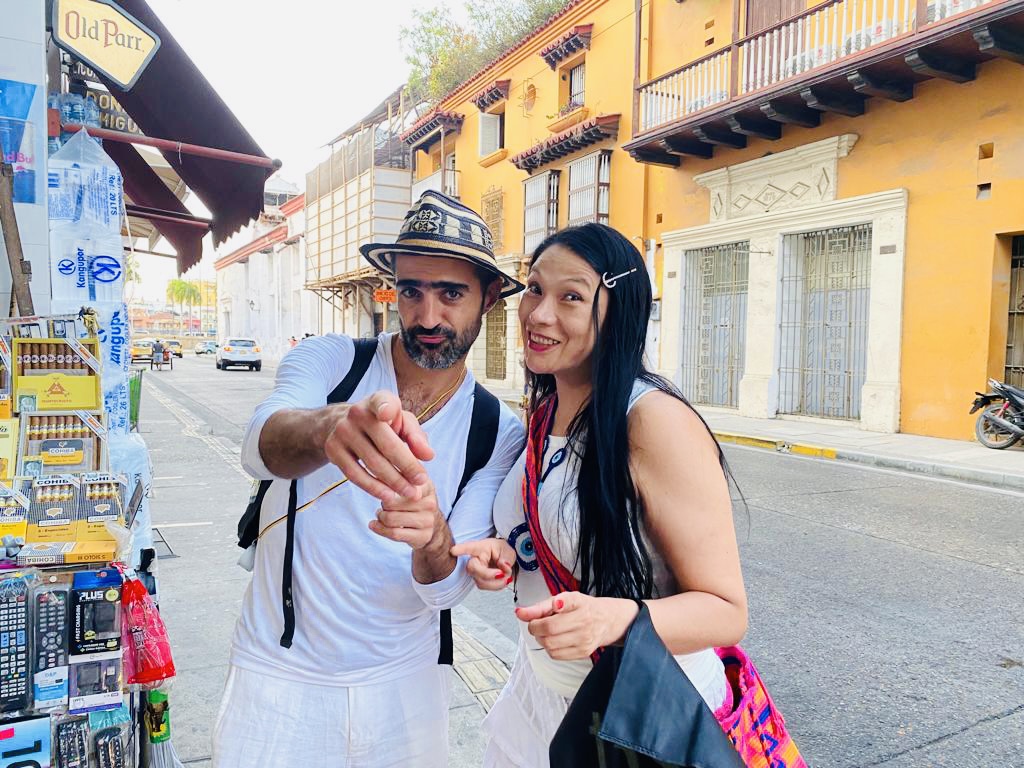
Tonight, we surrendered to the enchanting beats of porro and fandango, led by Jorge Otero and his ensemble of musicians armed with trumpets, clarinets, trombones, and drums. In a lively lesson, Jorge shared that within the Porro genre, various rhythms exist, some slower like the porro palitiado and others faster like the porro patiao.
Unfortunately, my notes only capture so much as my mobile battery gave in, but what followed was a magical night filled with joy and dance, where many locals joined in this celebration of incredible energy.”
SPECIAL THANKS
I extend a heartfelt gratitude to our group leader, the multi-talented musician Gregorio Uribe, a person I deeply admire for his commitment to helping traditional musicians preserve and evolve their art.
Thanks to Gregorio’s efforts, many of these artists now have the opportunity to tour Europe and the rest of America. This tour embodies what I consider authentic, sustainable, and ethical tourism. It left me with a profound sense of gratefulness for the privilege of meeting such exceptional musicians and cultural preservers, contributing to the preservation of our Colombian heritage.
A special acknowledgment goes to Impulse Travel for organizing this truly sustainable experience. As a colleague in the industry and a passionate traveller, I commend you.
This is the way we should all travel! To all my travel companions who transformed that week into an unforgettable experience, thank you.
Lastly, infinite thanks to all the teachers, cultural managers, and knowledge bearers who generously shared their time, wisdom, and infectious smiles.
“Air, Earth, Water, Fire… and Music: what unites people and the undeniable path to peace.”
With lots of love
❤️
Jenny
 Jenny Sky Is The Limit
Leave a comment