A TransMiCable Journey through Ciudad Bolívar, Mirador del Paraíso: Where mural art, resilience, and everyday life meet
We woke up early this day; it was a bank holiday Monday, with a clear idea of taking full advantage of the city. I had wanted to do this experience for a long time, and what better excuse than to do it with family, this time with everyone who “joined the crew.” It was a unique experience in the south of Bogotá, an area that for years was marginalised and seen as dangerous, but which now tells a very different story.
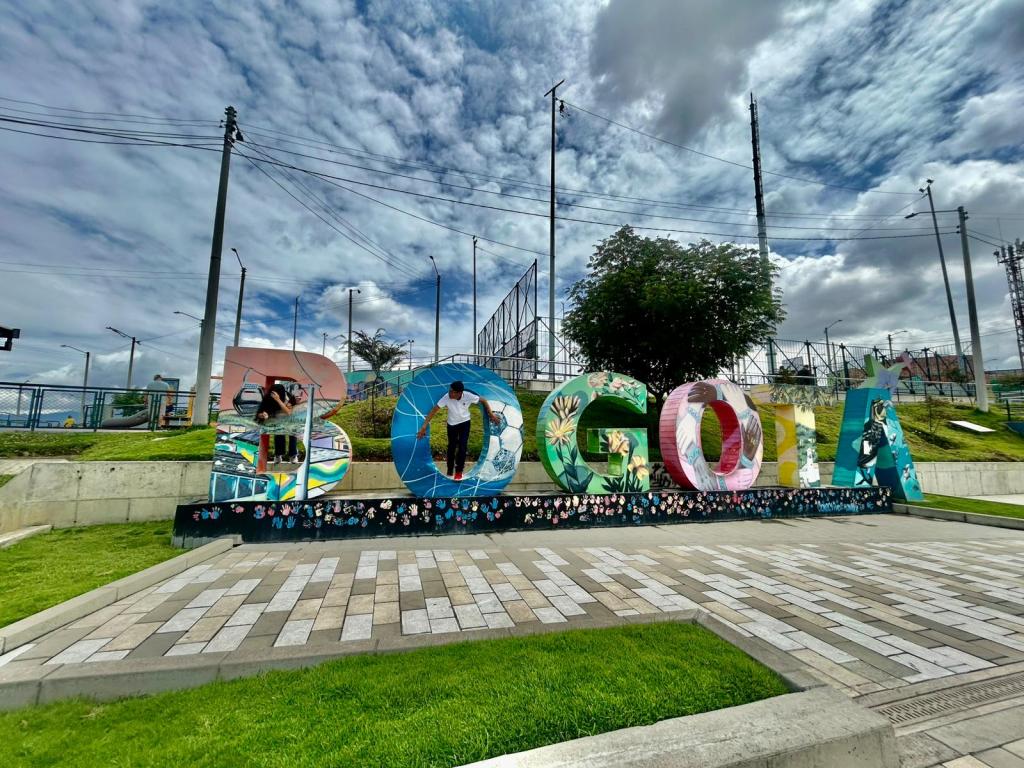
After several years of engineering work, urban development, and social initiatives, this neighbourhood has become one of the emerging sectors for visitors looking for authentic Bogotá experiences. No more just heading to Carrera 93 for cocktails, and forget Andrés Carne de Res! That is so last season! Today we were going to explore, walk, and live this other side of the city.
No cars, I said it from the start. Today we were travelling by public transport. Of the eight people on this adventure, only two had used TransMilenio before… and that is saying something, as we are Bogotá natives. So for several of us (not me), this ride on public transport was also a first. We boarded the bus at the Toberín TransMilenio station, where we had to buy the Tu Llave card, which is like London’s Oyster card, valid for the whole city transport system.
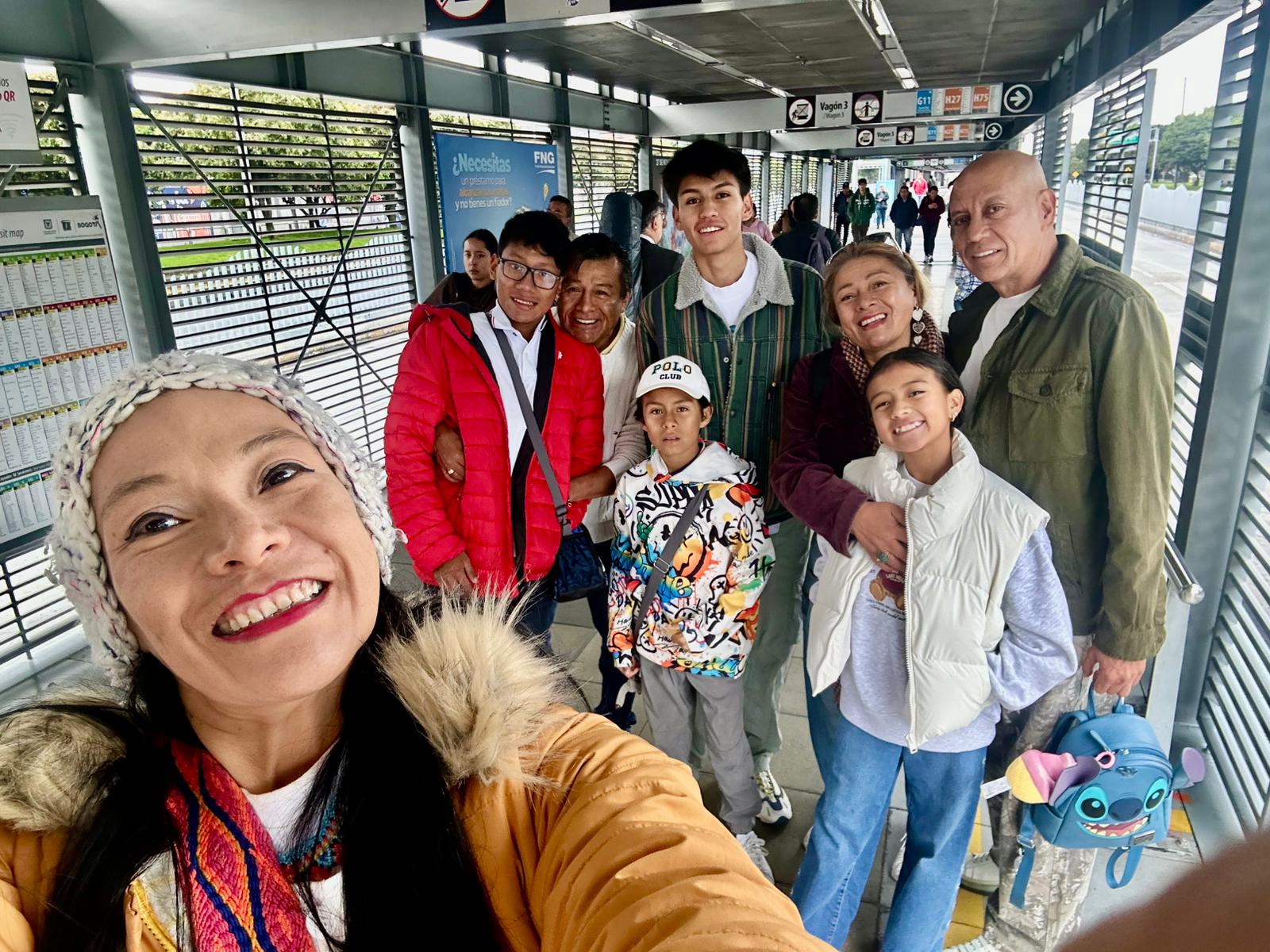
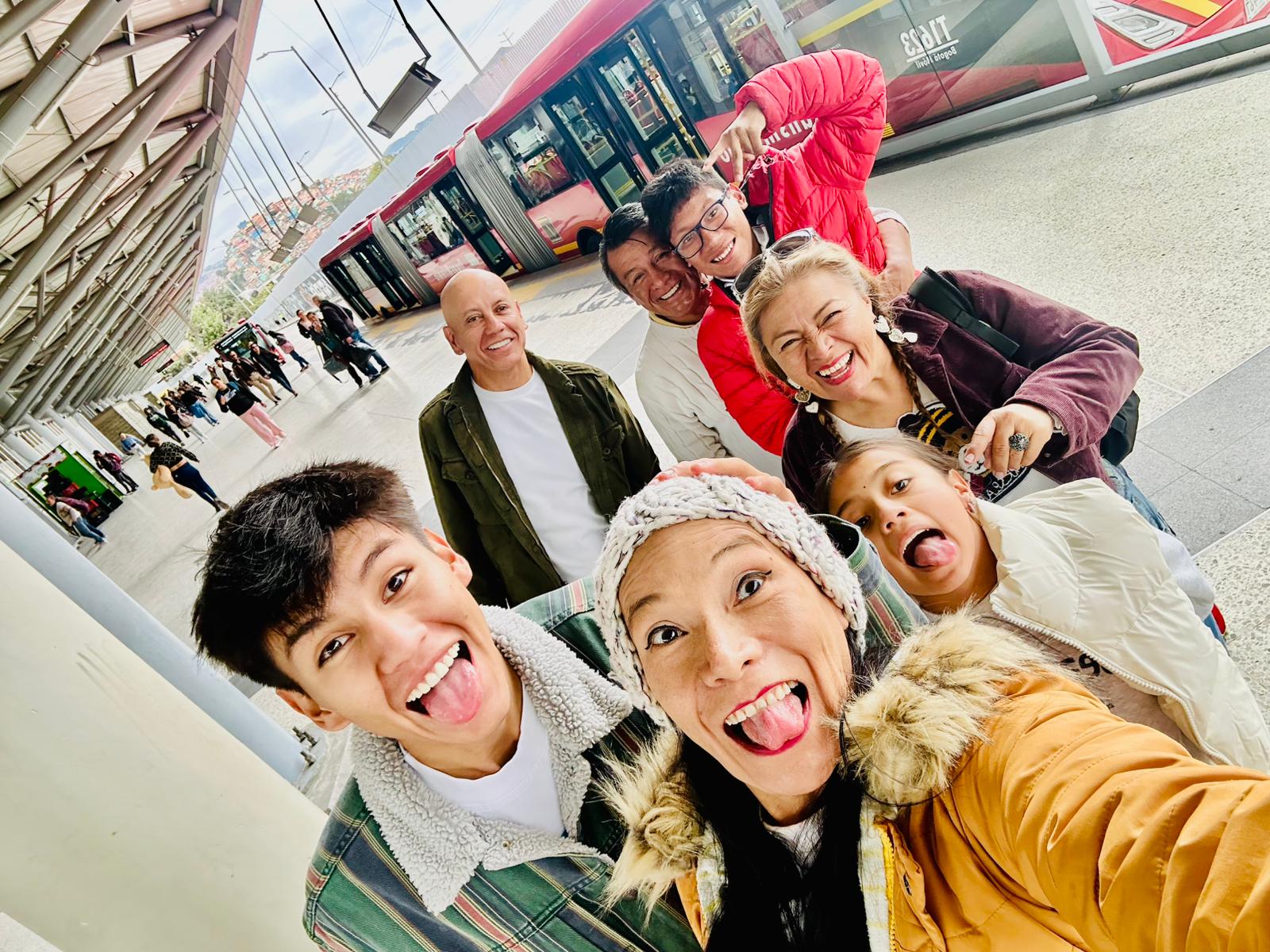
Next came the mission to figure out the route to our destination, as signage on the TransMilenio wagons is not very clear, but we knew our goal: the Mirador del Paraíso, in Ciudad Bolívar, a district that today, with more than 600,000 inhabitants, has much faster and friendlier access to the rest of Bogotá.
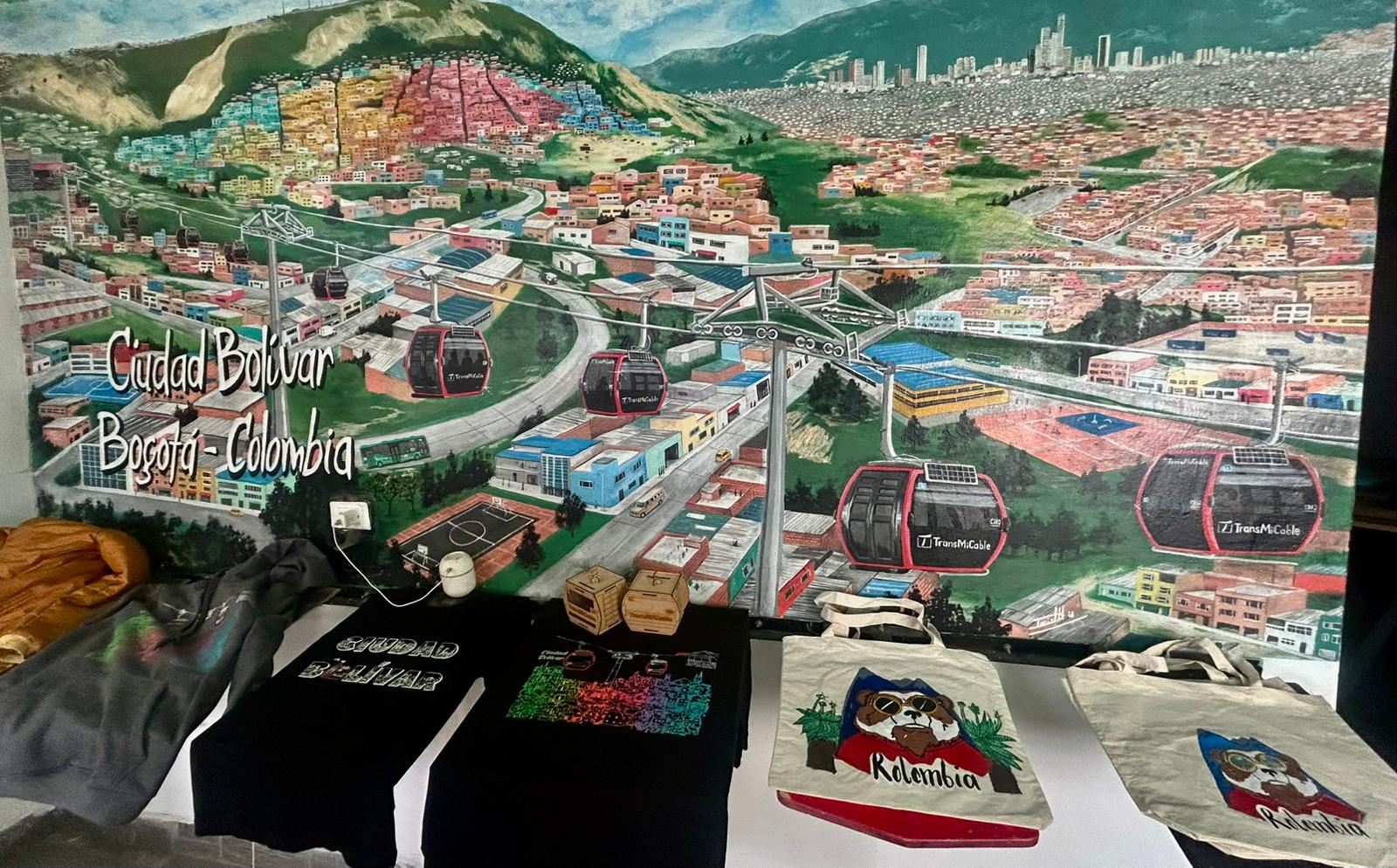
From the north of the city, we travelled on TransMilenio until we reached the southern connection point at Portal del Tunal, a station founded in 2002 as the system’s terminus and which, since 2018, also connects with the TransMiCable, an incredible transport system that has transformed life in this area.
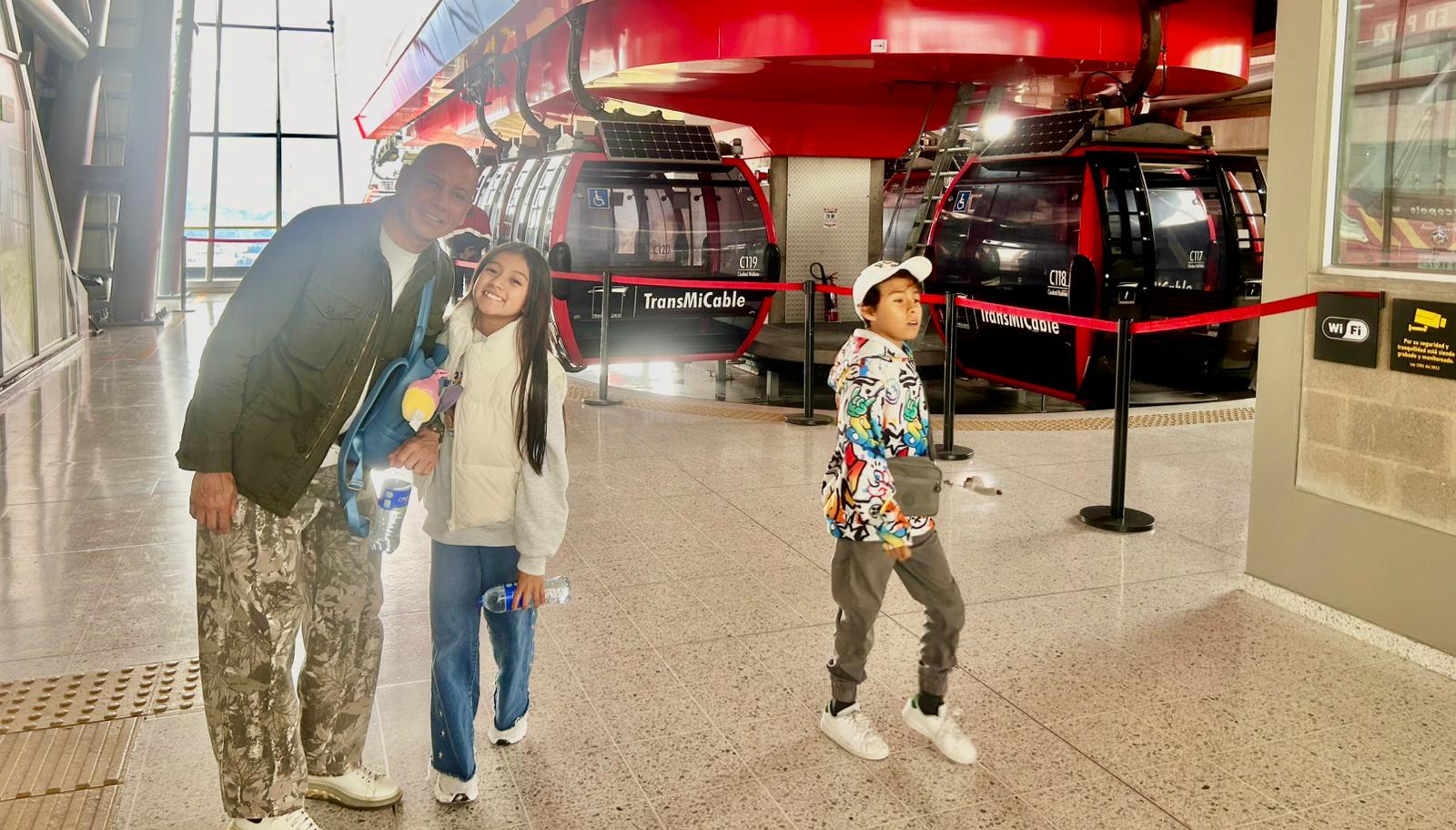
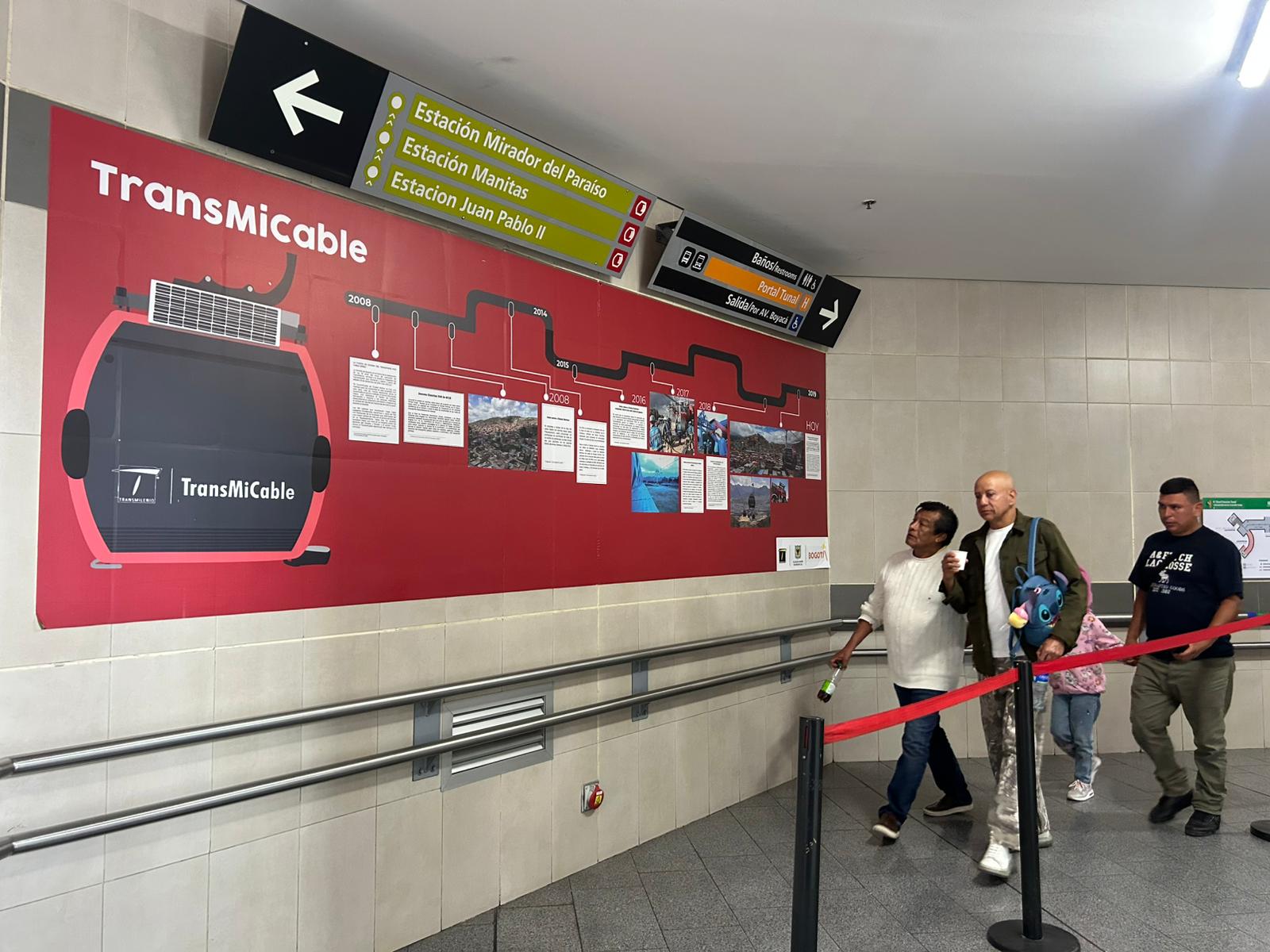
We had to make a couple of changes in our journey because, being a bank holiday Monday, the routes varied a little, but we eventually arrived. Asking gets you to Mirador del Paraíso.!
One of the highlights of the day was seeing and using the TransMiCable system, a huge step forward for public mobility in Bogotá and, above all, for connecting this locality with the rest of the city. The views are breathtaking, but the story of resilience visible from above is even more so.
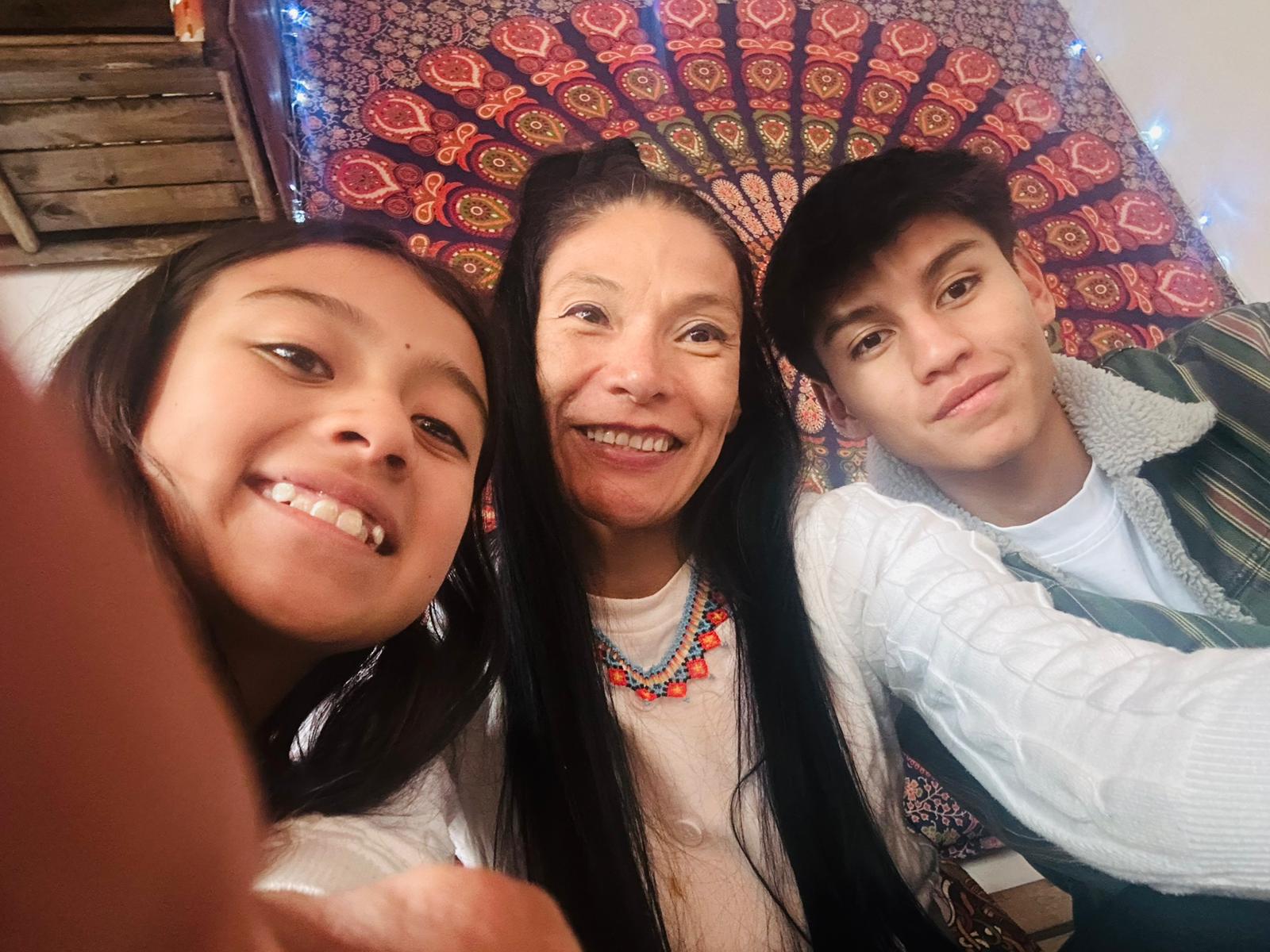
During the TransMilenio journey, my lovely companions Lalo, Sandra, Beto, Sami, Mati, Tomás, Luciana, and I were in stitches. We were tourist-Ing in our own city! Between the novelty of riding TransMilenio, the laughter, the street vendors, the occasional passenger trying to jump the fare, and the energy of the system, we had a blast.
I was one of the two who had used TransMilenio many times, despite not living in Colombia! So I became the narrator, ha-ha. Urban public transport adventures, very European metro style, but with a Bogotá flavour.
The Portal del Tunal is a crucial connection hub and is remarkably well-maintained. Civic culture is on the rise, and more and more Bogotá residents understand that this system belongs to everyone. The station was impeccable and very well signposted. From there, using the same ticket and within 90 minutes, you can transfer to the TransMiCable. There are only three stops from Portal del Tunal: Juan Pablo II, Manitas, and finally Mirador del Paraíso. Andrea was waiting for us there.
TransMiCable, More Than a Cable Car
When I got on Bogotá’s TransMiCable, I could not help but feel a sense of familiarity with London’s cable car, especially because of the design and cabin capacity, which in both cases can carry up to 10 people. However, while they may look similar, both systems have very different purposes and scales.
Today, the London cable car is officially called the IFS Cloud Cable Car, reflecting its current sponsorship. It crosses the Thames, connecting Greenwich Peninsula with the Royal Docks, offering spectacular city views. Its route is approximately 1.1 km and operates with only 36 cabins, making it clear that it was conceived primarily as a tourist attraction and local connection, not as a central urban transport artery.
In contrast, Bogotá’s TransMiCable was designed as an integrated urban public transport system, intended for daily mobility over steep terrain, with a strong social impact and a clear focus on accessibility. Its route spans 3.34 km, almost three times longer than London’s, and it has 163 cabins, all with a capacity of 10 people. With over 25,000 daily users on average, it has become a key piece in connecting communities that previously took up to an hour to reach the rest of the city.
Thus, while London’s cable car offers a unique panoramic experience over the Thames, Bogotá’s TransMiCable not only provides views from above but also transforms the daily lives of thousands of people.
Murals That Tell Community Stories

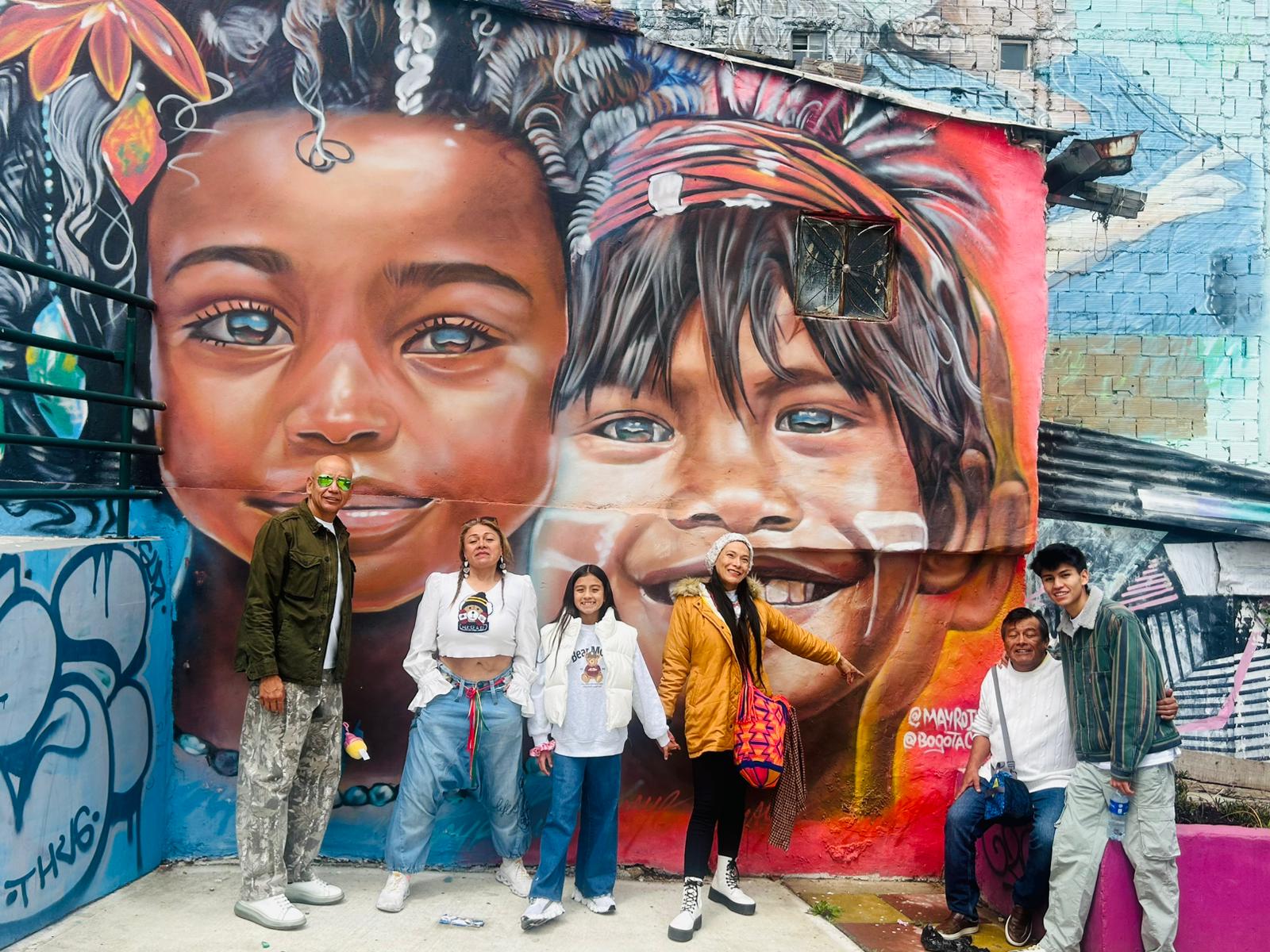
Back on solid ground, we took a historical tour of the area to understand the changes and transformations of the past three decades, when public services were scarce, and the neighbourhood carried a strong social stigma marked by violence.
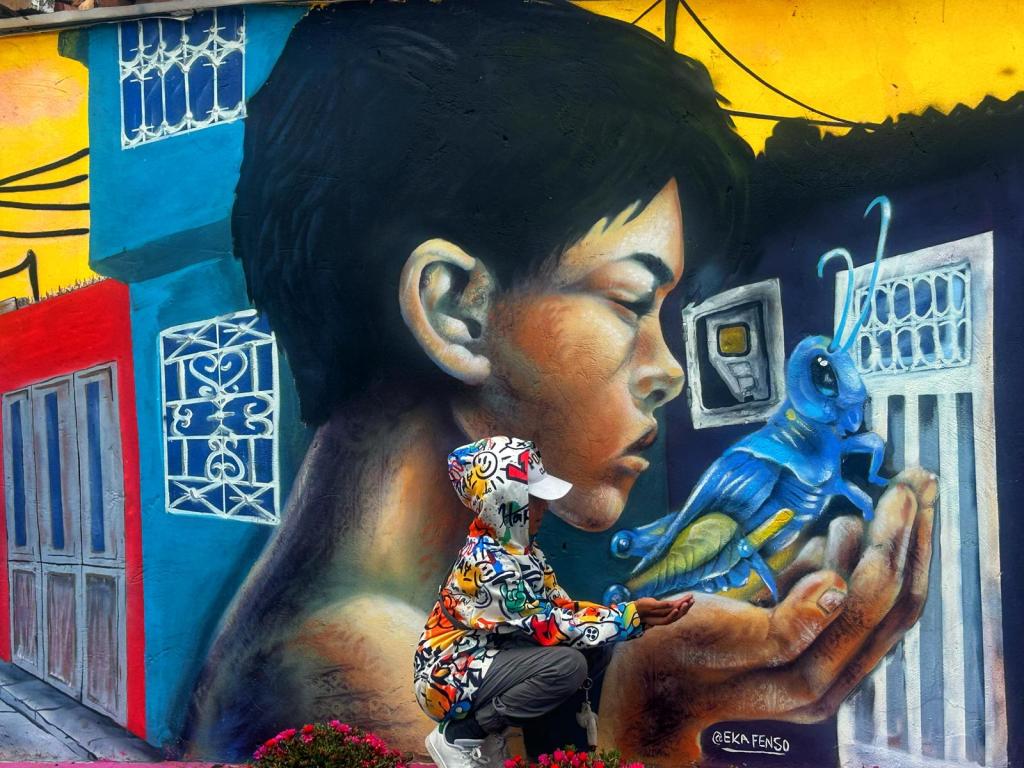
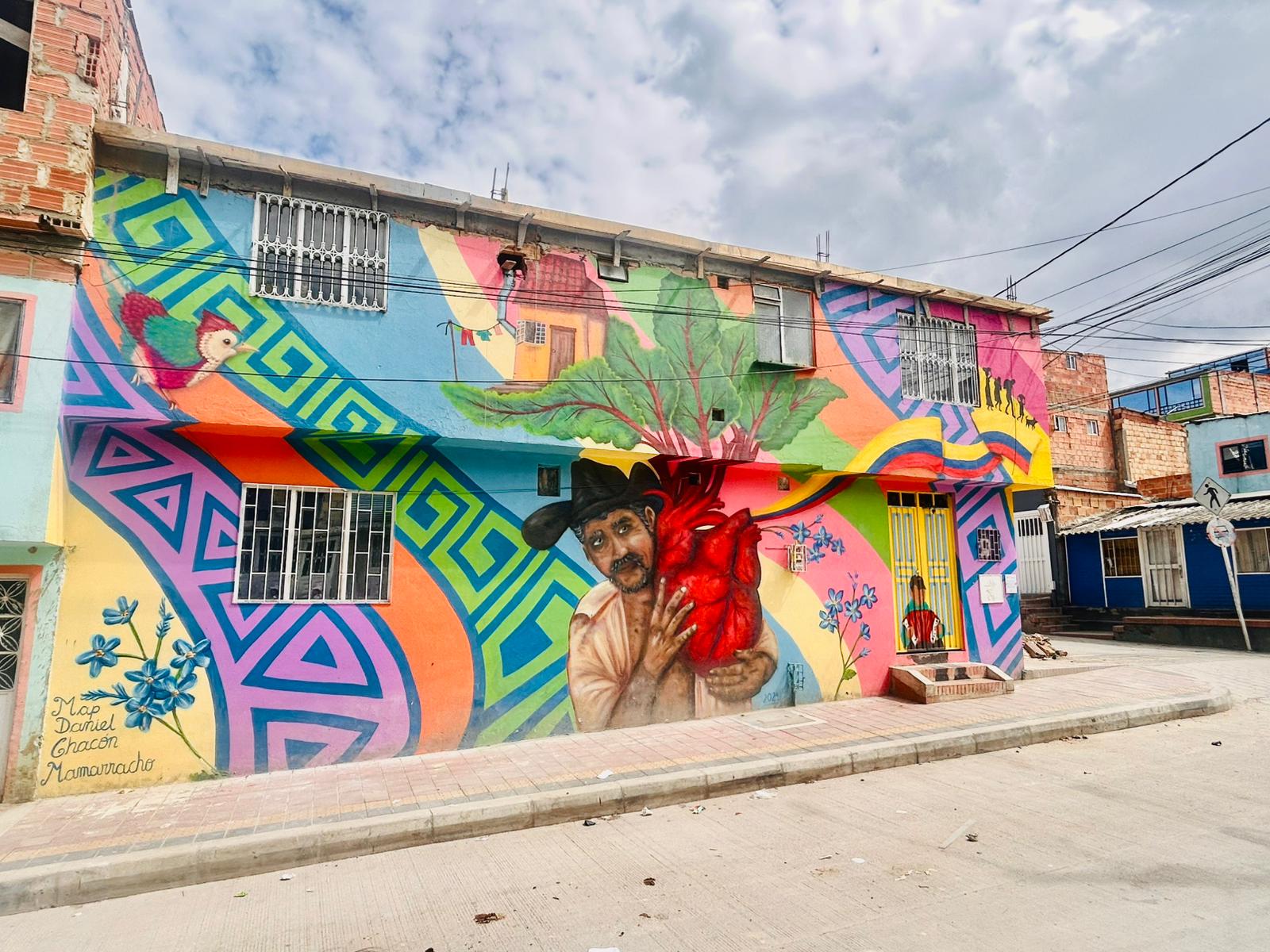
We visited the “Colour Promenade” , a space with 12 murals that narrate the history of the locality. Walking through it feels like zigzagging, with stunning murals on one side telling vivid local stories and breathtaking views of Bogotá on the other.

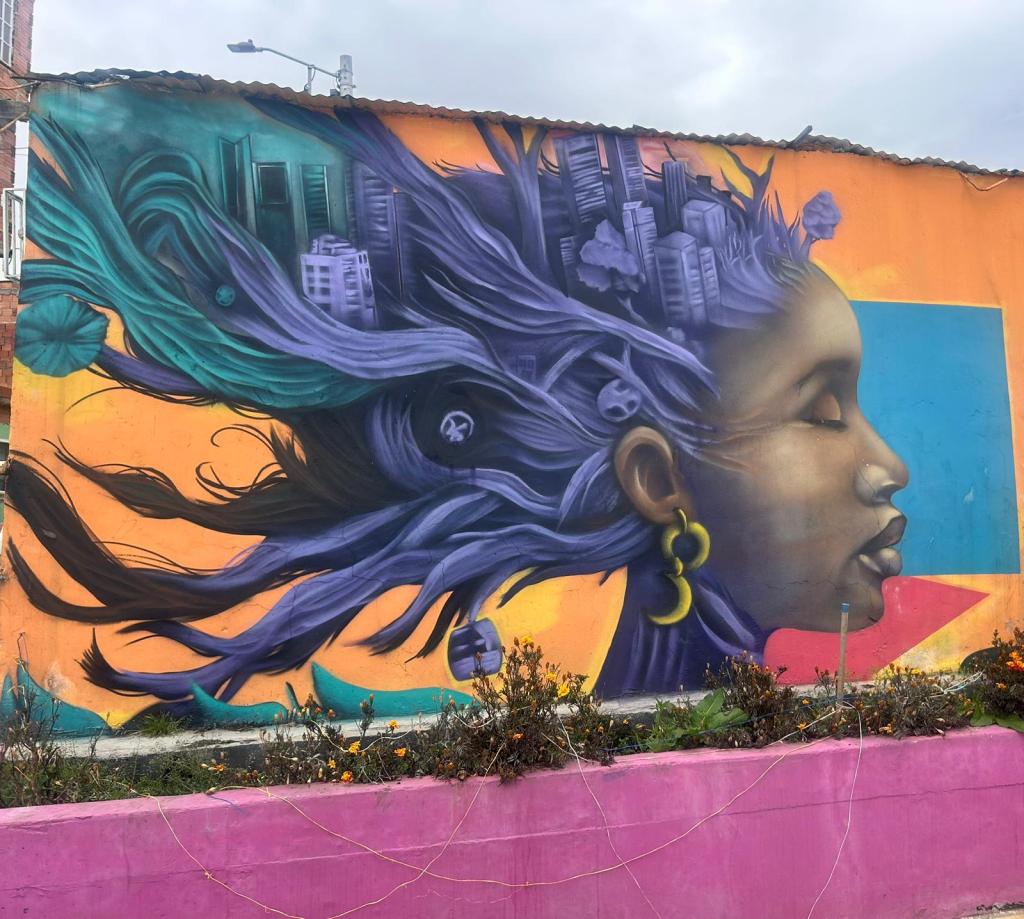
Each mural carries a real and authentic message, born from the community and the artists who transform their life stories into colourful art with social meaning.


In the video I share below, I highlight two special stories: the meaning of the little donkeys painted in the final mural of the alley and Casa Sumercé, where a peasant carries his heart on his back, ready to begin a new life full of opportunities in this locality. So, do not miss the video!

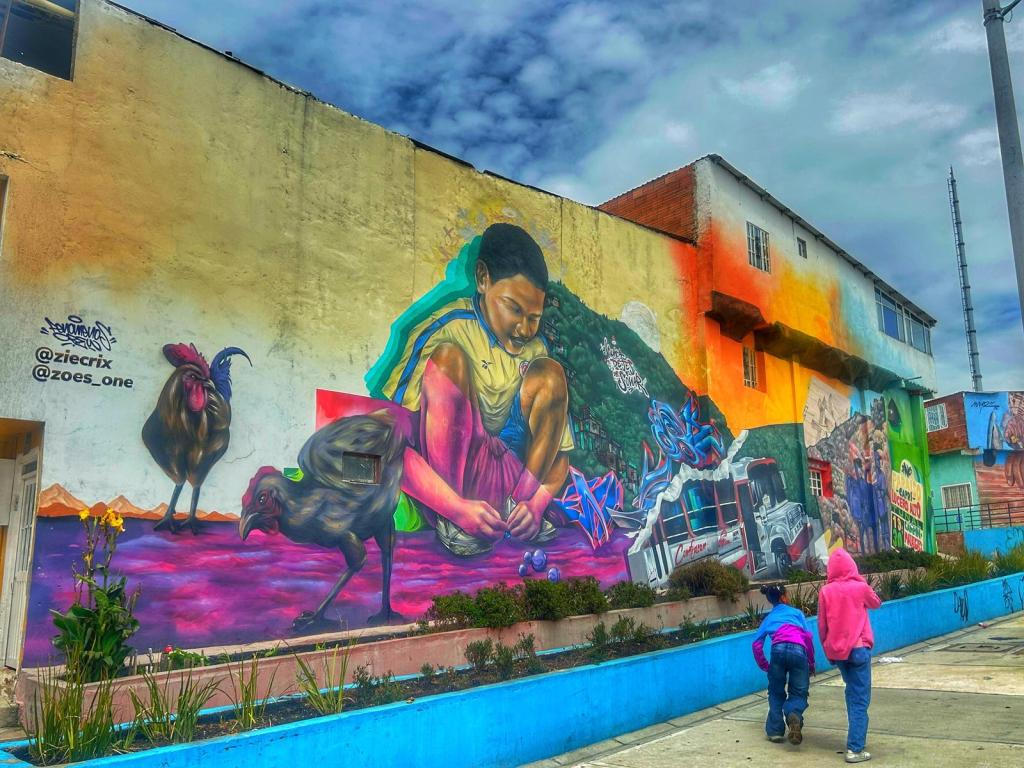
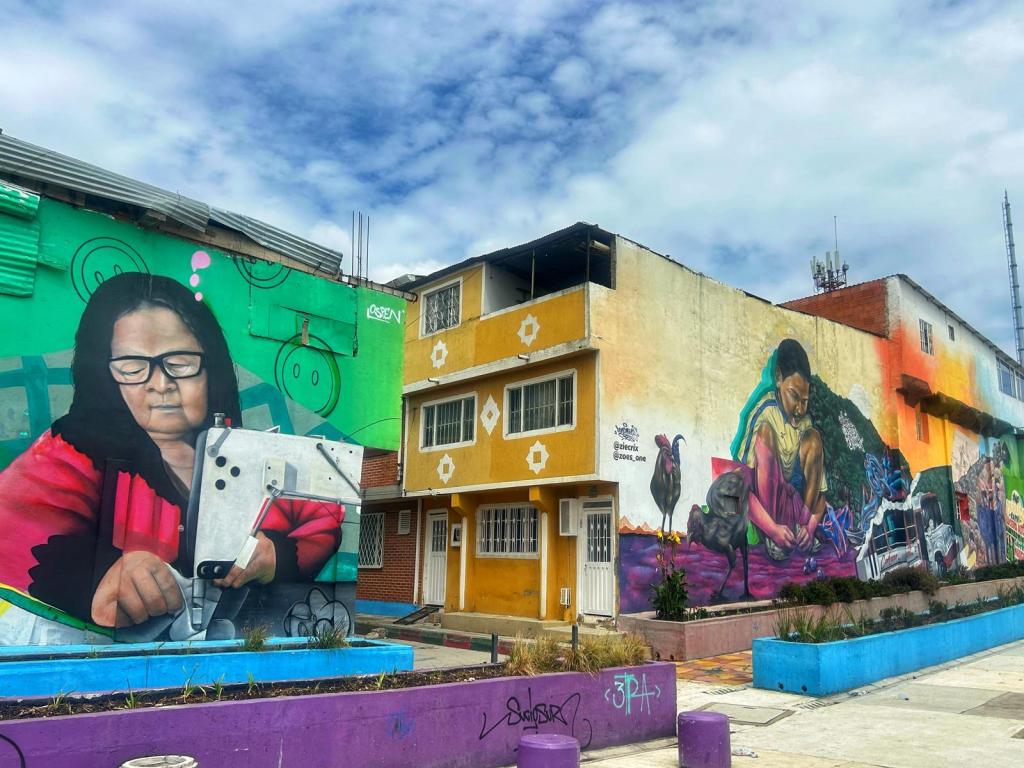
The artist @imprudente87 explained some of the mural techniques, including “bombas” and stencils, and then invited us to create our own mural. I tried to paint a drum but ended up painting more of myself than the mural, so I will spare you my terrible result! Haha. Handling spray cans is not as easy as it seems; it is a technique that takes time and practice, but we had an absolute blast.

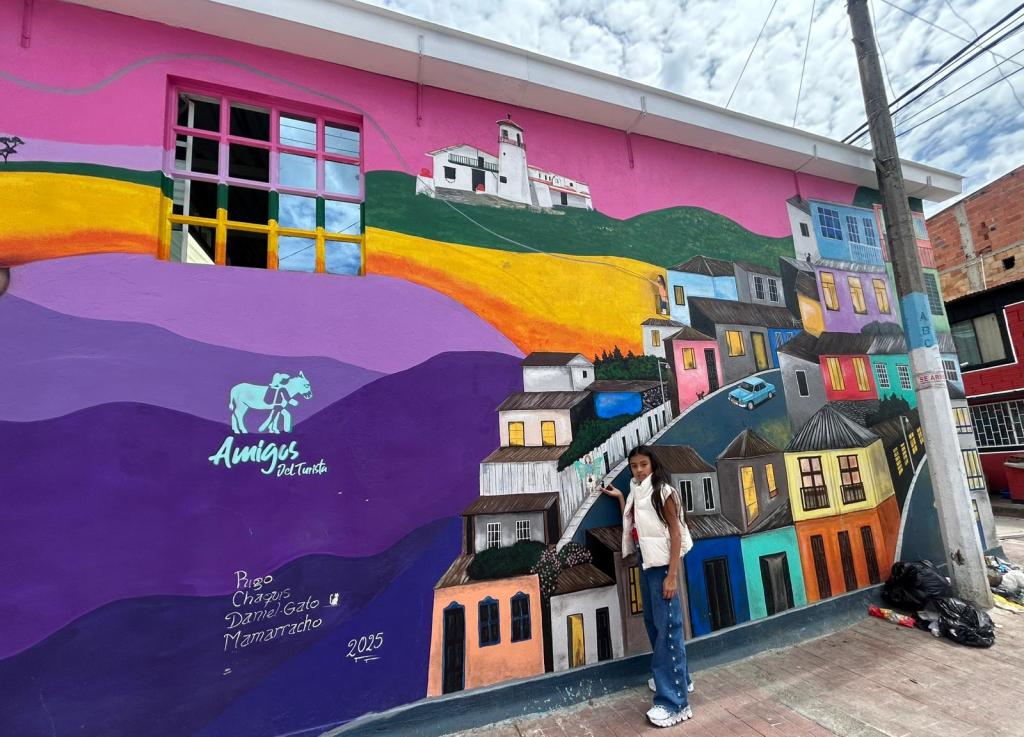

The children were delighted, and we all laughed endlessly, enjoying family time surrounded by colours and an incredible mountainous view.
Colours, Food, and Games That Bring People Together
Next, we visited another iconic spot: Parque Mirador Illimani, a space with playgrounds for children where we spent a good while chatting and enjoying the view. More colours, more murals, more stories, and then we got ready for lunch.
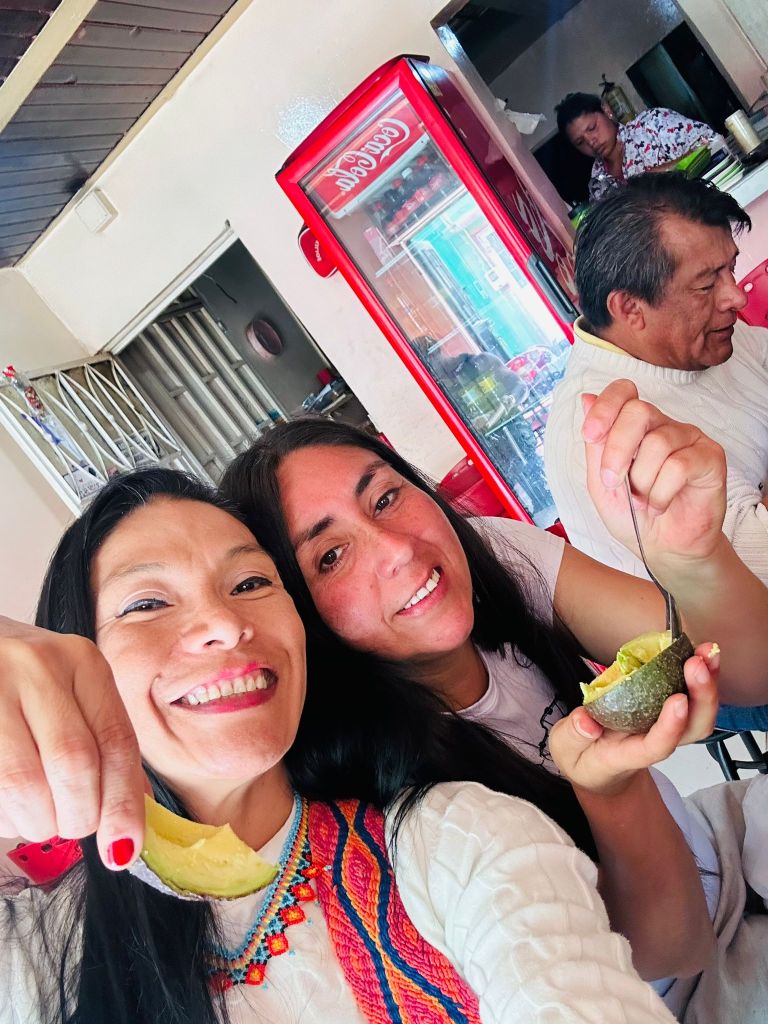
And yes, a “corrientazo” lunch, a delicious homemade meal, much cheaper than à la carte, including starter, main course, dessert, and drink. Portions are generous, so come hungry because here you really eat well.
During lunch, Andrea Ochoa, founder of this community tourism agency @amigosdelturista, shared her life story. A story of resilience, of a woman who, despite obstacles, has succeeded with determination and self-will. From her home, she also offers experiences like sensory literary picnics, crafting bracelets from recycled materials, urban gardening, making sweets and jams, screen printing, recycling museum visits, graffiti workshops, airbrushing, magic, theatre, Colombian rap, the “rana” game, and gastronomy, among many others.
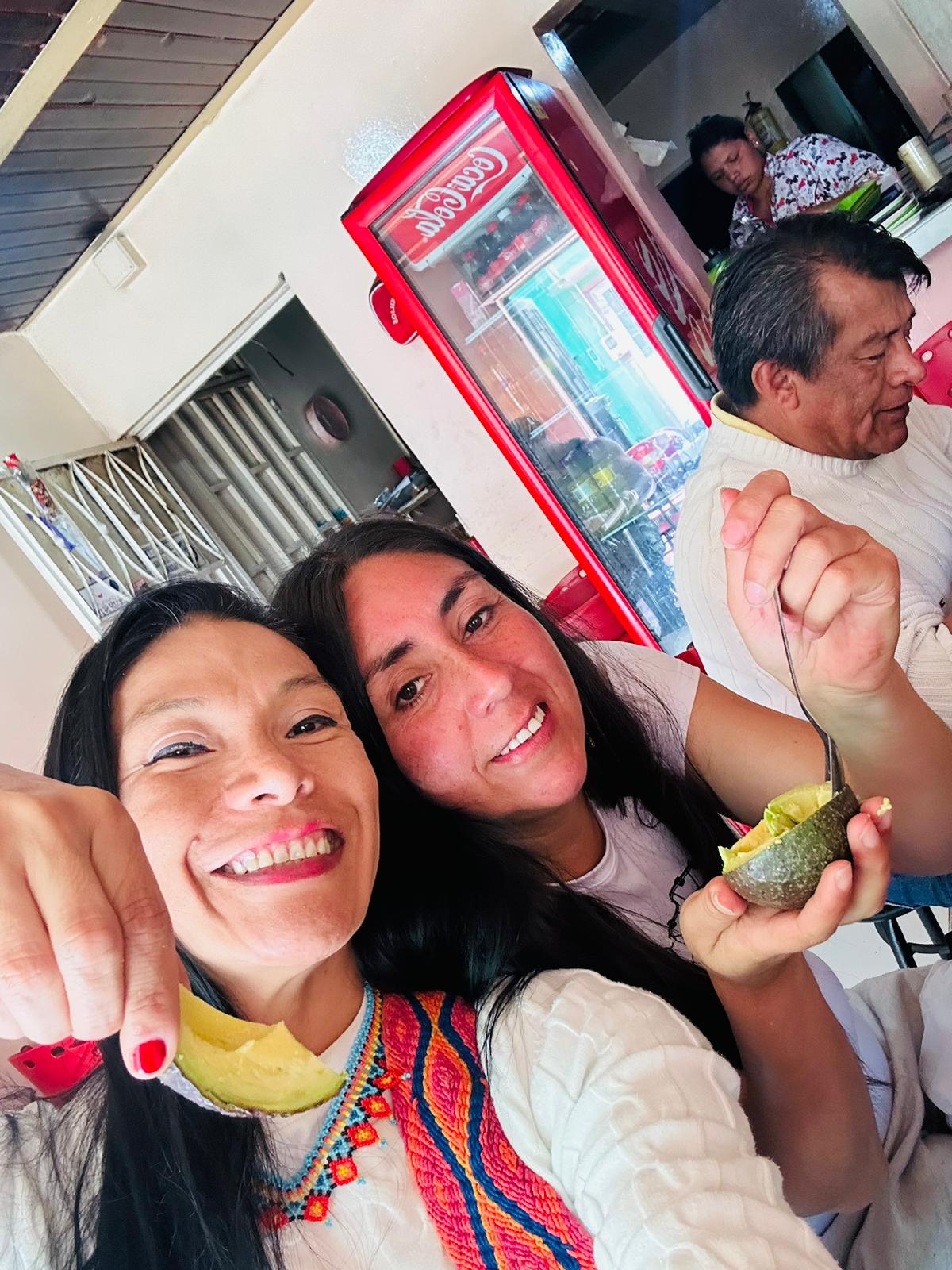
After lunch, we had more playtime, coffee or carajillo, and wrapped up with a mini “rana” championship, an ancestral game from Andean peoples, where the frog symbolised good luck and prosperity. During colonial times, it mixed with accuracy games brought from Spain.
Today it is a family and traditional game, “El Juego de Rana” known for its joy and friendly competitions. We split into two teams, “Juventud” (Youth) and “Vejetud.” (The Matured Ones!). Of course, I wanted to join Juventud, but they would not have me! And yes, we were defeated, sadly, ha-ha.
Living and Transforming Bogotá
Thanks to community initiatives like Amigos del Turista and Andrea Ochoa’s vision, this part of the city is becoming a rising star on Bogotá’s map. From the murals at Casa Sumercé to the famous Calle del Color with its vibrant murals, every corner is full of life, culture, and heart. This is the authentic side of Bogotá that more visitors should see and understand.

To convey the atmosphere of this experience, I share this audiovisual record on YouTube, accompanied by the song Los Sueños from the album Inelementum by my dear friend and talented artist @Esteban_Card. Exploring Ciudad Bolívar is discovering a neighbourhood that was once considered dangerous but now embraces community tourism to showcase its welcoming, creative, and deeply human spirit.
Final Reflection
I want to sincerely thank everyone who joined me on this experience and made the day so special. My family, for coming along on this adventure, for laughing, walking, observing with curiosity, and opening their hearts to discover their own city from a new perspective. Thanks also to Andrea Ochoa, for her generosity, her story, her leadership, and for showing that community tourism can be a true tool for social transformation. A special thank you to Rodrigo Atuesta of Impulse Travel for the recommendation and for connecting travellers with experiences that have meaning, purpose, and humanity.
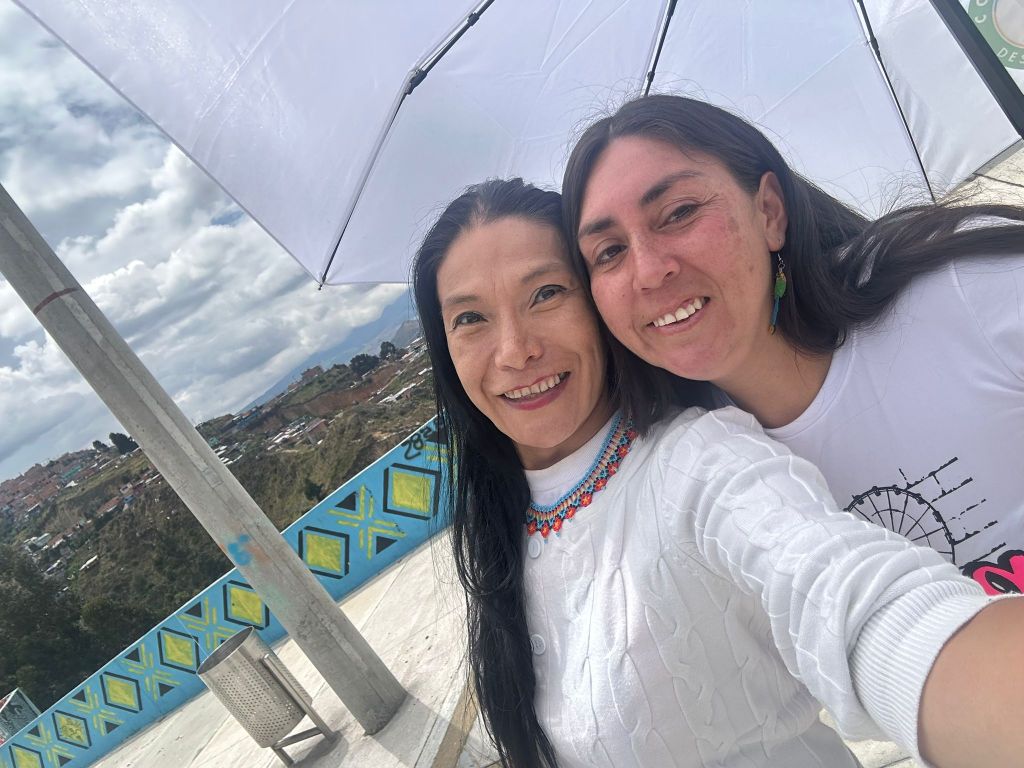
This journey left me with a clear reflection. Urban art, stunning murals, and community tourism are not just pretty photo opportunities. They are an ethical way to travel, to move the local economy, dignify territories, and hear stories that deserve to be told. Choosing this type of tourism consciously supports communities, values their identity, and understands that travel can also be an act of respect, learning, and real connection.
Bogotá has so much to tell beyond its well-known postcards. Sometimes, all it takes is to get on a cable car, look at the city from a different height, and let yourself be surprised by the creative and human force that lives in its neighbourhoods.
Lots of Love
❤️
Jenny
 Jenny Sky Is The Limit
Leave a comment