
My journey by train from Lopburi to Phitsanulok marked the next chapter of exploration, and my decision to make a pit stop in Phitsanulok was driven by the desire to explore the city’s temples.
While many travellers use Phitsanulok as a transit point to Sukhothai and its famous Angkor Wat-style ruins, I opted to stick to the train route, dedicating a day to discovering the local temples.
Navigating the Thai railway system for ticket purchases is remarkably straightforward. For short distances, the train station ticket office suffices, but for longer journeys, advance booking is advisable. I discovered the convenience of the website http://www.thairailwayticket.com, where a simple registration allowed me to swiftly book my tickets. A berth-style ticket from Lopburi to Phitsanulok cost me 263 baht, and for the stretch from Phitsanulok to Chiang Mai, I secured a berth for 690 baht. The process was efficient, confirmation instantaneous, and an electronic ticket promptly arrived in my inbox.

On the Rails: Second Class Journeys to Phitsanulok and Chiang Mai
I experienced the transformation of seats into beds, a nightly ritual performed by train staff around 7:30 pm. While the initial journey to Phitsanulok didn’t require a bed, the subsequent one did, offering a comfortable and spacious resting place. Throughout the voyage, food vendors dotted the train, avoiding the need for pre-purchased snacks.
Phitsanulok, though not abundant in tourist spots, unfolded its charm through three intriguing places easily navigated on foot, sparing me the need for taxis or tuk-tuks.
The first stop was Wat Phra Si Ratana Temple, where the highlight was the gold-covered statue of Buddha, Phra Phuttha Chinnarat, a revered image considered among the most beautiful in Thailand. However, I found the Buddha at the entrance even more captivating, setting the stage for the exploration that followed.


The second stop on my Phitsanulok exploration was Wat Ratburana Temple, conveniently located near Wat Phra Si Ratana. Despite its proximity, this temple attracts fewer visitors, adding an air of tranquillity to the experience. With free entrance, the highlight for me was the Chedi, a hidden gem with a unique charm and intricate details, making it a lesser-known but equally enchanting site to explore.
My final destination in Phitsanulok was the Sergeant Major Thawee Folk Museum, a mere ten-minute stroll from the train station. With an entry fee of 50 baht, this museum quickly became my favourite in the city. Its unique collection narrates the rich history and traditions of the region, with almost all exhibits featuring English descriptions. A cultural treasure trove, the museum provided a glimpse into the heritage of Phitsanulok.
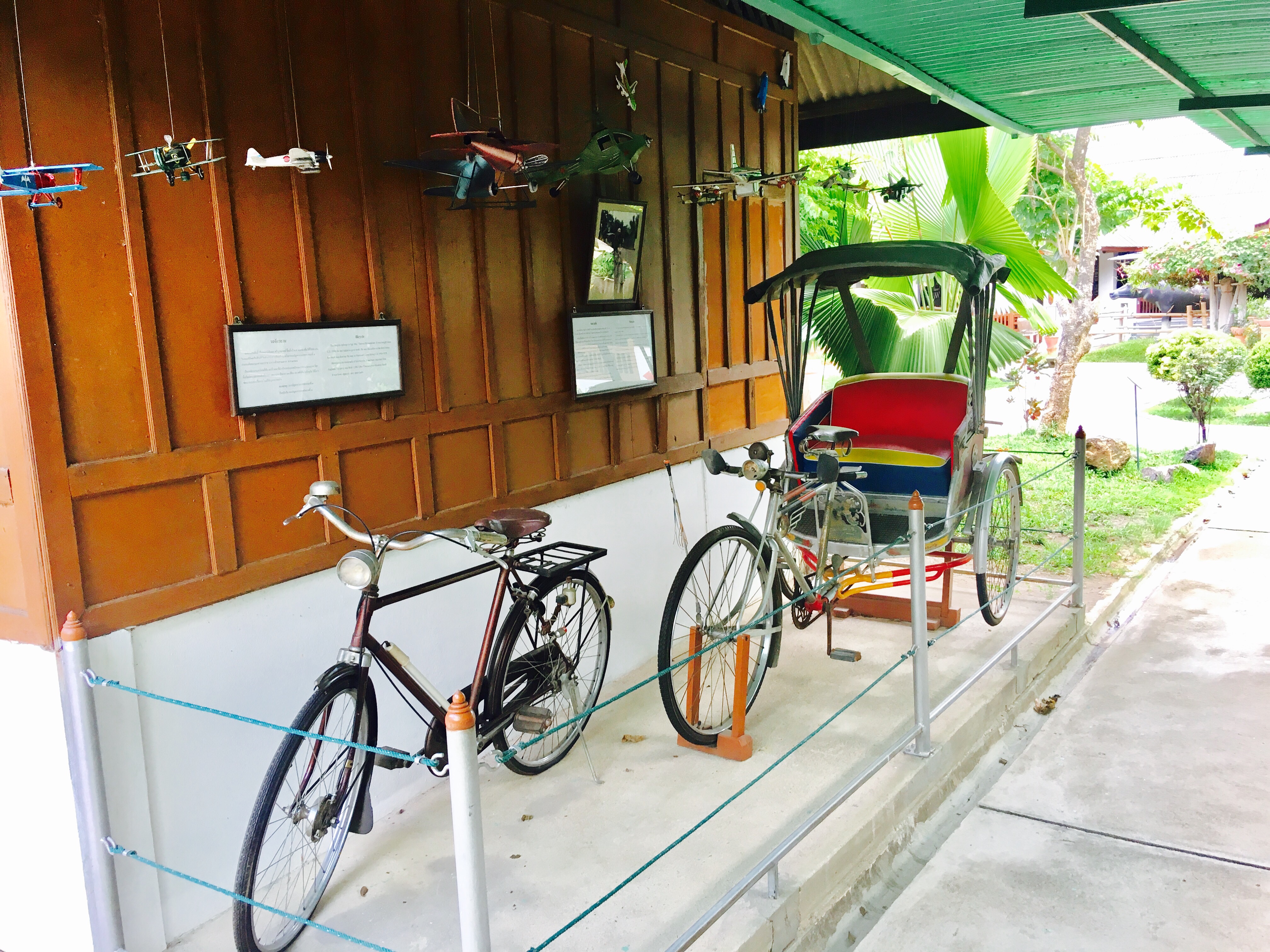
Sergeant Major Thawee Folk Museum stands as a testament to the vision of Sgt. Maj. Thawee Buranaket. Driven by the desire to preserve and share the history and traditions of the region, he embarked on a mission to collect these objects for his descendants and the wider community.
Among the captivating exhibits is a tricycle credited to Captain Leaung Phonsophong, a Thai innovator who claimed to have created the first of its kind. A visit to this museum is a must for anyone in Phitsanulok, offering a profound connection to the heritage of the area.
With Phitsanulok’s cultural treasures explored, my next adventure beckons in Chiang Mai: a quest for trekking awaits.
Happy days
😊
Jenny

 Jenny Sky Is The Limit
Leave a comment