As our time in Chengdu came to an end, we prepared for our next destination: Guilin. Given the substantial distance of over 1100 km between these two cities, we opted to arrange a flight for our journey.
Flight Journey:
Chengdu Shuangliu Airport (CTU) is notably large, modern, and equipped with all the amenities expected of contemporary airports. Serving as the main airport in Sichuan province, it holds significant importance as a gateway for western China and for Air China.

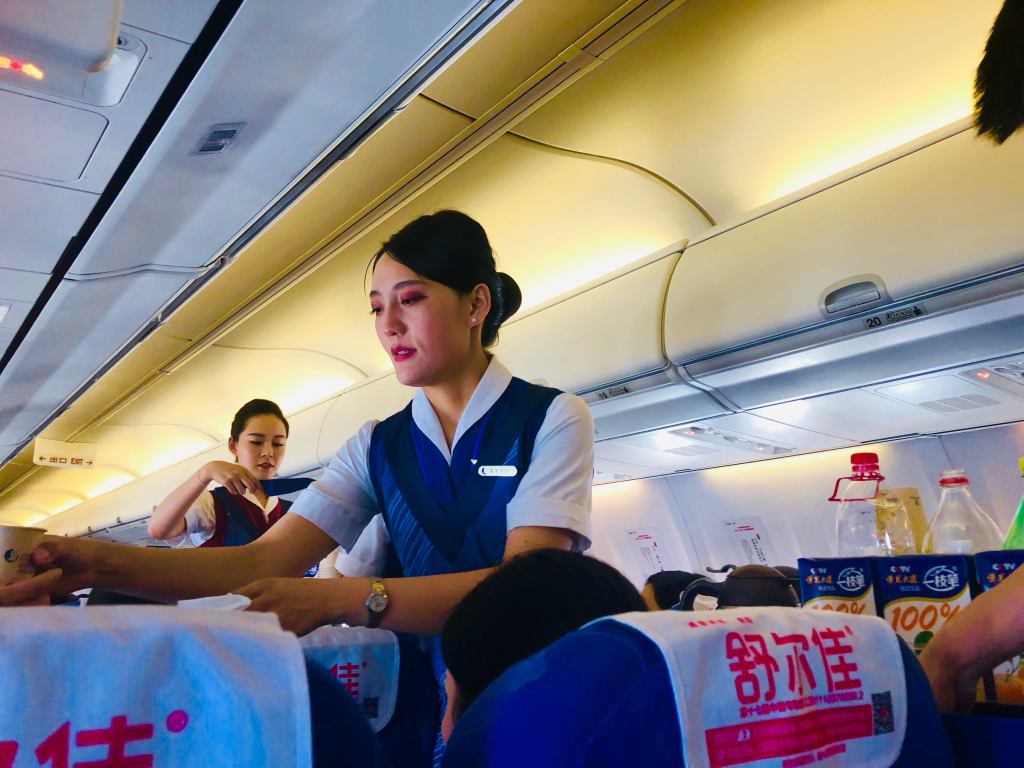
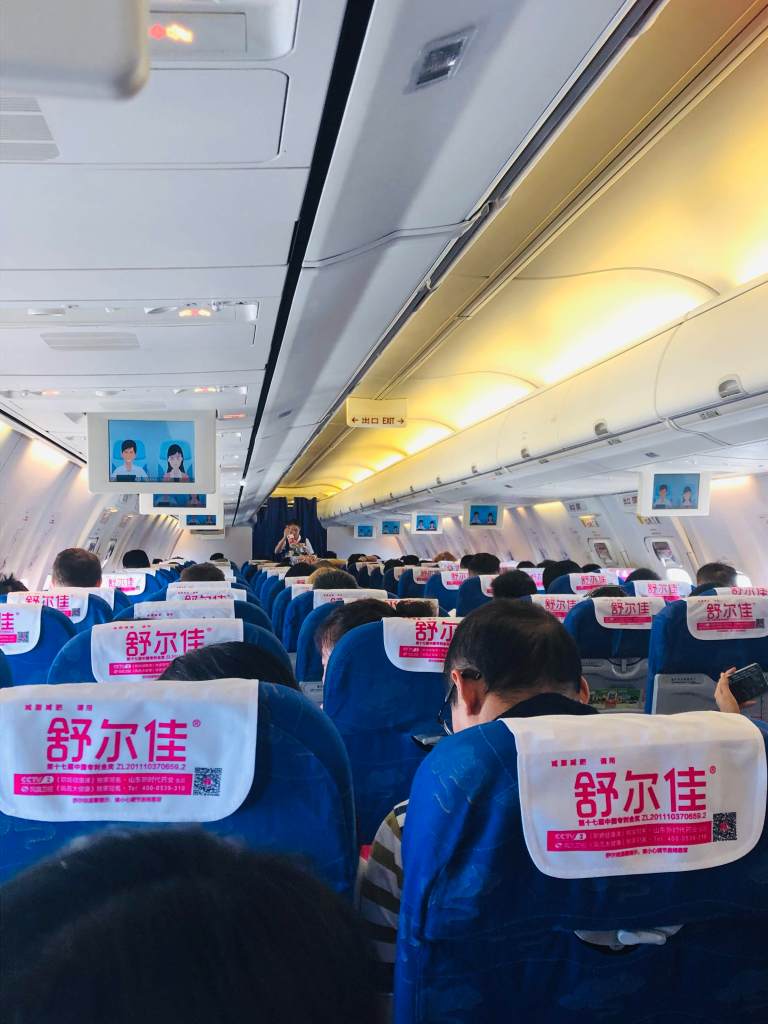
The airport handles over 50 million passengers yearly and boasts two runways. Our flight today, a mere 1.45 minutes, was onboard a Shandong Airlines Boeing 787-800. I was able to issue and manage my flight thanks to their ticketing agreement with Hahn Air, and overall, the service was decent and far superior to similar short journeys in Europe.
We landed at Guilin Liangjiang Airport (KWL), the primary airport in the Guangxi region, which handles nearly 9 million passengers yearly with a single runway.
We landed at the airport at 13:05 and headed directly to our visit to Longsheng to explore the famous rice fields. The car journey took approximately two and a half hours, covering a distance of approximately 100 km from Liangjiang International Airport. Our visit today was to appreciate the renowned Longji rice fields.

Longsheng Rice Terraces
Longsheng Rice Terraces, also known as Longji Rice or Dragon Backbone Terraces, derive their name from the Chinese term ‘Longji,’ which translates to ‘dragon spine.’ These terraces span across several villages in Longsheng, including Jinkeng, Ancient Zhuang, Ping’an, and Huangluo Red Yao Village, among others.


With a history spanning over 700 years, these terraces were originally built during the Yuan Dynasty, offering the most impressive multi-coloured agricultural view that truly took my breath away! literally! As we walked through the village under the intense heat, we also relished our guided walk.


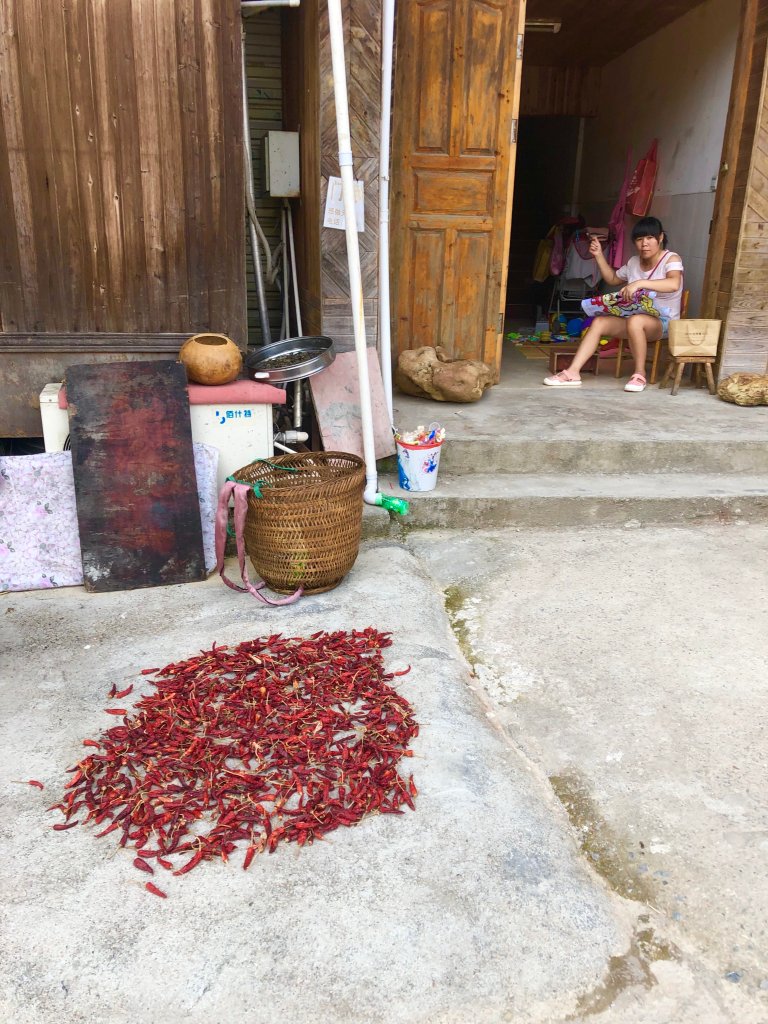
We arrived at a village called Ancient Zhuang, which we were told is the least modernized Zhuang minority village in Longsheng. Located in the middle of Yuecheng Mountain, north of Guangxi province, we began hill-walking through it. This area is home to the Zhuang people, who continue to preserve their large wooden housing and stone carving culture.


Despite both of us struggling with the heat, we continued to appreciate our local guide, Emily, who shared many stories about the local culture, the cultivation of these five-coloured terraces, and the lives of local farmers. The terraced fields are scattered between 300 m to 1100 m above sea level, offering spectacular scenery, a piece of art painted by nature. I was pleased and captivated by it all.
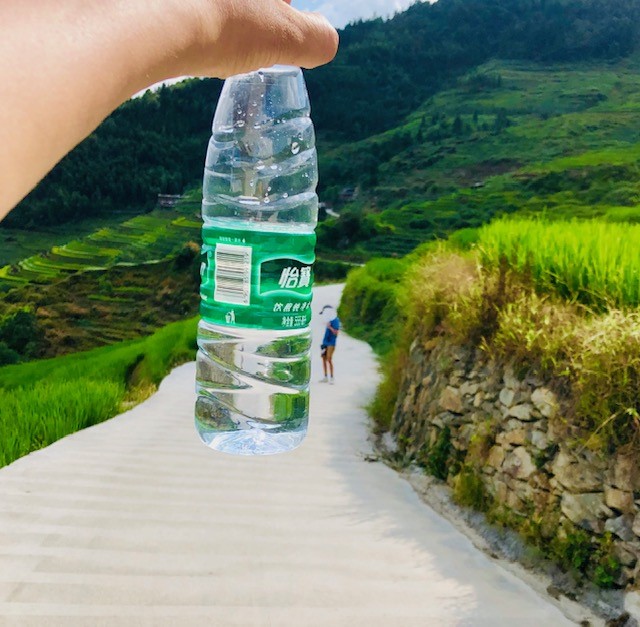

The Dragon’s Backbone Terraces are the result of the profound knowledge of the land and the diligent work of the Zhuang community that has evolved over the centuries.
Diaojiaolou
We also explored local life by visiting a local house where we ‘chatted’ (with my fluent Chinese, right!) with the most beautiful 83-year-old lady! her skin is amazingly smooth! She graciously allowed us to visit her lovely wooden house.
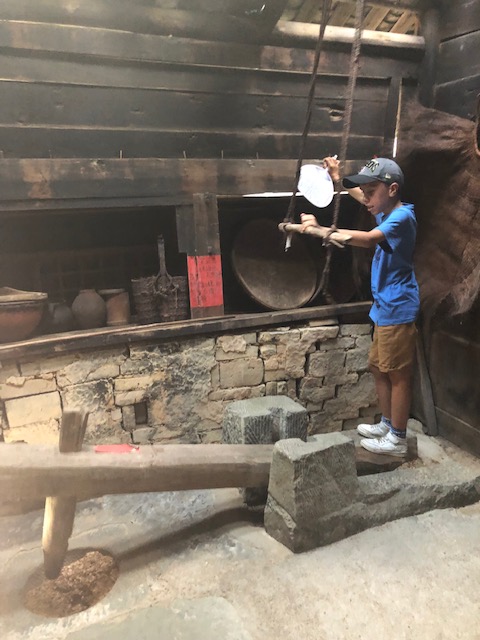
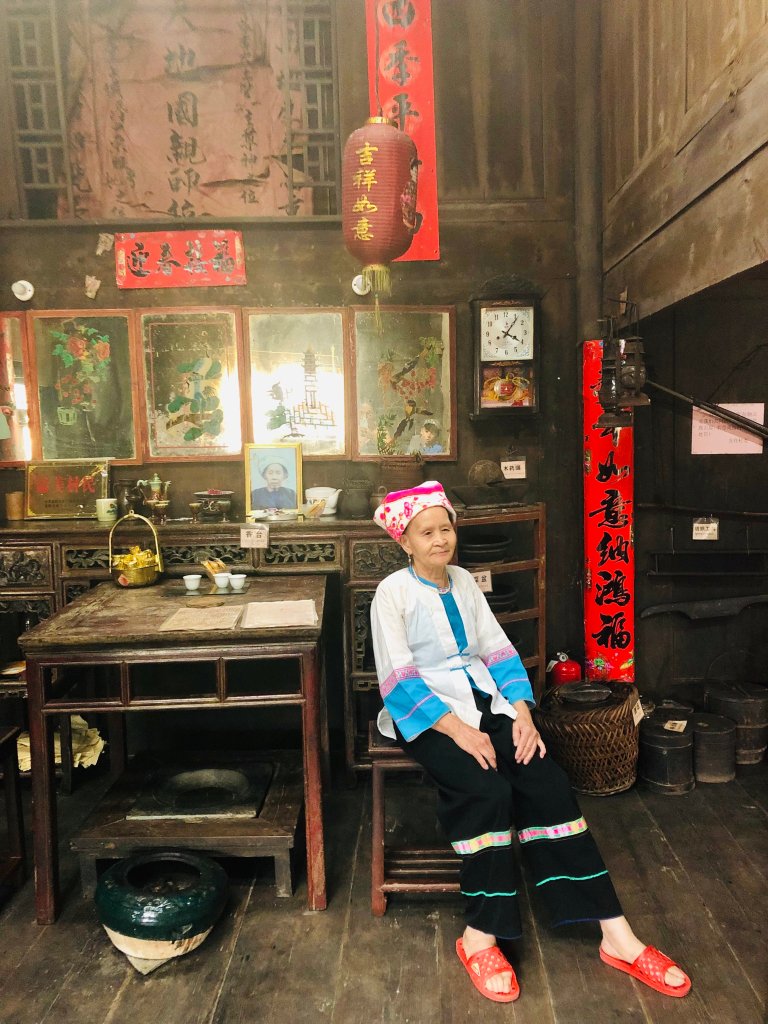
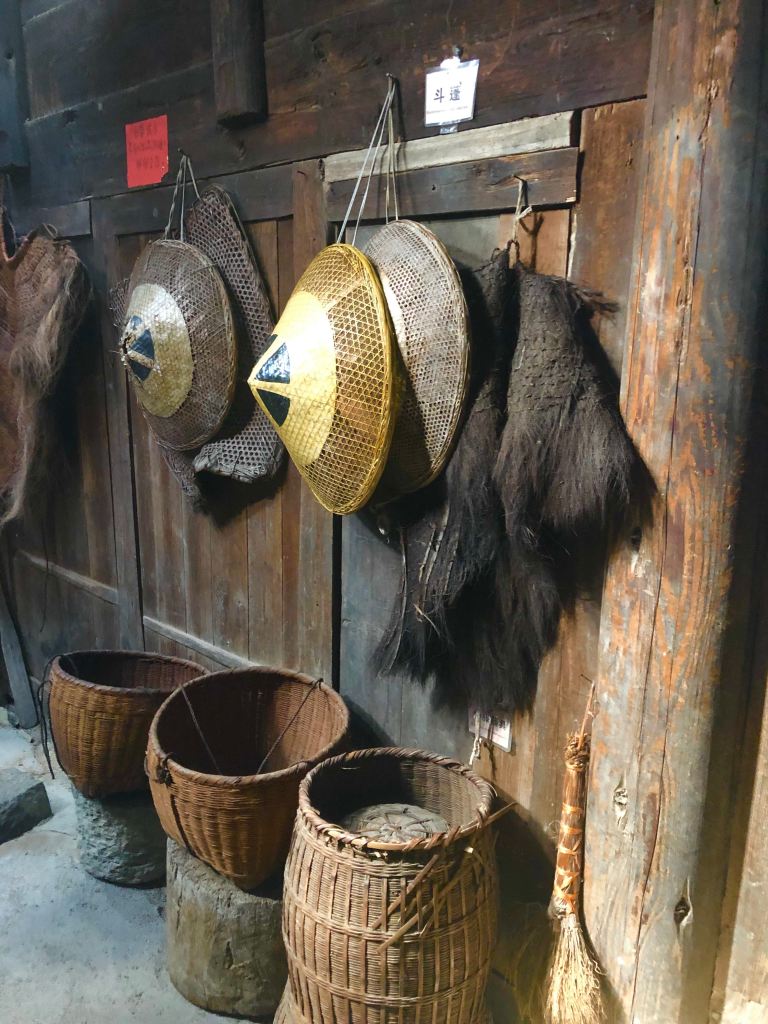
These houses are called Diaojiaolou, which translates to ‘stilt house’ They are built on a mountain slope, supported by columns above the ground.
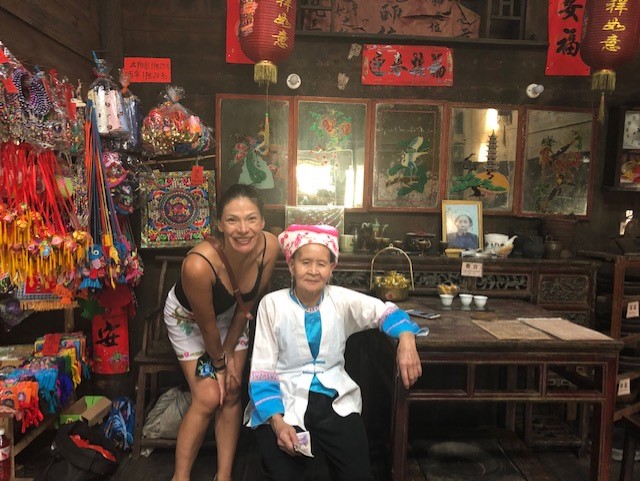
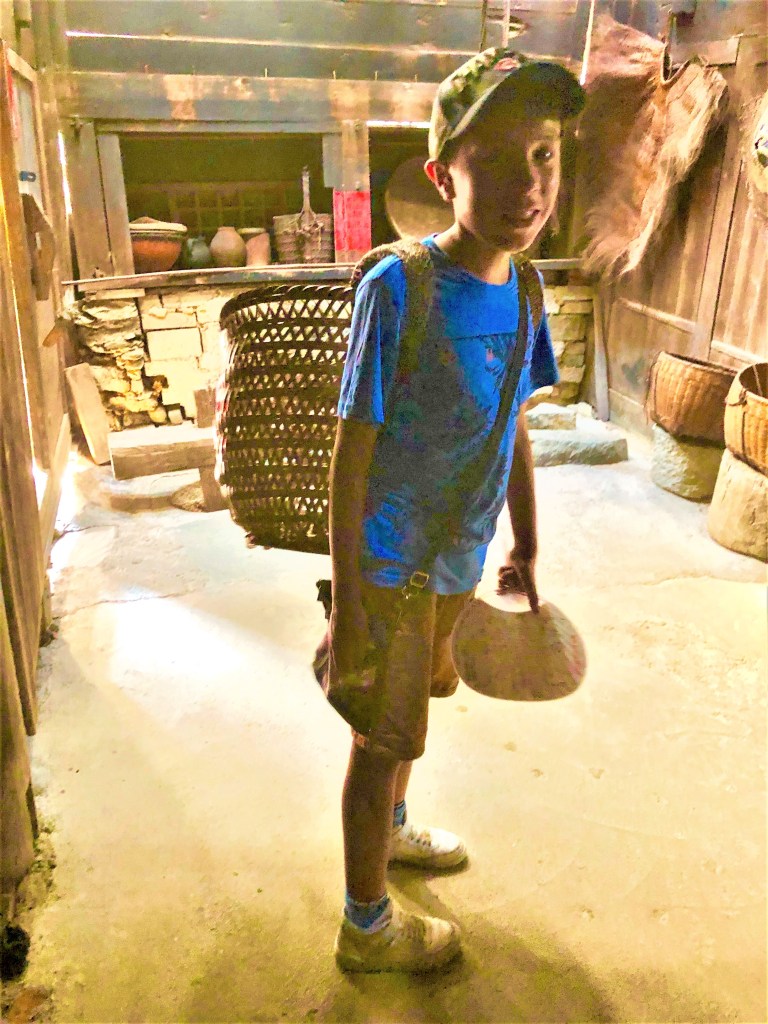
This youthful-looking lady graciously showed us around her house with pride. The ground floor is typically reserved for animals, while people live on the first floor. Handicrafts and souvenirs were available for purchase at her house, and we bought some to express our gratitude for her hospitality.
“Oh to be a dragon!! a symbol of the power of Heaven – of silkworm size or immense; at times invisible.” Marianne Moore
Love
💖
from Jenny
 Jenny Sky Is The Limit
Leave a comment