
I’ve been yearning to embark on a Round-the-World journey for a few years now. However, the challenges of being a perpetual student, coupled with the responsibilities of a full-time job and single parenthood, haven’t allowed me to make it happen, until now. In my quest, I’ve delved into extensive research, meticulously exploring the fare regulations of various Round-the-World tickets. Let’s dive in!
There are three prominent Round-the-World products offered by well-known airline alliances: Star Alliance, Oneworld Alliance, and SkyTeam.

While there are three major airline alliances, my choice boiled down to deciding between Oneworld, with its 15 member airlines, and Star Alliance, boasting 28 member airlines.
Having completed multiple trips to the Americas, I’ve had the opportunity to fly with many carriers from the Oneworld alliance. This adds weight to the idea of trying out the Star Alliance.
Oneworld offers two products, with one being the One-World Explorer. This option enables travellers to explore between three to six continents, and the fare is continent-based, depending on the number of continents selected. The itinerary can be modified both before and during the journey. The Continental Zones include TC1 for The Americas, TC2 covering Europe, the Middle East, and Africa, and TC3 encompassing Asia and the South West Pacific.
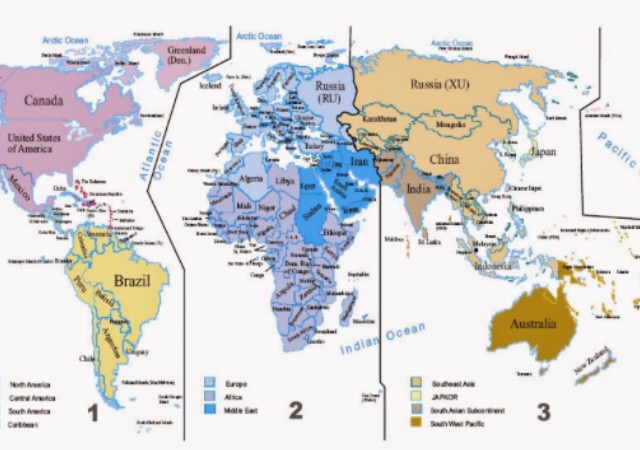
The second product is known as The Global Explorer, and its pricing is determined by the total distance covered and the chosen cabin class. This is organized into four Tier Levels: Tier 1 covers up to 26,000 miles in economy class only, Tier 2 extends to 29,000 miles, still limited to economy class, Tier 3 accommodates up to 34,000 miles with options for economy, business, or first class, and finally, Tier 4 includes up to 39,000 miles, but only in economy class.
On the Star Alliance side, there are two products vying for my travel appetite. The first contender is Circle Pacific, which opens the gateway to 25 countries but restricts the choice to specific airlines. This option is tailor-made for those with an itch to explore Asia, North America, and the South West Pacific.
The second option is the Round the World ticket, offering unrestricted access to the extensive network of 28 member airlines. The pricing for this product is determined by factors such as the total mileage of the journey, based on IATA industry standards (Ticketed Point Mileage), the number of stopovers, and the country of origin. The regular Round the World fare covers distances up to 29,000, 34,000, or 39,000 miles. Alternatively, the Special Economy Round the World fare includes up to 26,000, 29,000, 34,000, or 39,000 miles, while the Special Business Round the World fare encompasses up to 26,000 miles. It’s important to note that travel must adhere to a single global direction (East or West) within these products.
Given my eagerness to experience the splendour of Singapore Airlines’ Airbus A380, commencing my journey in vibrant Bangkok, and continuing from the renowned Changi Airport, coupled with a desire for a brief visit to Sydney and Auckland, the clear and optimal choice for me is the Star Alliance. Leveraging my adept travel journey planning skills, I’m now orchestrating an itinerary that aligns seamlessly with the criteria of the Special Economy Round the World ticket, enabling me to embark on an exhilarating 26,000-mile journey around the globe. Yujuuu… here’s to the adventure
I am eagerly anticipating my solo round-the-world adventure spanning 80 days

Follow me
🙂
Love ❤️ from
Jenny
“We travel, some of us forever, to seek other places, other lives, other souls.” – Anais Nin


Leave a Reply