Reflecting on my visit to Cambodia during my 2017 round-the-world trip, a year has passed since that adventure.
Although my initial intent was to document my travels concurrently, the fast-paced of my adventures kept me on my toes. Now, I find myself recounting these experiences as time allows. The anticipation of exploring Cambodia, particularly the iconic Angkor Wat, had been a long-standing daydream of mine. Eager to gather insights, I turned to my Facebook community for recommendations, tapping into the wisdom of friends who had already ventured to this part of the world.
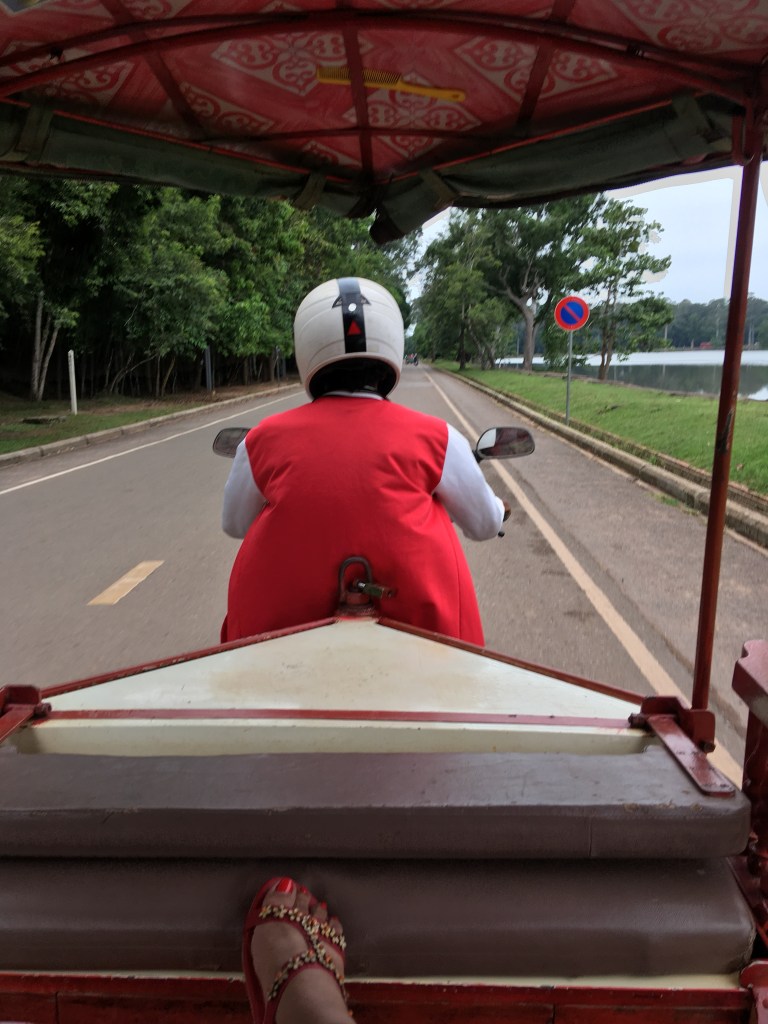
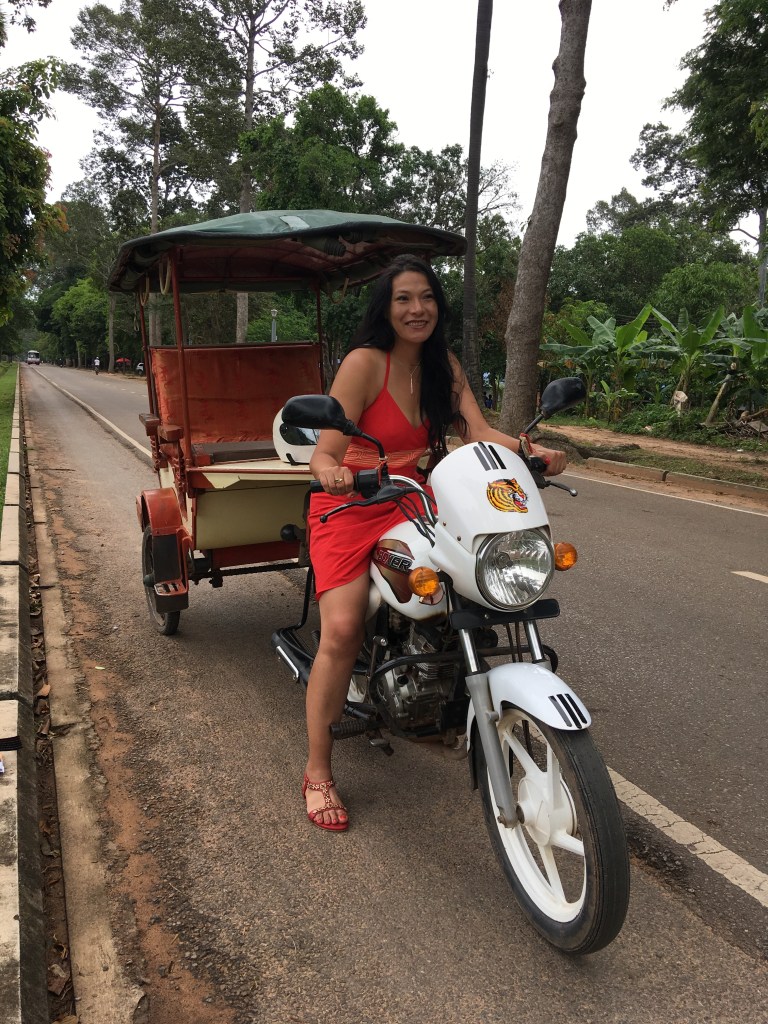
Initially, I entertained the idea of wandering from one archaeological site to another on foot. However, thanks to the guidance of my well-travelled Facebook community, a more practical suggestion emerged, opting for the convenience and affordability of a tuk-tuk to navigate the expansive wonders that awaited.
On my initial day in Siem Reap, I made a deliberate choice to ease into the experience. The agenda was simple: acquaint myself with the town, explore local bars, and meticulously assess my options for visiting the archaeological wonders. True to expectations, the process unfolded seamlessly.
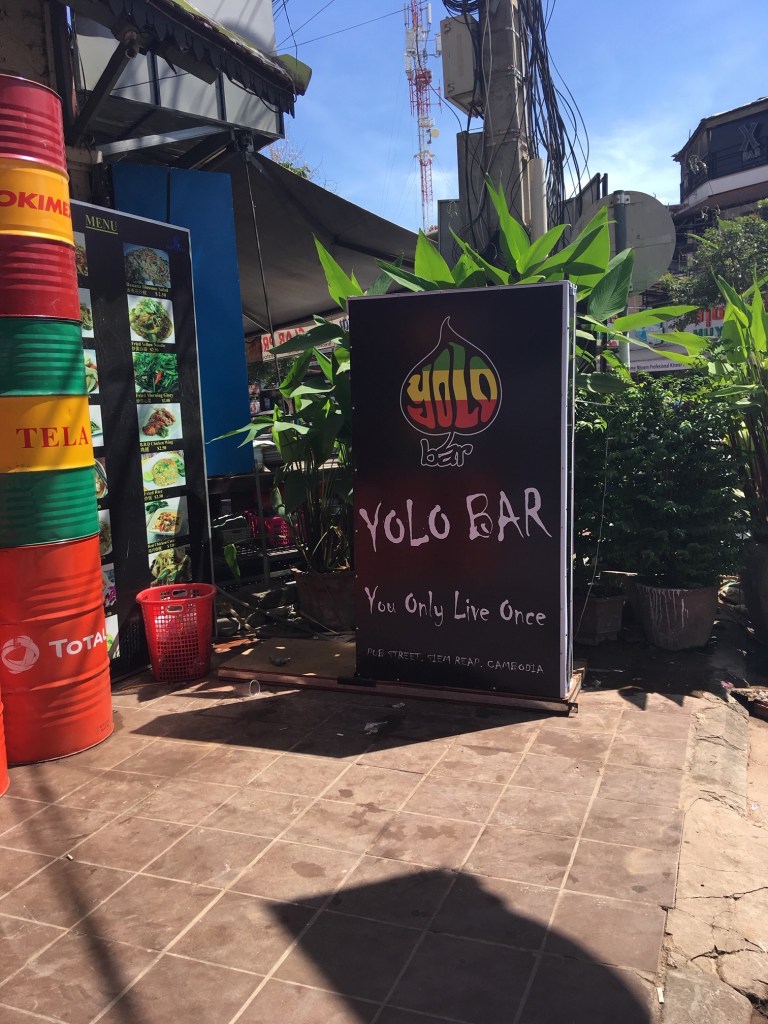
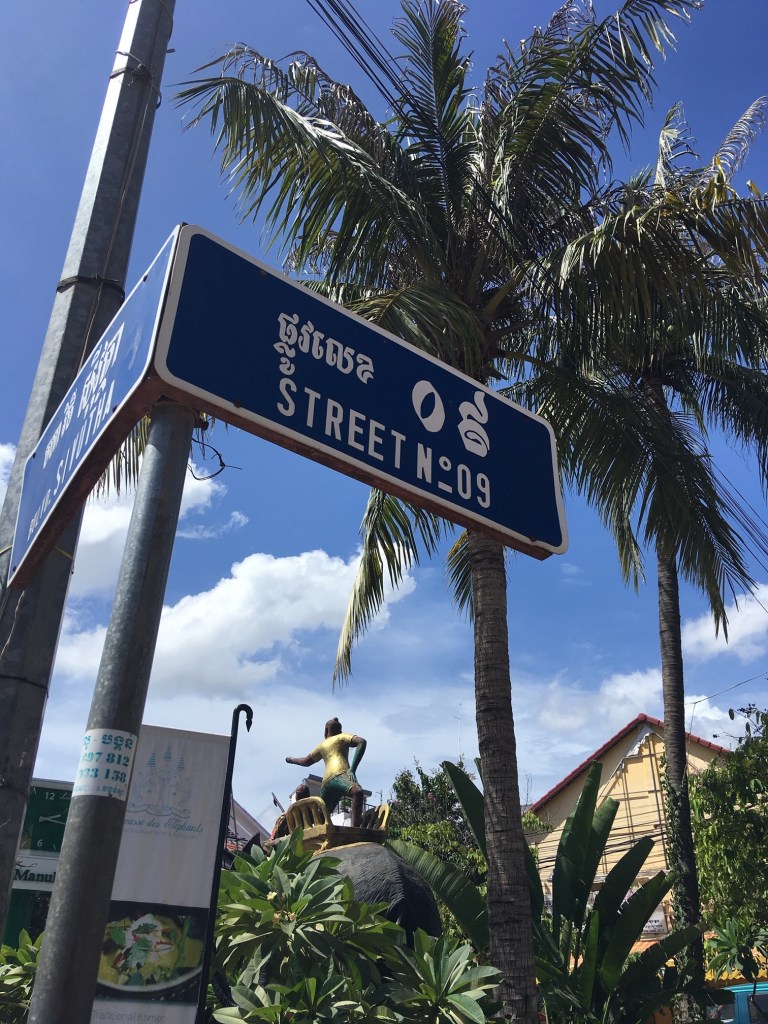

My hostel conveniently nestled near the vibrant “Pub Street,” the bustling hub of bars, restaurants, and tourist hotspots in Siem Reap.
Establishing my priorities for the day, I kicked off with a rejuvenating “deluxe” massage-pedicure, a steal at USD7 (GBP5.5, $20,000 COP), gearing up for the forthcoming days of exploration. Concluding the day with a bout of souvenir shopping, securing a SIM card, and relishing a delightful meal at a local eatery, I felt content and fully primed for the impending adventure.
Back at the hostel’s travel desk, I found a fantastic deal for my upcoming escapade. The offer included the services of a tuk-tuk and driver for three full days at a mere USD65. This inclusive package covered waiting time at each site, seamless transport between locations, as well as pick-up and return services to my hostel. The irresistible offer prompted me to swiftly embrace this opportunity.
DAY ONE AT THE ANGKOR COMPLEX:
Embarking on my inaugural day at the Angkor Complex, the order of the day was securing an entrance ticket, a prerequisite for all foreign visitors exploring the Angkor Archaeological Park. Accompanied by my driver, we made the queue for the visitor center conveniently located on our route to Angkor Wat temple. Here, I was explained all the ticket options, each tailored to accommodate varying timeframes for exploring the sprawling sites.

The ticketing options presented three distinct choices to explore the Angkor Archaeological Park. The initial choice provided access for a single full day, with a ticket priced at USD 37. The second option extended visit window to three days, valid within a ten-day period, with a ticket costing USD 62. Opting for the second choice, I secured this ticket. Lastly, the third option granted entry for a seven-day period, valid within a month, at a cost of USD 72. Each ticket required a digital photograph, ensuring non-transferability and non-refundability.
It was imperative to carry the ticket at all times, as entry to the temples could be denied without it. In addition to that and to respect the sacred nature of many temples, visitors were required to adhere to a dress code, encompassing appropriate attire covering shoulders and long trousers or dresses extending below the knees.
Here my itinerary:

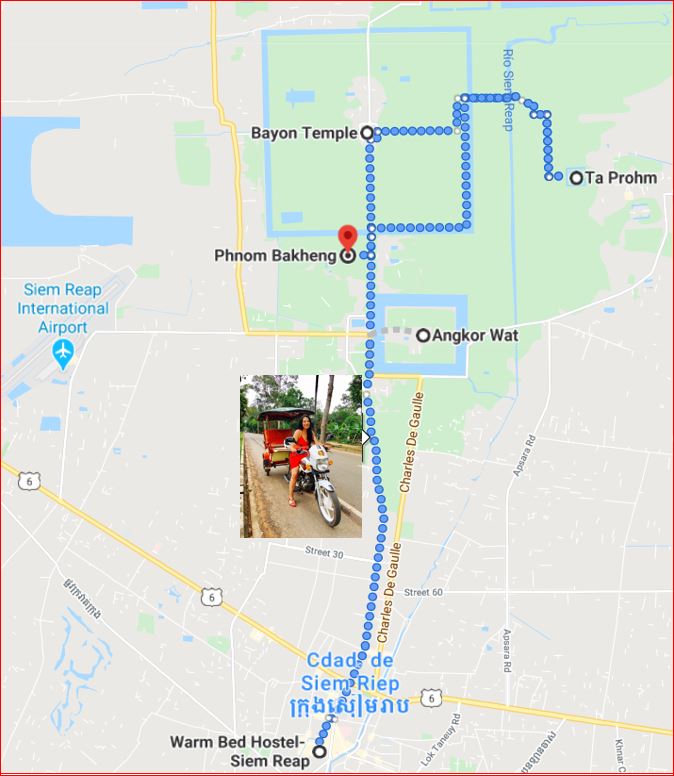
The Angkor Wat Complex, translating to the city of temples, stands as a testament to the ancient Khmer empire, which once held sway over much of Southeast Asia. Though the civilisation is long gone, its awe-inspiring temples and structures endure, having weathered centuries of wilderness. The intricate interplay of nature and history in this complex left me completely mesmerised, offering a glimpse into the intriguing past of a bygone era.
1. Angkor Wat Temple:

Angkor Wat, a captivating cultural and architectural marvel, draws over a million tourists to Cambodia annually. Spanning more than 248 square miles, the Angkor ruins form an expansive historical landscape.
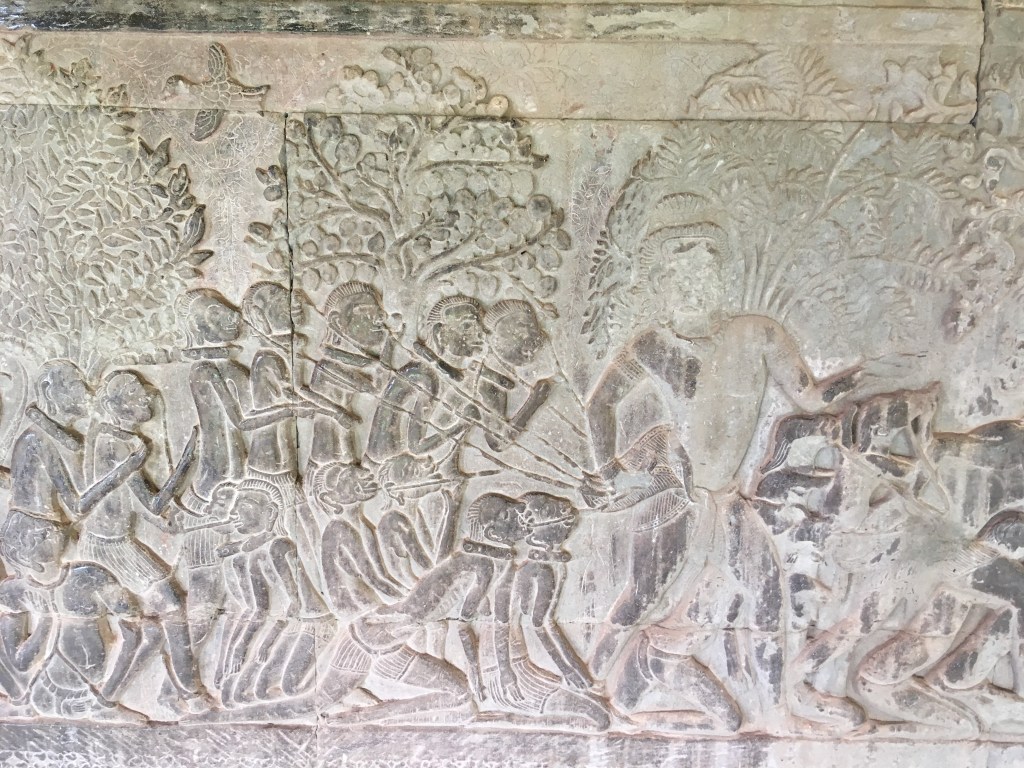
The peculiar westward orientation of Angkor Wat, traditionally linked with death in Hindu culture, adds an intriguing layer to its significance. The intricately carved reliefs at Angkor Wat follow a counter-clockwise path, a feature associated with funeral ceremonies.
The temple’s dedication to Vishnu, a Hindu deity, rather than the reigning king of its era, adds a unique historical dimension.
The construction of Angkor Wat showcases the ingenuity of the Khmer people, as they used a vegetal compound to virtually imperceptibly bind the bricks together, eschewing traditional mortar. Unfortunately, Angkor Wat, considered the largest religious monument in the world, faced challenges due to unregulated tourism and looting over the years, which has resulted in the decapitation of numerous ancient figures illicitly sold to private collectors.
Despite these issues, Angkor Wat was rightfully designated a UNESCO World Heritage Site in 1992, recognising its unparalleled cultural and historical significance.
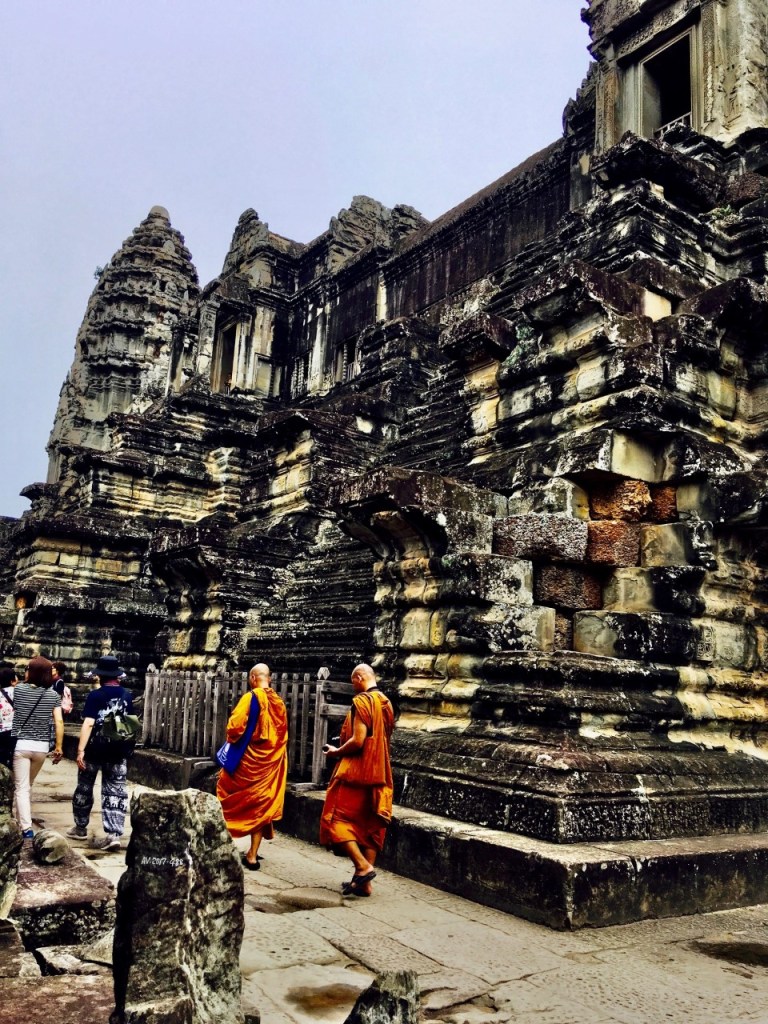
I visited Angkor Wat temple first, and I was advised to return on the second day to witness its stunning sunrise. So, that was my plan. Being around this temple one of my most dreamed destinations, I was very excited about the day ahead. As I walked towards the entrance, one of the first great things I noted was the colours of the sky’s reflection, which I think will remain in my mind for years to come. It was incredibly beautiful.
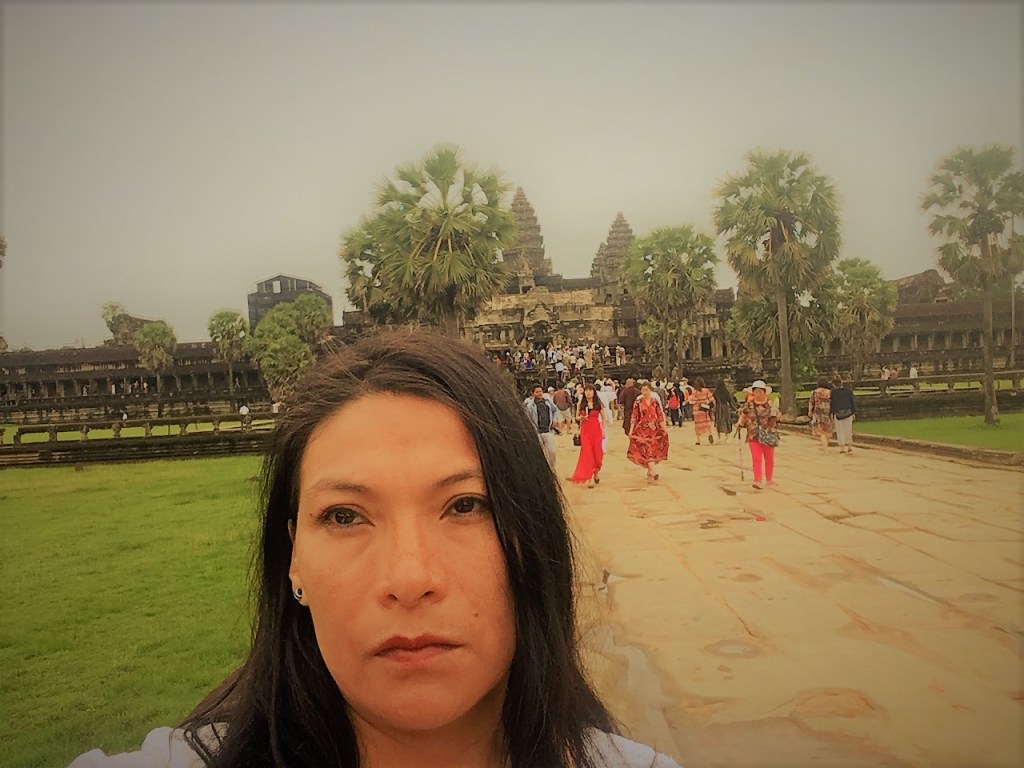
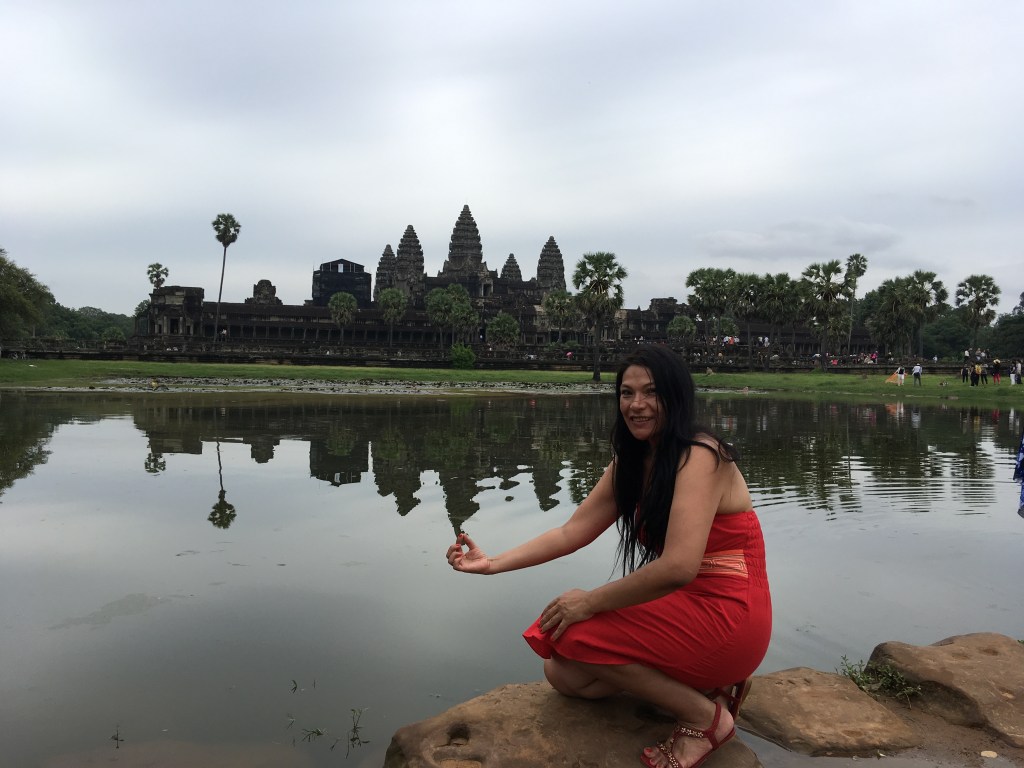
This temple was built in the 12th century by Suryavarman, and it is over 200 feet, 60 meters high. It is the best-preserved temple; therefore, it has become the symbol of Cambodia.
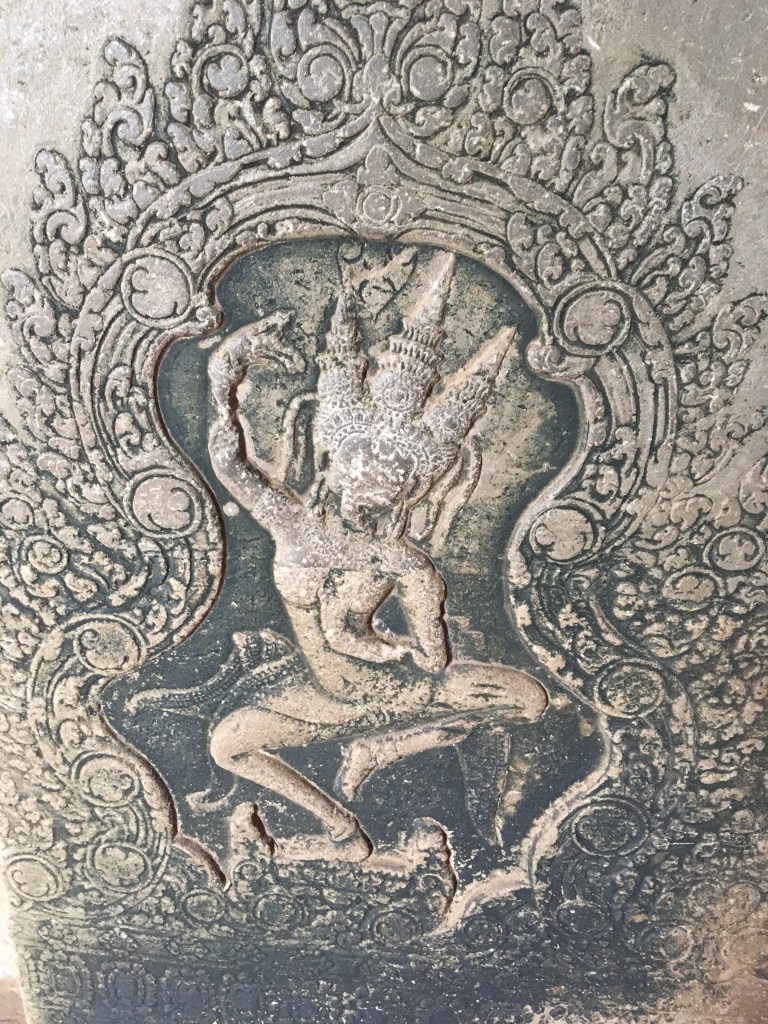
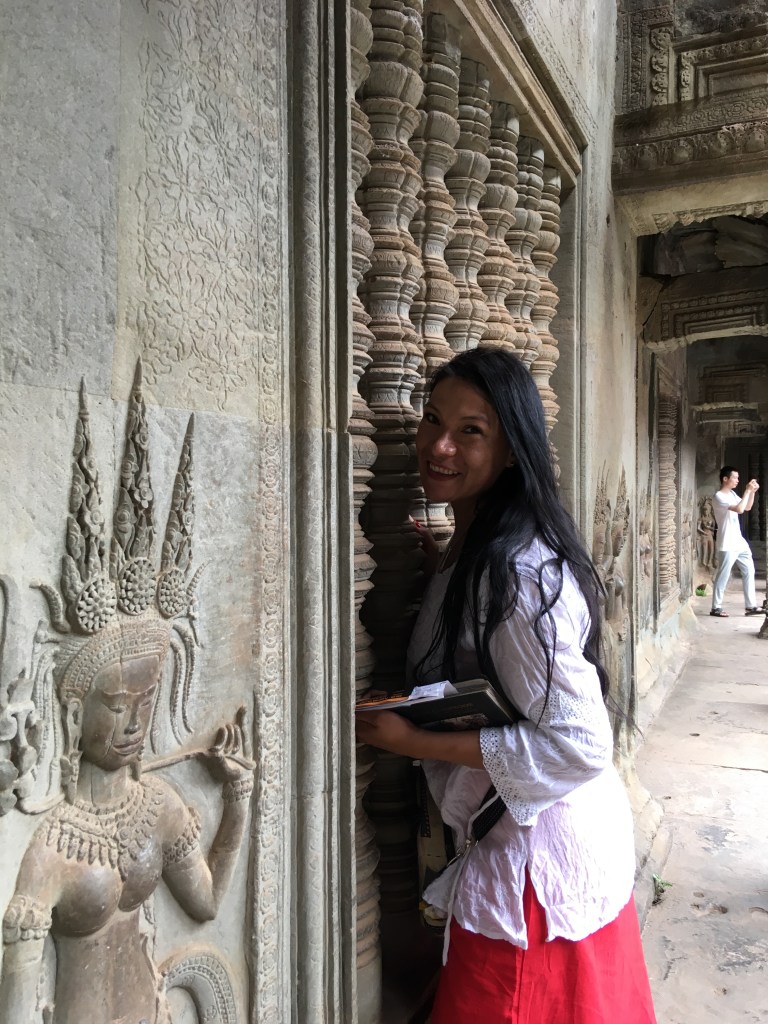
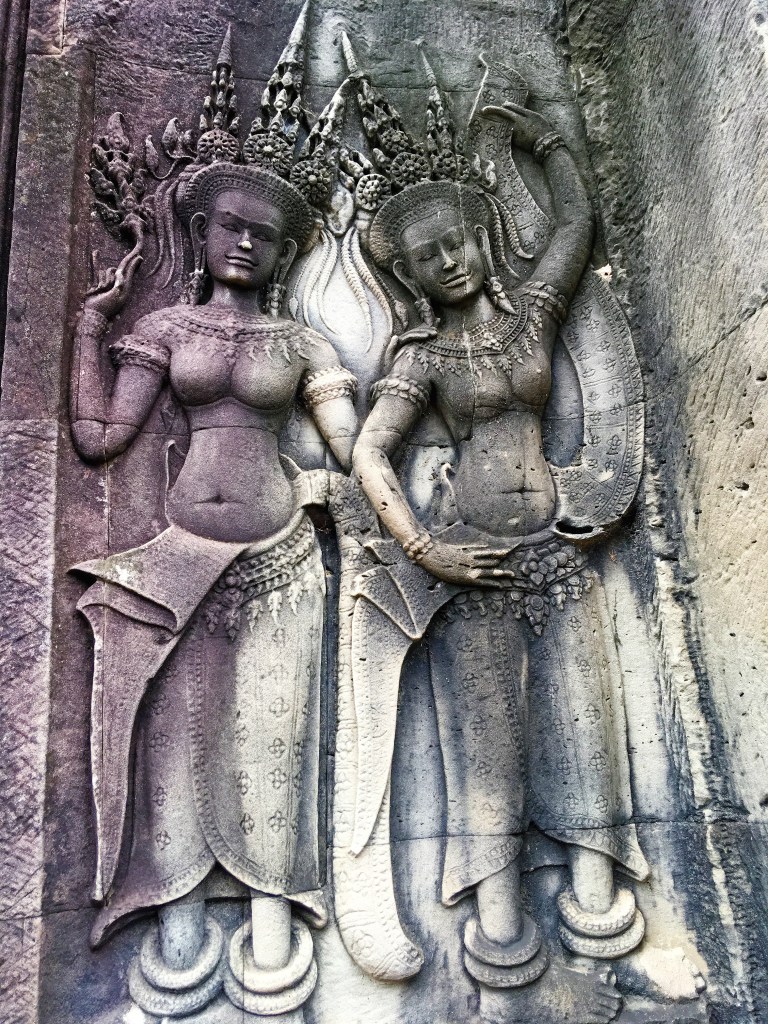
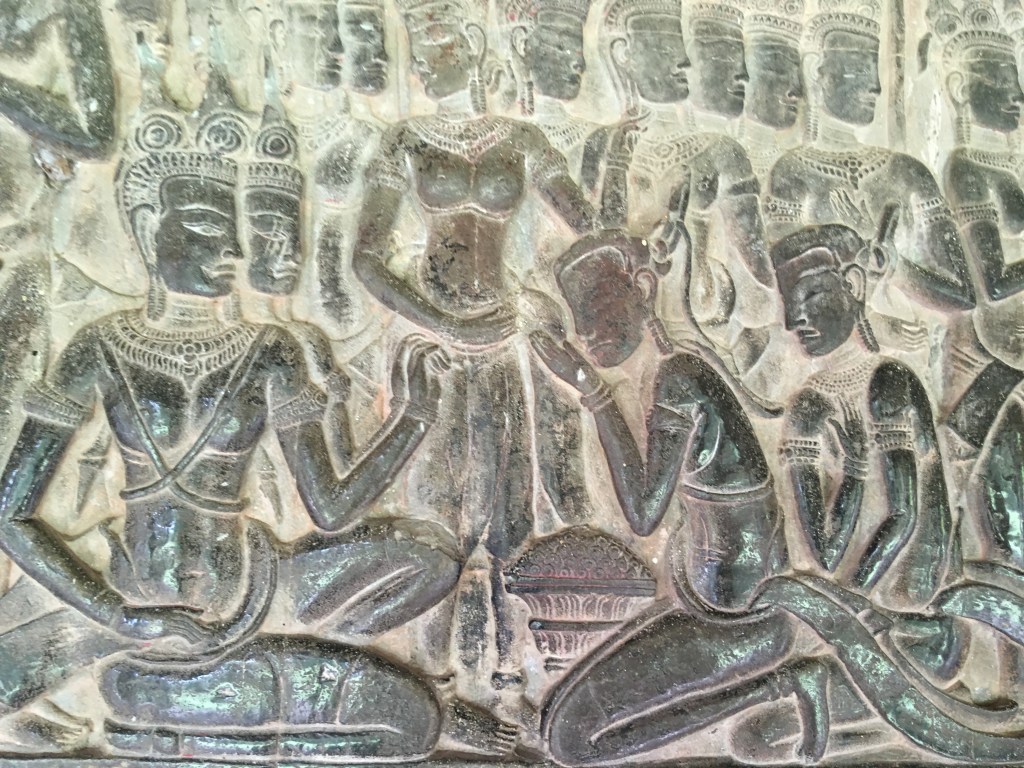
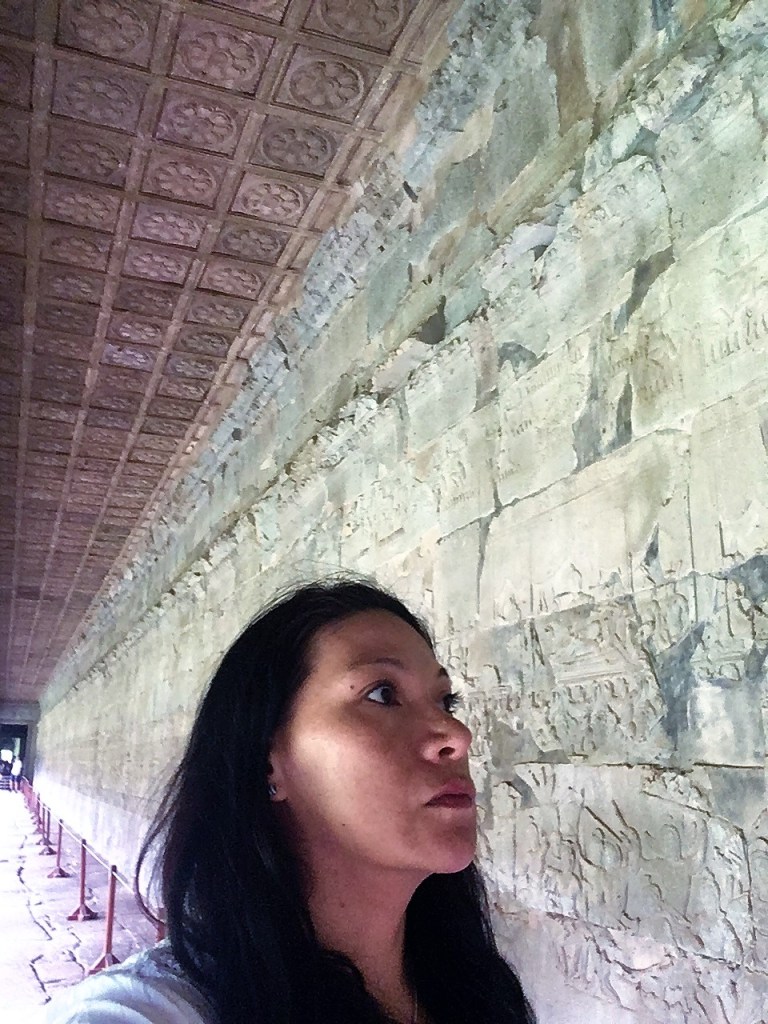
As I walked along the passageways, I marvelled at the 790 meters of intricate carvings depicting numerous gods. The whole architecture of the temple was intended to symbolise Mount Meru from Hindu mythology.


The relief sculpted on the eastern section of this southern gallery, as depicted in my picture below, intricately portrays 37 heavens and 32 hells, deriving from the rich Indian tradition. Interestingly, the hells, situated on the lower registers, are illustrated with remarkable detail, each accompanied by a distinct label such as ‘Avici,’ ‘Raurava,’ and others that still evoke fear and recognition in Cambodia to this day

The temple seamlessly integrates two components: the majestic temple mountain and three encompassing rectangular galleries.

Among the myriad embellishments, one can find depictions of female spirits and deities from both Hindu and Buddhist traditions.

Early Sunrise
I revisited Angkor Wat temple the following morning, eager to witness the renowned sunrise. Rising at 4 am, I made my way to the temple, hoping for a breath-taking spectacle. However, luck was not on my side that day as the sun remained obscured by thick clouds, offering only a view of the overcast blue skies.
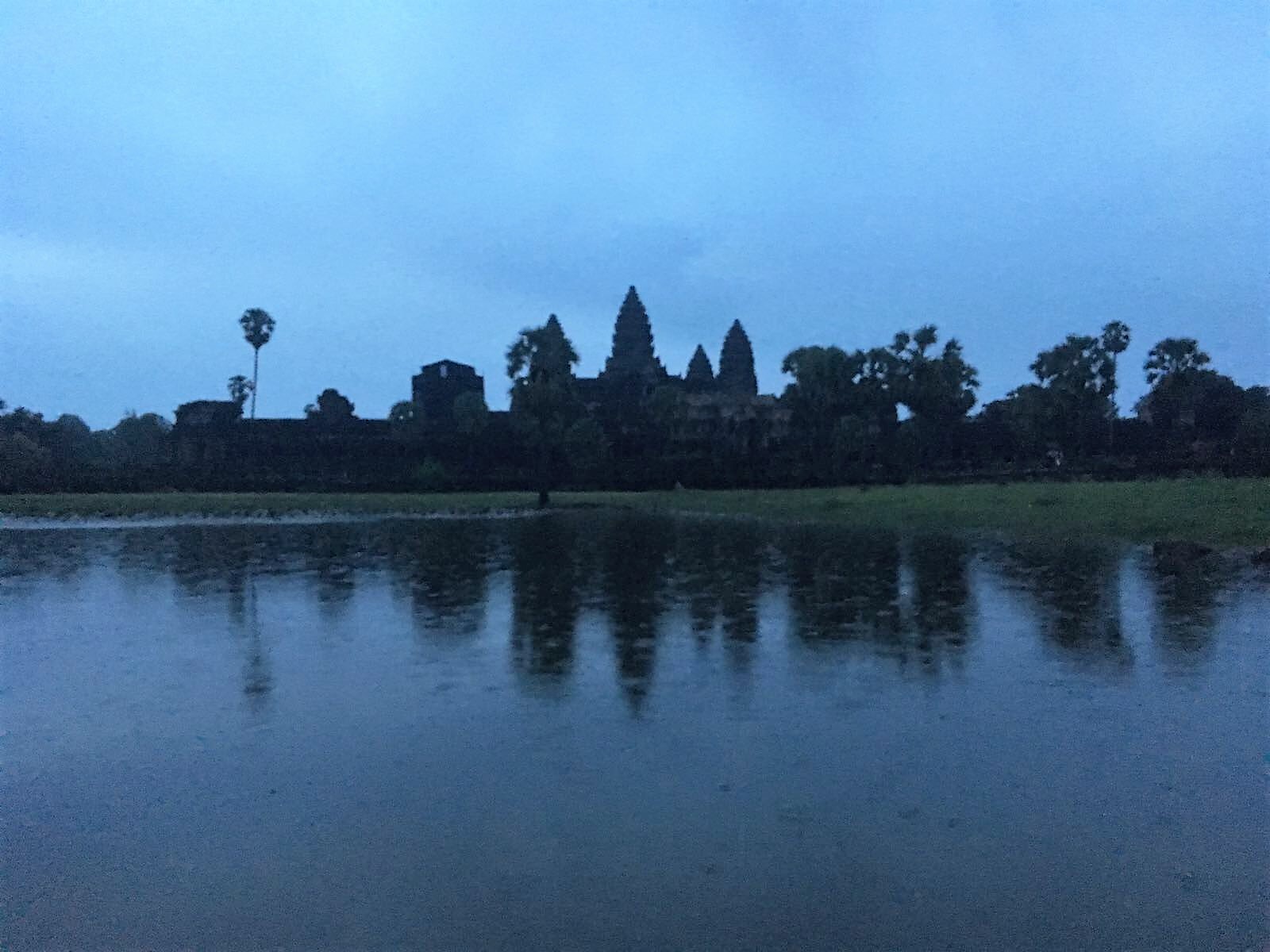
Despite the early morning chill, rain, and the bustling crowd (yes, at 5 am!), the majestic view of Angkor Wat was still breath-taking, standing amidst the ancient splendour, I couldn’t help but imagine what life might have been like in the 12th century. It was a moment of daydreaming and profound gratitude for being able to witness such a marvel.
The entire site captivated me; it was a visit well worth it, and another dream that came true for me. If you visit, be prepared for the intense heat and humidity!, but the fascinating history and the uniqueness of this wonder of the world make it an unforgettable experience.
I highly recommend starting your visit with the early sunrise experience, perhaps even bringing your own breakfast to savour amidst this ancient beauty. Guides are readily available on-site (although I opted not to hire one, I find myself wishing I had). For a more in-depth understanding of this magnificent structure, hiring a guide, typically costing around USD15, could enhance your overall experience.
Be prepared for a lively “assault” of souvenir vendors as you make your exit from the site.
2. Angkor Thom
Bayon:
From Angkor Wat, our journey led us to Bayon, where we entered the complex through the South Gate into the enchanting world of Angkor Thom.
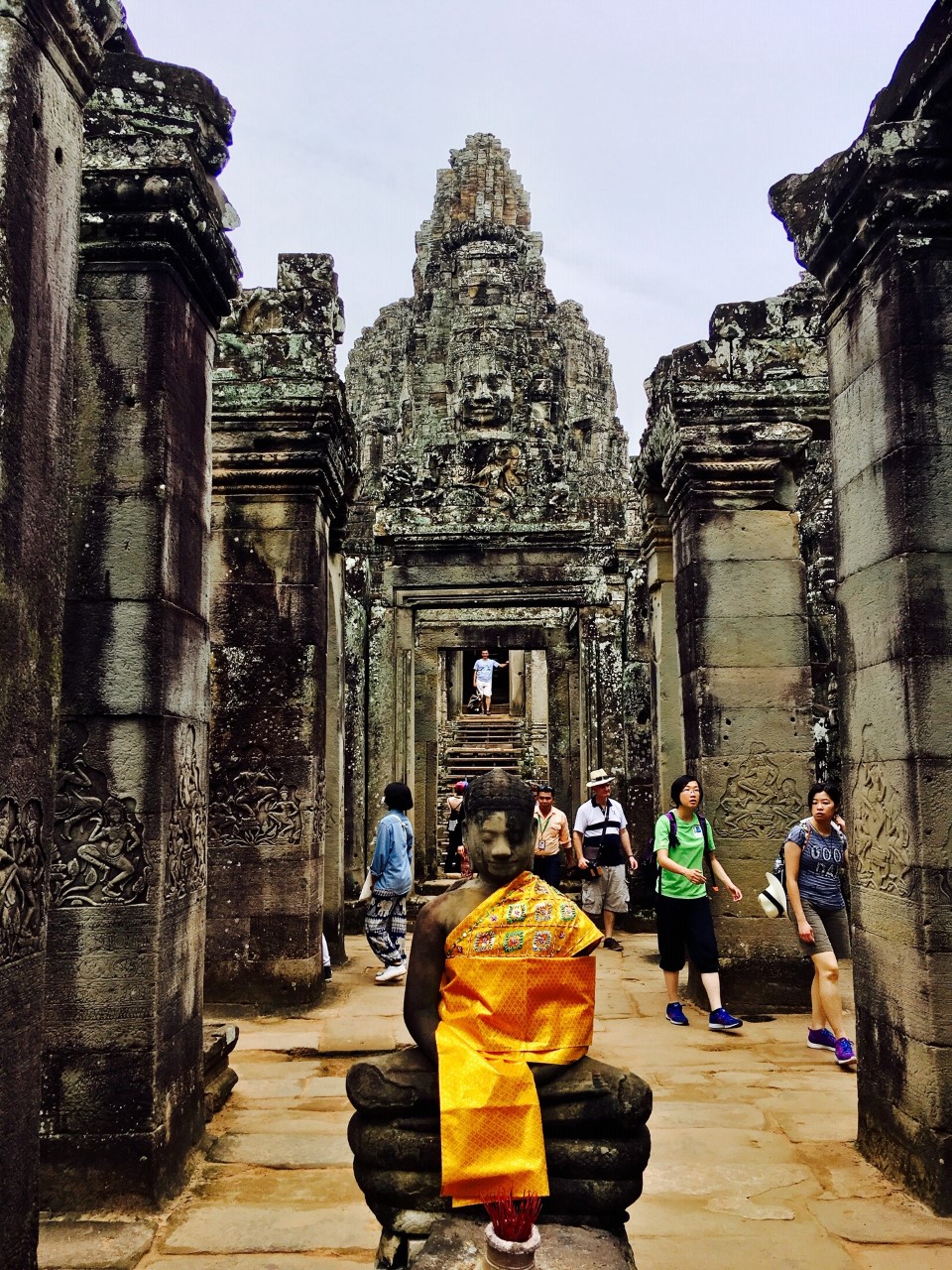
If you’ve ever wondered about the distinction between Angkor Wat and Angkor Thom, as I did, let me clarify. Angkor Wat, a temple city dating from the 12th century, is the most renowned in the entire complex. On the other hand, Angkor Thom was constructed later, in the late 12th and part of the 13th century. It is also a city that encompasses various temples, with Bayon being the most popular among them. The south gate of Angkor Thom is just 1.7 km north of the entry to Angkor Wat. Travelling comfortably in my tuk-tuk, I relished the rides between these historical wonders as the wind refreshed my path.
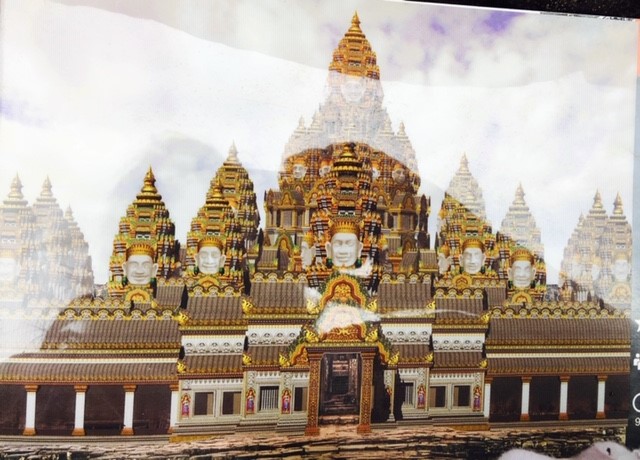

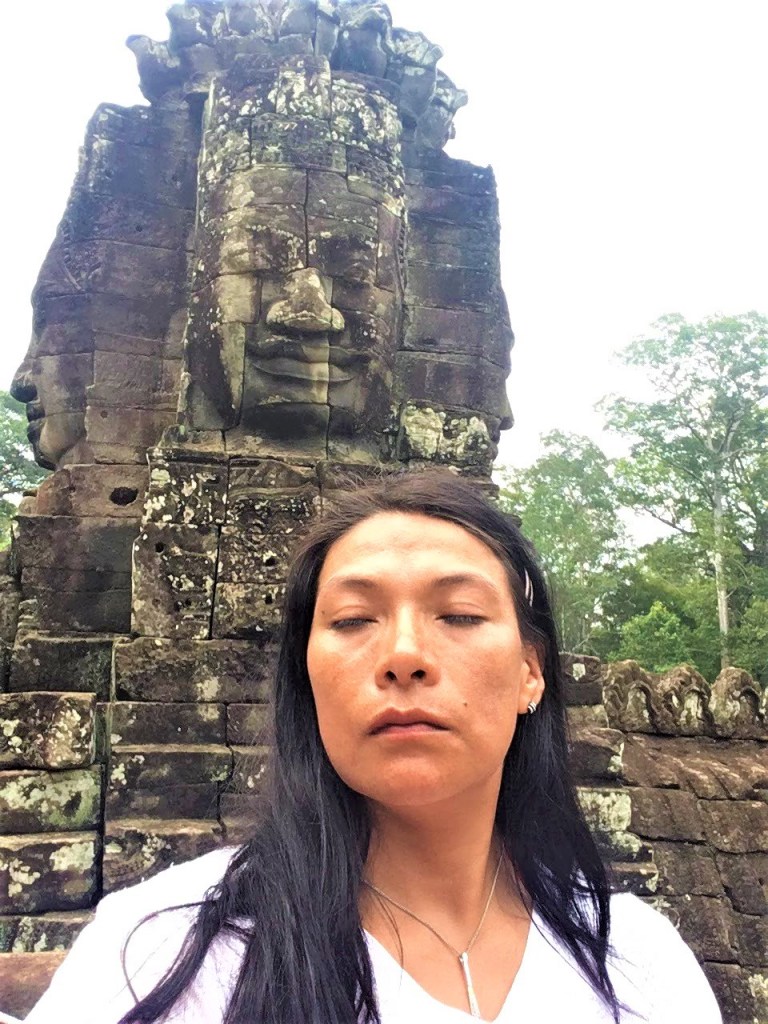
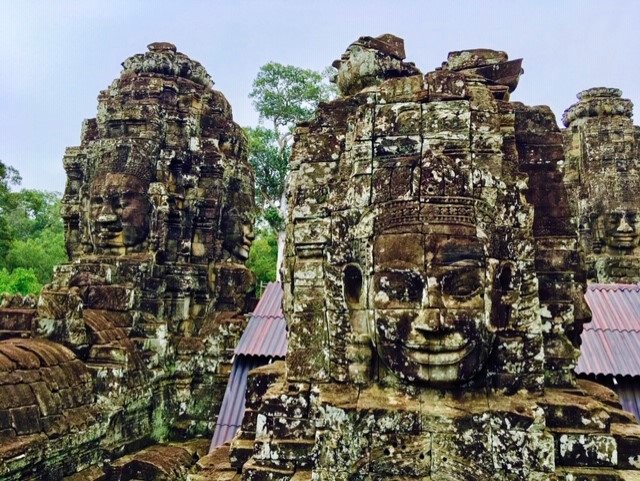
Bayon temple held a special place in my heart. I was captivated by its unique charm, adorned with countless smiling stone faces, seemingly frozen in an eternal state of meditation. This remarkable Khmer temple boasts intricate carvings that depict a rich tapestry of mythical, historical, and everyday scenes.
The Terrace of the Leper King
The Terrace of the Leper King, nestled within the Royal Square of Angkor Thom, is a short 600m journey from the Bayon temple.
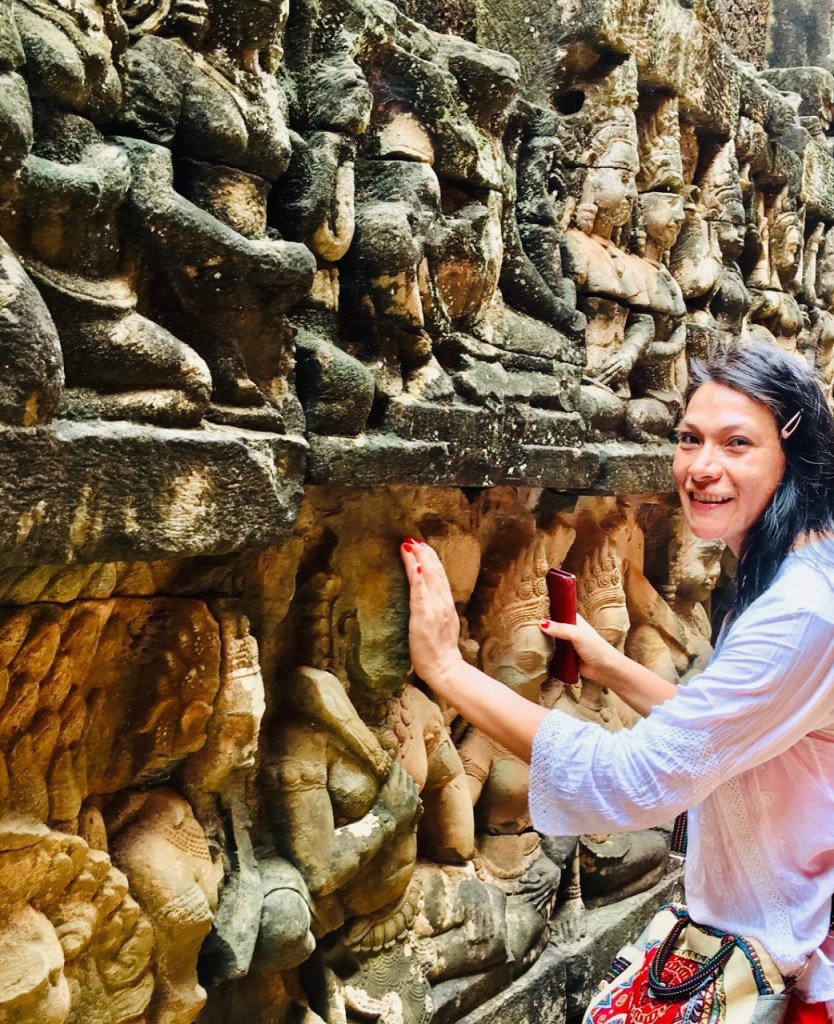
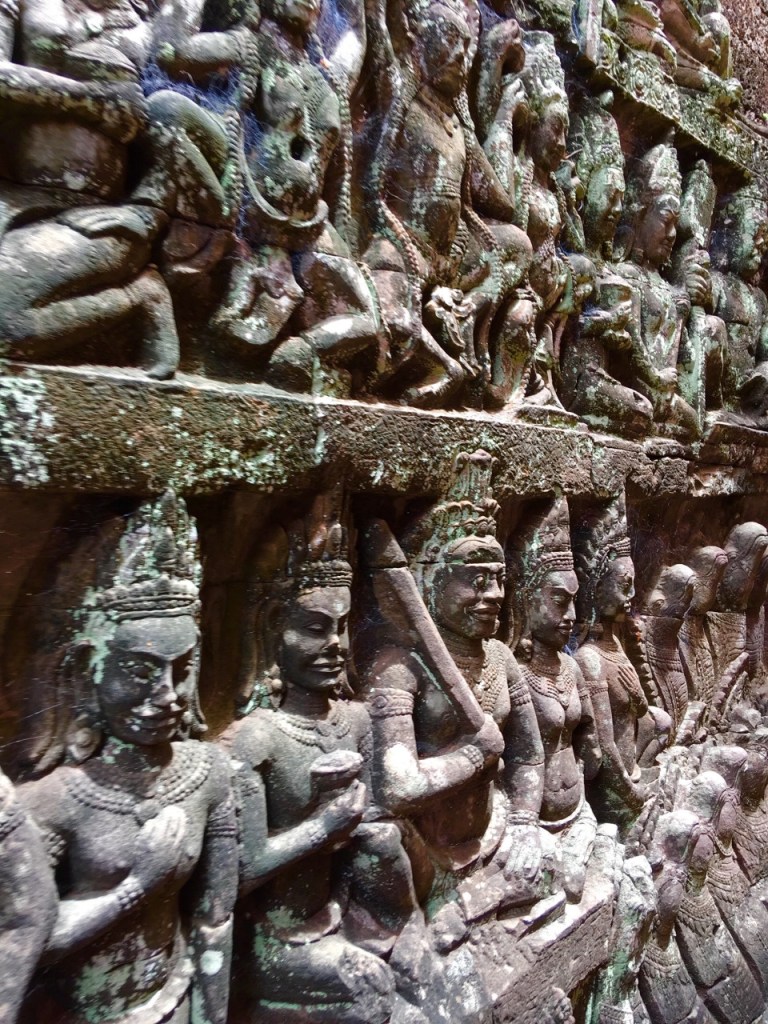
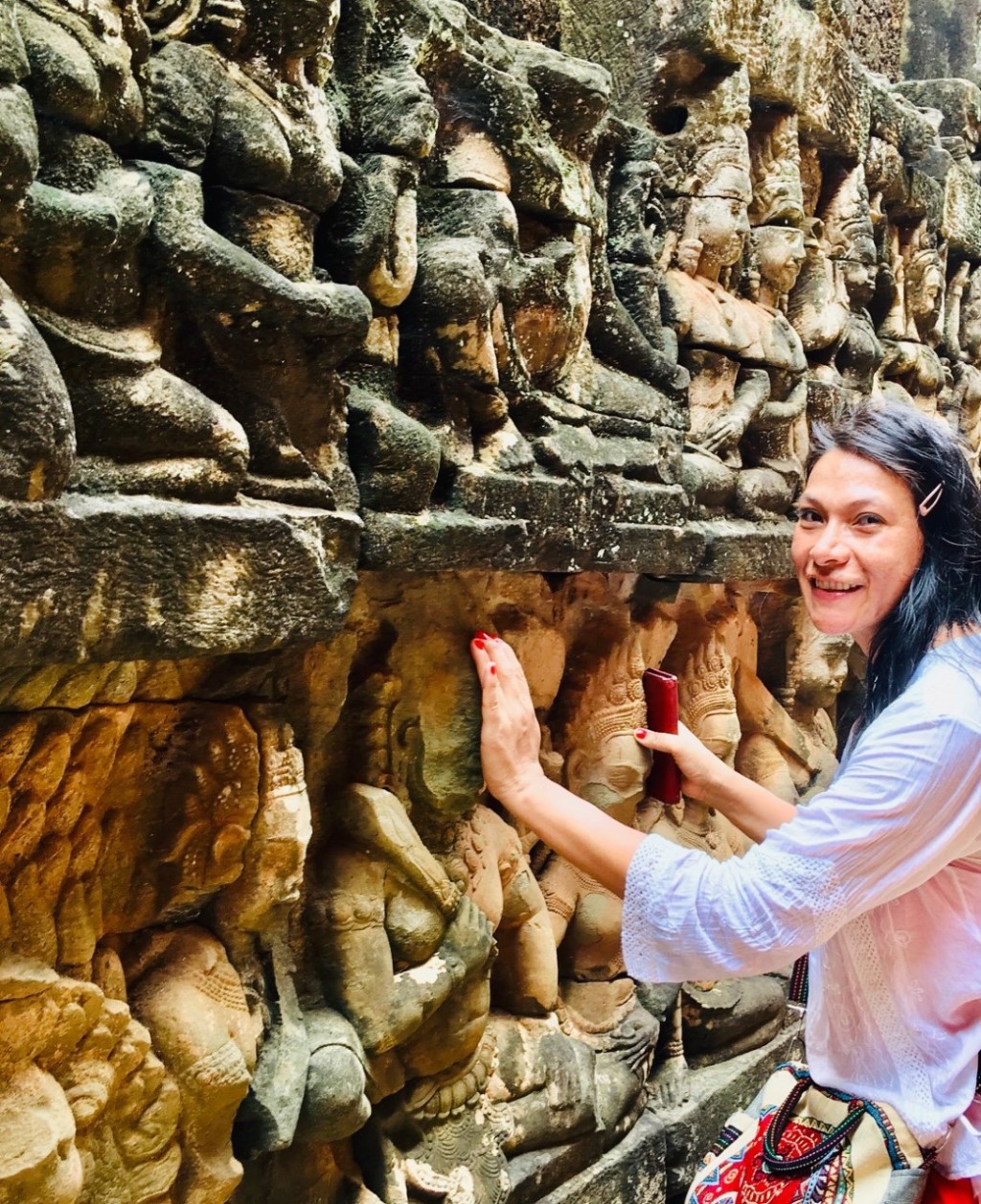
Walking along this terrace was an immersive journey back in time. Part of the expansive Royal Terraces complex, the site earned its peculiar name from a statue of the ‘Leper King’ that once stood at its center, its worn state leading locals to associate it with leprosy.
A distinctive feature of this terrace is its construction as double sandstone walls enclosing a narrow passageway, through which I walked in this clip. The walls are horizontally arranged into seven levels of figures, with the best-preserved ones found from the bottom to the middle.
Later in the day, I explored two more sites, Ta Phrohm and Banheng Hill. Unfortunately, my iPhone ran out of battery, and I couldn’t capture more photos of the day.
Thanks again for reading 🙂
“To travel is to take a journey into yourself” Danny Kaye
Love
💖
From Jenny


Leave a Reply